

For years, residents of Newcastle in Northern KwaZulu-Natal have lived with persistent water and sanitation problems that continue to disrupt daily life and undermine public confidence in Newcastle Municipality’s service delivery.
Raw sewage spills have repeatedly surfaced in neighbourhood streets.
This, as ageing infrastructure struggles under mounting pressure, while burst pipes and network failures trigger regular water interruptions affecting households, schools, and businesses.

In communities already grappling with service delivery challenges, the result has been a gradual erosion of trust in the systems meant to safeguard public health and environmental stability.
Despite periodic interventions by Newcastle Municipality — including leak repairs, pump station refurbishments, and upgrades to sections of the reticulation network — the underlying challenges remain entrenched.
Official performance indicators and independent assessments continue to point to structural weaknesses in both drinking water management and wastewater treatment.
This deteriorating trajectory has been documented in recent years.
Reporting by Newcastillian News in July 2025 revealed that audits conducted by the Department of Water and Sanitation (DWS) showed a steady decline in the municipality’s water governance performance.
Blue Drop scores fell from 89.06% in 2014 to 84.35% in 2023, while Green Drop scores — which assess wastewater treatment compliance — dropped more sharply from 78% in 2013 to 58% in 2021.
Click here to read more about this.
These figures signal growing strain on the systems responsible for safeguarding water quality and environmental health.
Further concerns emerged in December 2025 when Newcastillian News reported that wastewater treatment facilities across Northern KwaZulu-Natal were in significant disrepair.
Independent monitoring indicated that several plants were releasing untreated or partially treated sewage into river systems that ultimately feed reservoirs serving surrounding communities.
To read more about this, click here.
Against this backdrop of mounting infrastructure failures and environmental pressure, Newcastle this week hosted a provincial water sector engagement aimed at confronting the challenges facing municipalities across KwaZulu-Natal.
The event comes as Newcastle Municipality faces growing scrutiny over declining Blue Drop and Green Drop performance scores and ongoing infrastructure failures affecting local water systems.
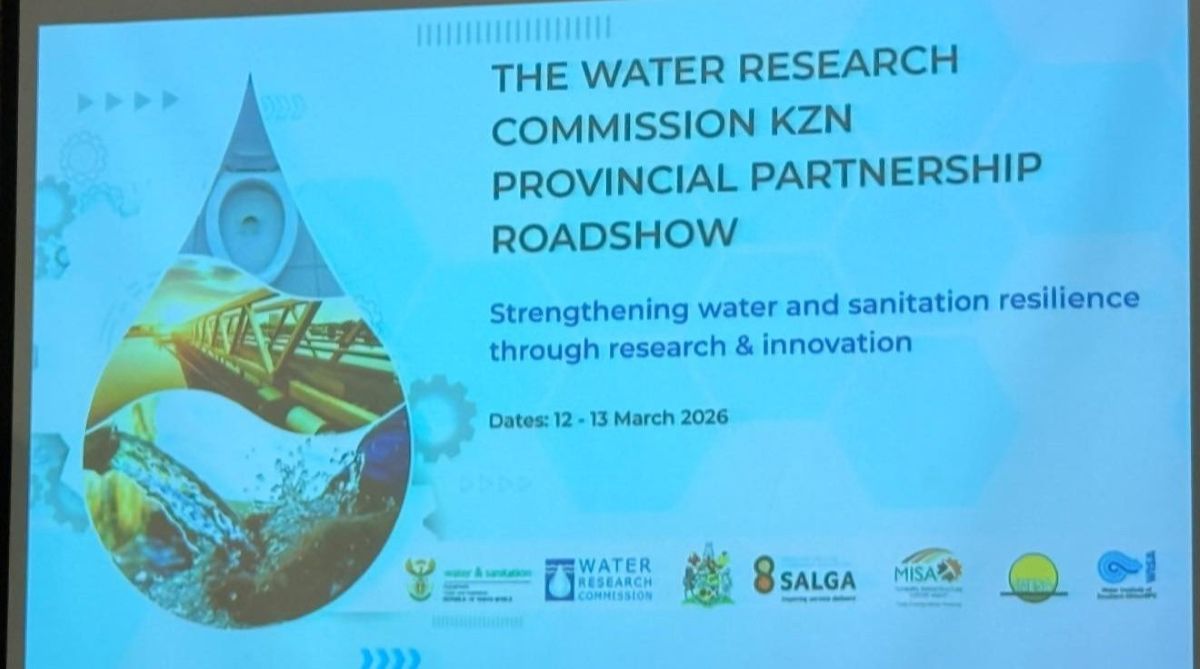
The Water Research Commission (WRC), working with Newcastle Municipality, convened the KZN Provincial Partnership Roadshow, a two-day gathering of government departments, engineers, researchers, and water specialists focused on the province’s deteriorating water and sanitation systems.

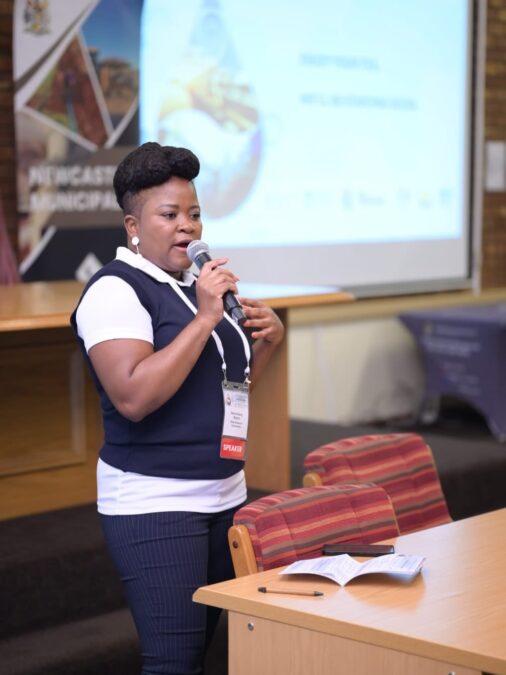
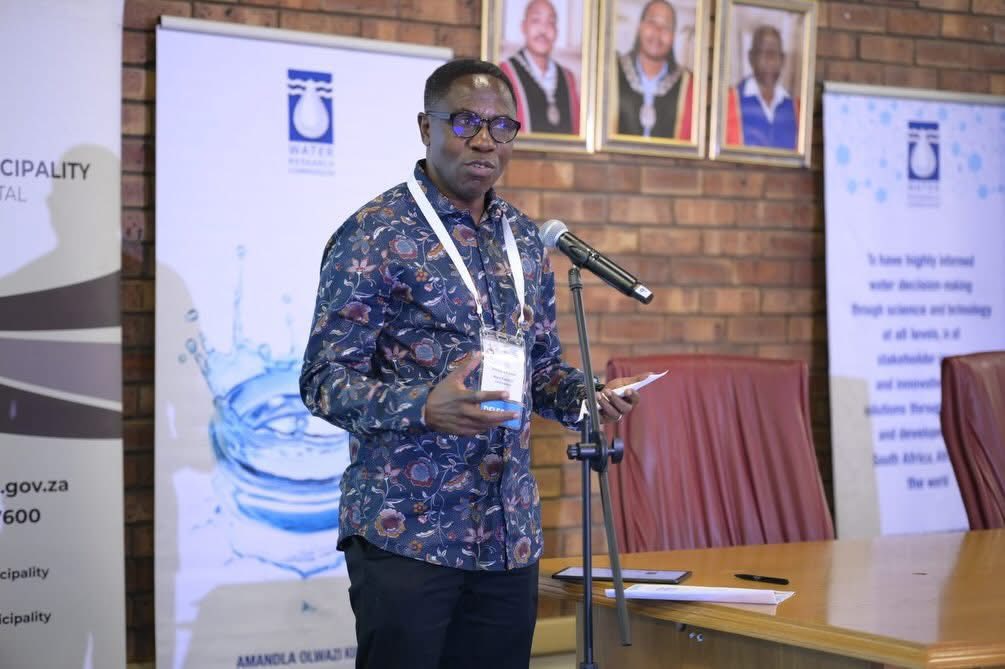
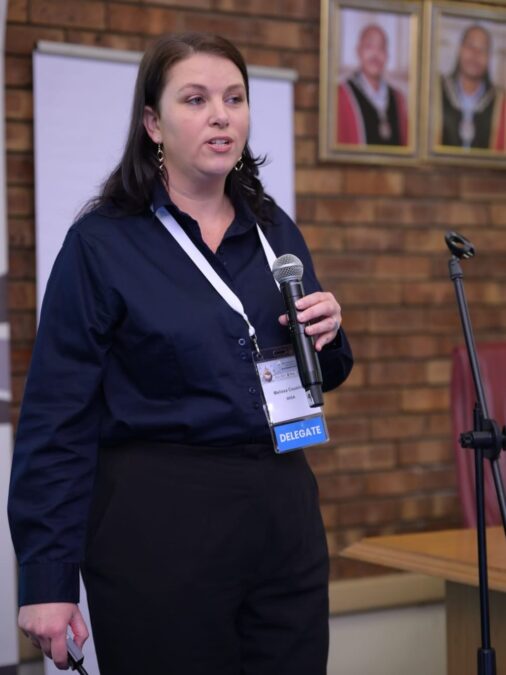
The event began on Thursday, 12 March 2026, drawing representatives from national and provincial institutions involved in water governance and infrastructure support.
Participants included the Department of Water and Sanitation (DWS), the Department of Cooperative Governance and Traditional Affairs (CoGTA), the South African Local Government Association (SALGA), the Institute of Municipal Engineering of Southern Africa (IMESA), and the Municipal Infrastructure Support Agent (MISA).
Discussions centred on the realities confronting municipalities across KwaZulu-Natal: ageing infrastructure, declining wastewater treatment performance, water quality management challenges, and the increasing impact of climate variability on already strained municipal systems.
According to the Water Research Commission, the purpose of the engagement was to bring municipalities together with technical specialists and researchers to explore practical solutions that could strengthen water services management.
“The WRC’s Roadshow creates a platform to co-develop solutions, match innovations to municipal needs, and strengthen local decision-making capacity,” the organisation said.
Acting WRC CEO Professor Stanley Liphadzi said the engagements provide an opportunity for municipalities and technical experts to share knowledge and explore ways of strengthening water management systems through improved governance and emerging technologies.
Water security was also highlighted as a growing concern. Professor Randhir Rawatlal of the University of KwaZulu-Natal’s WASH Centre noted that the pressures facing South Africa’s water systems reflect a broader global challenge, emphasising the need for stronger cooperation between municipalities, researchers, and technical institutions.
During the programme, several technical presentations focused on improving municipal compliance with national water regulatory frameworks, including the Blue Drop, Green Drop, and No Drop programmes.
Furthermore, Melissa Cousins from the Water Institute of Southern Africa (WISA) presented strategies aimed at strengthening technical capacity within municipalities, while Jay Bhagwan from the Department of Water and Sanitation’s Water Partnerships Office outlined potential opportunities for collaboration around water reclamation, recycling initiatives, and investment partnerships.
Day two of the roadshow opened on Friday, 13 March 2026, with research presented by Water Research Commission scientist Dr Eunice Ubomba-Jaswa.
Her presentation, titled “From Vulnerability to Resilience: Co-designing Health-Informed, Water-Sensitive Flood Responses in KwaZulu-Natal,” examined new approaches to flood management aimed at improving resilience in vulnerable communities.
The research explores low-cost, nature-based flood interventions developed in collaboration with local communities, with the aim of strengthening both flood preparedness and water system stability.
Representing Newcastle Municipality, Sbusiso Ndlovu provided an overview of the municipality’s current flood preparedness initiatives and the ongoing challenges of maintaining infrastructure resilience as weather patterns become increasingly unpredictable.
The session concluded with discussions between delegates on how the research and technical proposals presented during the roadshow could potentially be incorporated into municipal planning and infrastructure programmes.
While the event highlighted several technical solutions and partnership opportunities, the broader challenges facing Newcastle’s water systems extend well beyond infrastructure alone.
In January 2026, Newcastillian News reported on investigations that uncovered an illegal utility network operating in Newcastle West, where unauthorised electricity and water connections were linked to sewage diversions into stormwater systems.
Such activities place additional strain on already overstretched infrastructure and contribute to environmental contamination.
Click here to read more about this.
The issue was further compounded by findings reported in February 2026, when a forensic investigation revealed that three municipal officials had been implicated in a scheme involving illegal electricity and water connections that ultimately resulted in sewage discharge into Amcor Dam.
Click here to read more about this.
Raised during parliamentary oversight proceedings, the investigation highlighted systemic governance and compliance vulnerabilities that continue to complicate service delivery efforts.
Municipal representatives at the roadshow acknowledged that Newcastle faces multiple obstacles in improving water provision, including infrastructure backlogs, financial pressures, and the need for strengthened technical capacity within water services management.
According to the municipality’s Communications Unit, discussions during the event included potential partnerships aimed at strengthening long-term water service delivery.
“Discussions are underway on fostering partnerships and driving progress in water services delivery,” the municipality stated.
The roadshow now places several potential pathways on the table. These include accelerated refurbishment of pump stations and reticulation infrastructure, expanded technical support for municipal compliance programmes, pilot implementation of nature-based flood resilience strategies, and the development of water reclamation and recycling initiatives supported by national partnerships.
However, the true impact of the engagement will depend on whether these discussions translate into tangible implementation.
Should the proposals emerging from the roadshow be supported by clear timelines, dedicated funding commitments, and coordinated accountability between the municipality, provincial authorities, and national water institutions, Newcastle could begin rebuilding the reliability and integrity of its water and sanitation systems.
If meaningful implementation does not follow, however, the risk remains that declining audit scores, infrastructure failures, and community frustration will continue to define the region’s water reality.
What are your thoughts on this?
Be sure to read: