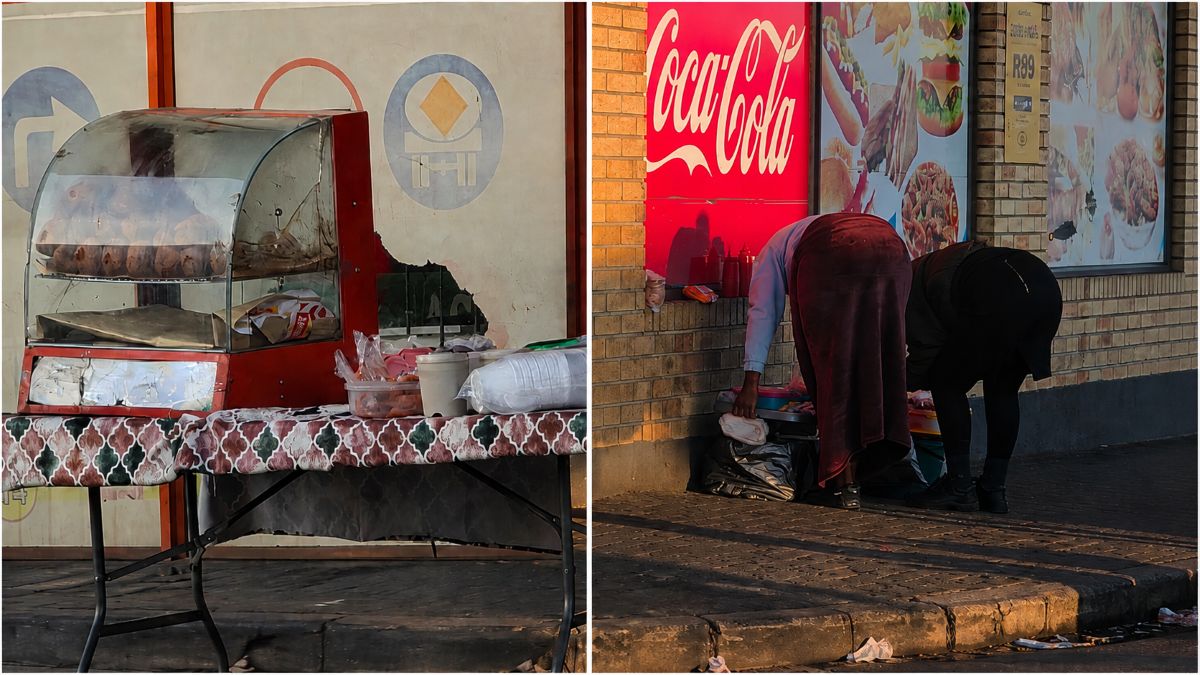
Raw meat prepared in crowded taxi ranks. Uncovered offal displayed beside dusty roads. Fried food sold from car boots with no visible refrigeration, handwashing facilities or regulated kitchen.
These scenes have become commonplace across Newcastle’s CBD, but formal restaurant and takeaway owners say the situation is no longer merely untidy or inconvenient.
Introducing Newcastillian BOOST—the fast, affordable way to put your business, event, promotion or announcement in front of thousands of engaged readers. No contracts. No meetings. Choose your BOOST. Book online. Get seen. Starting from just R350.
They argue that the situation presents a serious public health risk and creates the appearance of a regulatory double standard.
While established food businesses face costly compliance requirements, routine inspections, fines and even closure for breaches, certain informal vendors appear to operate openly without being subjected to the same visible scrutiny.
Manny Filipe, owner of local eatery Peperico, told Newcastillian News that municipal health officials inspect formal establishments down to the smallest detail, making the apparent lack of enforcement on Newcastle’s streets increasingly difficult for business owners to accept.
“There is virtually no compliance shown by informal traders selling food in the CBD. They have no proper storage facilities, no proper refrigeration, no one really knows where the food was acquired, where baked goods such as amagwinya (golden, deep-fried dough balls made from flour, yeast, sugar, salt, and water) are baked, and also, they will prepare and sell food products while someone is cutting hair next to them,” Filipe stated.
According to Filipe, street vendors frequently handle perishable products without gloves, hairnets, temperature-controlled storage or access to suitable food-preparation facilities.
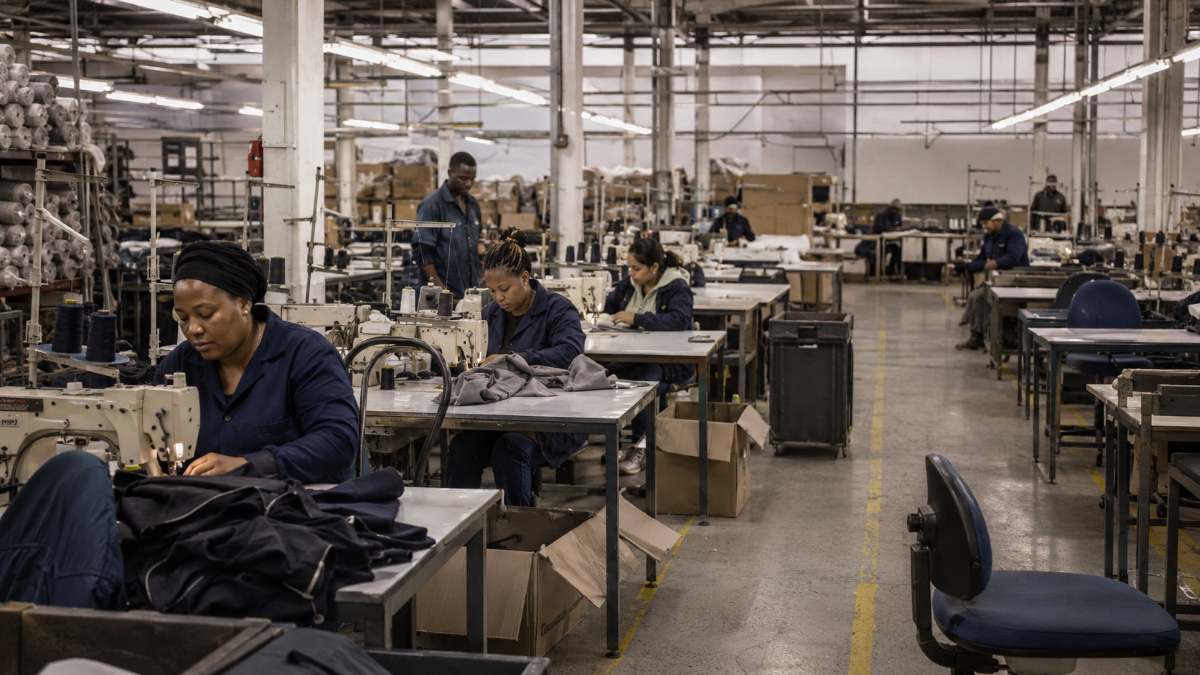
Formal enterprises, meanwhile, face inspections covering everything from dust on top of refrigerators to the maintenance of extraction canopy systems, commercial kitchens and dedicated handwashing basins.
A local restaurateur, who spoke on condition of anonymity, echoed these concerns, noting that formal establishments could face substantial fines or immediate closure if inspectors found their standards inadequate.
“However, while my staff is not allowed to work without a hairnet in the kitchen, there are individuals selling offal on the side of the road near the taxi rank with no covering, or anything.”
Furthermore, Filipe said formal appeals had repeatedly been made to the Newcastle Municipality regarding the alleged health risks, but visible enforcement remained limited.
“We even have to have a registered kitchen, but I have seen an informal trader selling chips from the boot of his car on Scott Street. No one really has an idea how or where their food is being prepared, or if they are using clean oils and expired ingredients. I understand that informal traders are earning a living, but it is a health risk. What happens if a child gets food poisoning and gets severely sick because of this?” Filipe warned.
In light of this, both business owners are now demanding greater accountability from the local Municipality and the relevant health authorities.
While stressing that they support firm public health standards, they argue that the apparent lack of enforcement against informal food vendors creates an uneven playing field for tax-paying businesses and potentially exposes consumers to preventable health risks.
When approached by Newcastillian News regarding the enforcement of food-safety standards, the Amajuba District Health Department confirmed that responsibility for public health and food-safety compliance among informal traders rests with the Municipality, stating:
“Public Health and Food Safety Standards for Informal Traders is a Municipality competency.”
In light of this, Newcastillian News submitted a series of questions to the Newcastle Local Municipality.
“Its primary purpose is to regulate the manufacturing, sale, importation and exportation, and protect the public by ensuring that these products are safe of acceptable quality and correctly labelled. Therefore, the Certificate of Acceptability (COA) is a mandatory legal document required to operate any food-handling business in Newcastle,” the Communications Unit elaborated.
The Municipality also rejected suggestions that informal traders were legally exempt from the standards imposed on formal businesses.
According to the Communications Unit, informal vendors are regulated under municipal bylaws and the Business Act 71 of 1991.
“They are required to comply with the same public health standards governing food safety,” the Communications Unit added.
Conditions on the ground, however, appear to contrast with the Municipality’s stated policy.
Under the Newcastle Local Municipality Informal Trading Bylaw, traders may not operate on a pavement alongside a formal business selling the same or similar goods without that business owner’s prior consent and the Municipality being informed.
Traders are also prohibited from obstructing pedestrian access or parking and loading bays, while open-flame or gas cooking requires authorisation and may not take place within five metres of a building, structure, vehicle or other property.
Despite these restrictions, such practices remain common throughout the Newcastle CBD.
Acknowledging the challenges, the Communications Unit said the Municipality had initiated an informal trading reorganisation project aimed at removing unauthorised structures, grouping traders according to the goods and services they provide, and restructuring the allocation of trading permits.
“The municipality has undertaken an Informal Trading Reorganization Project aimed at removing unauthorized and illegal trading structures to ensure compliance with Informal Trade By-Law. The project will be implemented in a phased approach, with informal traders being reorganized and allocated to designated trading areas based on the types of goods and services rendered,” the Unit explained.
Responding to concerns about informal traders operating directly outside established businesses, the Municipality said it had assessed current trading locations and identified designated areas intended to bring vendors into line with municipal bylaws, permit conditions and public safety requirements.
“The municipality has conducted assessments to determine whether informal traders are operating within the designated trading areas and are compliant with the prescribed municipal by-laws, permit requirements and public safety regulations. Following these assessments, designated trading areas have been identified and relocated to informal traders accordingly,” stated the Communications Unit.
According to the Municipality, the reorganisation process will be supported by continued monitoring and enforcement, with traders expected to operate only from approved locations and in accordance with the conditions attached to their permits.
Filipe, however, argued that reorganising where informal traders operate would not, on its own, resolve the immediate risks associated with food preparation, storage and hygiene.
In response, the Municipality said it was introducing measures to bring informal food vendors into compliance with the relevant legislation and ensure that the necessary approvals were obtained.
“The municipality is implementing measures to ensure that informal traders comply with all applicable legislative requirements while also providing education and awareness on public health risks to promote safe and responsible trading practices,” the Communications Unit stated.
The local authority added that this approach would combine strengthened inspections with education on municipal bylaws, public health requirements and safe food-handling practices.
“The municipality will strengthen routine inspections and implement educational awareness campaigns to educate informal traders on municipal by-laws and applicable health regulations. These initiatives will promote compliance, encourage responsible trading practices, and assist to create a clean, and orderly trading environment for both traders and the public,” the Communications Unit concluded.
For Newcastle’s established food businesses, however, the concern remains rooted in what they say they are witnessing daily.
Their argument is not that informal traders should be prevented from earning a living, but that food-safety requirements must be applied consistently wherever food is prepared and sold.
From their perspective, registered businesses cannot reasonably be expected to carry the financial and operational burden of compliance while visible concerns elsewhere are addressed only through longer-term planning, relocation and awareness programmes.
The Municipality’s informal trading reorganisation project will therefore be closely watched by both formal businesses and members of the public.
Its effectiveness will depend not only on allocating designated trading spaces and regulating permits, but also on whether inspections, education and enforcement produce safer and more consistent food-handling practices across Newcastle.
Newcastillian News has launched its new Business Directory — bringing trusted local businesses together in one place. Jump on over to claim your business. Tap the advert
Its effectiveness will depend on whether unhygienic practices are addressed, food vendors are inspected properly and consistently, and consequences follow when the law is breached—regardless of whether the operator is formal or informal.
For Newcastle’s restaurant and takeaway owners, the coming months will show whether the Municipality’s stated plans result in consistent enforcement on the ground, or whether the cost of compliance continues to fall disproportionately on businesses operating from formal premises.
As always, Newcastillian News will track the progress of this over the ensuing weeks.
But, in the meantime, what are your thoughts on all of this? Let us know below.
Food Safety Compliance should apply to everybody. Acts, Standards, Regulations and By Laws exist. Its always some one elses responsibility when in get to implementing and regulating it…until some poor individual dies again.
There are informal tuckshops open in the industrial area selling cooked food, no running water, no toilet facilities either, the preparation and selling is done on side walks where these vendors stand a urinate amoung other things, this is tuckshop is on the pavement, yes they need to make a living however it is unhygienic to say the least, take a drive in Gutenberg street and you see tuxkshops everywhere selling food in conditions which will your skin crawl pretty sure the rats run around there and mess as well.
The one day there was a guy selling meat on a blanket, on the side of a busy road in the CBD. This was in summer and we all remember how hot the last summer was. How is it possible that not at least one municipal, police, traffic of government employee did not see it? I really hope the municipality sticks to its commitment and sorts this out.
Newcastillian News invites your input. We ask that you keep your remarks courteous and on-topic. We do not allow any form of hate speech, such as racist or sexist comments. All comments are subject to moderation in line with our User Rules and Commenting Policy.














3 Responses
Food Safety Compliance should apply to everybody. Acts, Standards, Regulations and By Laws exist. Its always some one elses responsibility when in get to implementing and regulating it…until some poor individual dies again.
Not only in the CBD.
There are informal tuckshops open in the industrial area selling cooked food, no running water, no toilet facilities either, the preparation and selling is done on side walks where these vendors stand a urinate amoung other things, this is tuckshop is on the pavement, yes they need to make a living however it is unhygienic to say the least, take a drive in Gutenberg street and you see tuxkshops everywhere selling food in conditions which will your skin crawl pretty sure the rats run around there and mess as well.
The one day there was a guy selling meat on a blanket, on the side of a busy road in the CBD. This was in summer and we all remember how hot the last summer was. How is it possible that not at least one municipal, police, traffic of government employee did not see it? I really hope the municipality sticks to its commitment and sorts this out.