


The Newcastle Municipality has opened its 2026/2027 budget consultations with another round of proposed tariff increases that will again lift the cost of essential services, deepening pressure on households and businesses already grappling with rising living costs.
Beneath the technical framing of the draft budget lies a familiar pattern: incremental annual hikes that steadily shift the burden of municipal finance onto ratepayers.

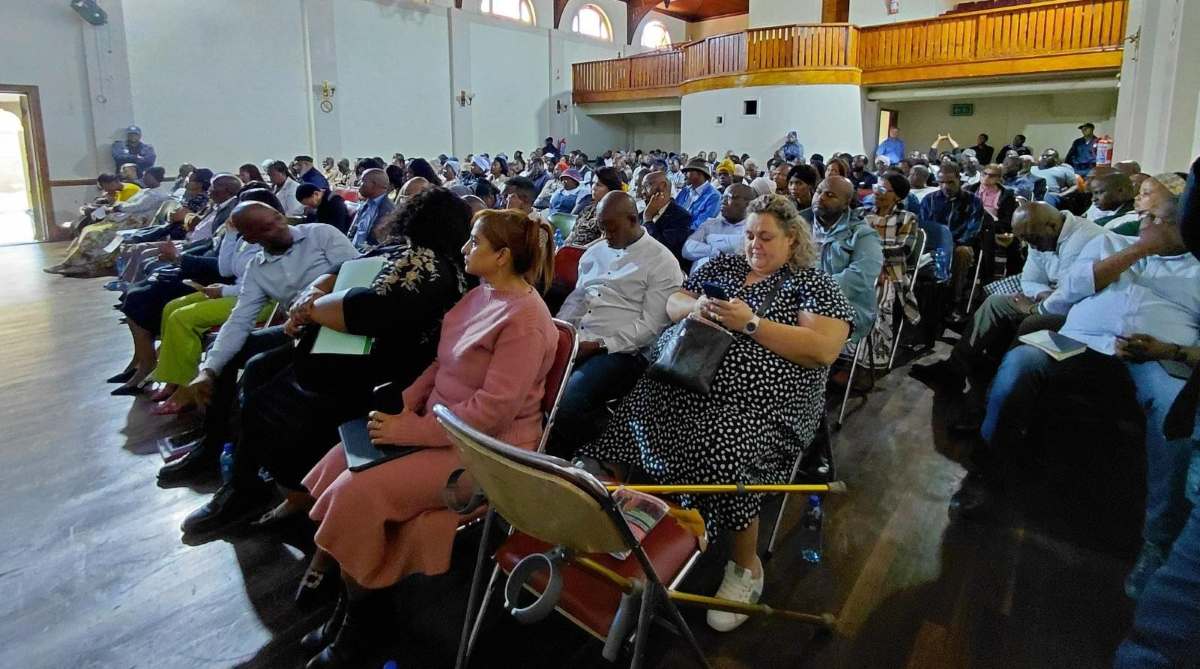
That pattern was laid bare at the Newcastle Town Hall on Tuesday, 28 April 2026, where officials launched the Integrated Development Plan (IDP) review alongside the Budget Consultation Programme.
While presented as a procedural milestone in the municipal calendar, the session underscored a structural reality—service delivery remains heavily dependent on tariff income, with limited fiscal room to absorb rising costs without passing them on to consumers.
For 2026/2027, the municipality has proposed increases across most key services: property rates at 6%, electricity consumption at 9%, electricity availability at 6%, water at 7%, and sanitation at 6%, with refuse removal remaining unchanged at 0%.
On paper, the adjustments are described as moderated.
In practice, they extend a consistent upward trajectory in municipal charges that has become a defining feature of recent budget cycles.
Furthermore, the 9% increase in electricity consumption charges is the most significant component of the package, shaped largely by national energy pricing determinations through NERSA and ongoing Eskom tariff adjustments.
Yet internal cost-of-supply assessments reportedly indicate that full recovery would require a higher increase, raising a familiar tension between financial sustainability and affordability that the municipality has repeatedly had to navigate.
Despite that tension, electricity remains the backbone of Newcastle’s revenue model, projected to generate just over R1 billion in the coming financial year.
Water contributes more than R260 million, sanitation over R155 million, property rates approximately R493.3 million, and refuse removal just over R116 million. Together, these figures reflect a narrow and consumption-heavy revenue base that leaves the municipality exposed to both economic strain and rising service delivery costs.
That dependence is further entrenched in the municipality’s R3.2 billion draft budget, which includes just over R840 million in national grants and R10 million from the provincial government.
While these transfers are directed largely toward infrastructure and service delivery, they remain insufficient on their own to offset operational pressures, leaving tariff income as the primary balancing mechanism.
In effect, the budget continues a long-established fiscal approach: incremental tariff increases spread across services rather than abrupt hikes in any single category. It is a model that maintains stability on paper but steadily transfers cost pressure outward, particularly in a local economy already constrained by unemployment and limited household income growth.
As part of the rollout, the Newcastle Municipality Communications Unit said:
“The first day of the consultation programme marks the commencement of a series of meetings which will be conducted until 8 May 2026. These engagements will outline the municipality’s plans and processes to accelerate service delivery for the preceding year in all areas across Newcastle.”
With the formal launch complete, attention now shifts to public participation, with residents and stakeholders invited to engage directly on the proposed tariffs and broader service delivery priorities.
Newcastle West residents are scheduled to meet on 5 May 2026 at the Newcastle Show Grounds Hall, while the business and agricultural sector will convene on 7 May 2026 at the Farmers Hall council chambers.
Ultimately, the 2026/2027 budget reflects a municipality operating within constrained fiscal boundaries, where tariff income—particularly from electricity—remains central to financial stability. Yet it also highlights a persistent structural challenge: the reliance on regular increases to sustain operations, even as affordability pressures deepen across the local economy.
As consultations continue, the central question remains whether public participation will materially influence the final tariff structure—or whether it will simply formalise an outcome already shaped by fiscal necessity.
What are your thoughts on this? Be sure to let us know below.
Do not forget to read:








4 Responses
l humbly request that senior citizens be exempted from availability and rates payment for it becomes difficult to make ends meet and most of seniors are killed by starvation and lack of money to buy medication.
I am not understanding how they intend on charging more for property rates when rates goes by valuation of property, not what they decide you pay..
I am extremely tired of being charged more and more while the town goes to the dogs…
Road infrastructure is poor, maintenance around suburbs and town is poor, water supply is poor… yet do they understand what the rates are supposed to go to?
Are we paying for Madadeni and Ozisweni while Newcastle becomes dilapidated…
Is this town not run by the DA and the IFP???
What is going on….
What happens when all these old people do not pay their rates as they do not have the money they have been living there since they bought the house 30trs ago for fraction of the value today the electricity account is probably as much as their pension and now what are they evicted or what happens it’s shocking stop wasting our money this town is a pigsty holes in the roads rubbish every where while the powers that be get rich shocking
as of July 1, 2025, the Newcastle Municipality has updated its billing structure to link several fixed service charges directly to property values.This means that owners of higher-valued properties may face higher fixed costs for services, in addition to standard property rates.Key Changes to Fixed Services (Effective July 1, 2025):Water Fixed Charge: Linked to property value.Sanitation Fixed Charge: A new fixed charge introduced that is linked to property value.Fixed Cleaning Charge: A new fixed charge introduced that is linked to property value.Electricity Home User Charge: Increased to R339 per month. Additionally, property rates were set to increase by (7.98%). These changes are part of the municipality’s efforts to ensure financial sustainability. , Now here is the good news , The Western Cape High Court ruling against the City of Cape Town’s property-value-based fixed charges on water and sanitation sets a national precedent that municipal tariffs must reflect the cost of service. This means Precedent for Municipalities: Other metros and municipalities are likely to see their revenue models challenged if they use property values—rather than actual consumption or cost-to-serve—for charging fixed services.