


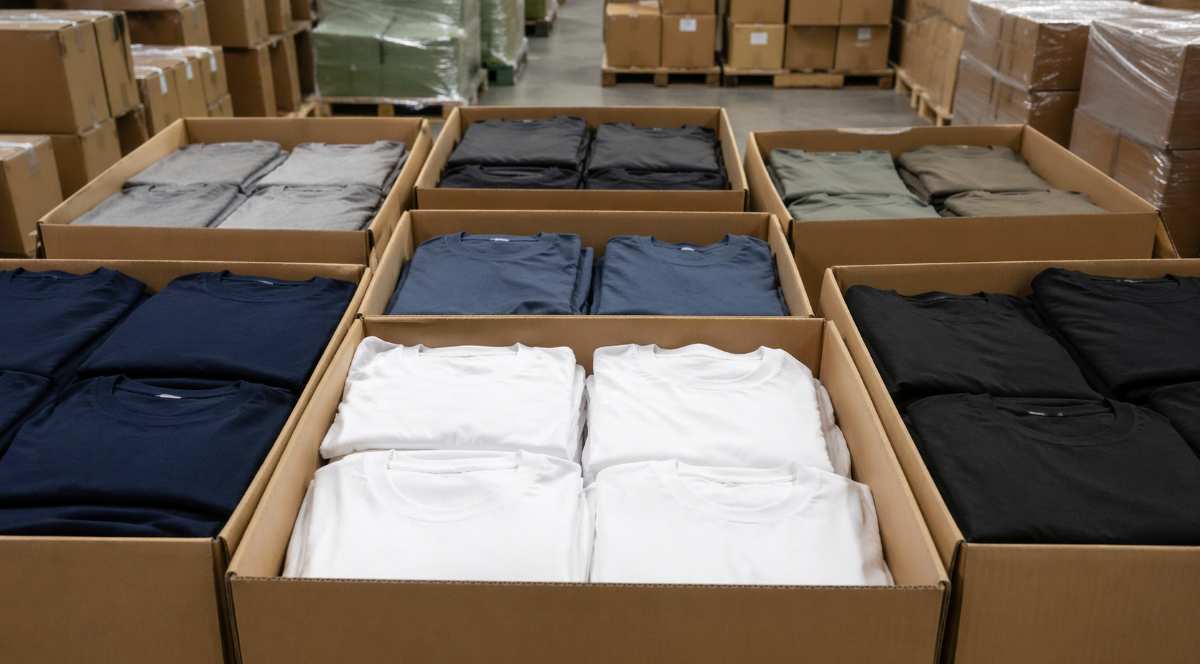
As attention remains firmly fixed on Newcastle’s textile sector following the February 2026 raids, further developments have emerged involving several major retailers.
The raids exposed entrenched labour and compliance concerns, with factory workers allegedly subjected to sweatshop-like conditions.

Pick n Pay Clothing, The Foschini Group (TFG) and Pepkor have each since confirmed that internal investigations are under way after garments linked to their brands were identified at local textile factories flagged for serious violations.
This latest development follows a series of parliamentary oversight inspections and labour department blitz operations conducted at multiple factory sites across Newcastle earlier this year.
During these interventions, officials uncovered what they described as deeply concerning working conditions within Chinese-run manufacturing facilities, prompting renewed scrutiny of supply chain practices linked to major South African retailers.
As reported by Newcastillian News in early February 2026, the sector came under formal investigation during a multi-departmental operation led by the Parliamentary Portfolio Committee on Employment and Labour in the Amajuba District. The coordinated effort included the South African Police Service and the Department of Home Affairs, alongside the Department’s Inspection and Enforcement Services.
During these inspections, authorities recorded a series of regulatory breaches, including unsafe electrical installations, failure to produce a valid steam generator certificate, non-compliance with the Unemployment Insurance Act, and breaches of the Compensation for Occupational Injuries and Diseases Act.
These findings collectively pointed to widespread non-compliance across multiple operational areas.
Furthermore, the inspection programme assessed six manufacturing operations in total. All six were found to be non-compliant with UIF requirements, while only four complied with the Basic Conditions of Employment Act.
In addition, five were non-compliant with Occupational Health and Safety regulations, and five failed to meet COIDA requirements. It was also reported that the majority of workers were paid significantly below minimum wage levels, in some cases as little as R76 per week.
In response to these findings, the Deputy Minister of the Department of Trade, Industry and Competition (dtic), Alexandra Abrahams, confirmed that enforcement authorities would intensify investigations into non-compliant garment manufacturing operations in Newcastle.
This followed both the parliamentary oversight visit and subsequent media reports which raised potential links between alleged sweatshop operations and prominent South African retail brands.
At the time, the Deputy Minister emphasised that the matter extended beyond isolated breaches, raising broader systemic concerns relating to supply-chain accountability, responsible sourcing, and the overall integrity of South Africa’s clothing and textile value chain. She further noted that enforcement action alone would not be sufficient to address deeply embedded vulnerabilities within fragmented supply networks.
Consequently, she indicated that the dtic would engage with the Retail Clothing, Textile, Footwear and Leather Masterplan Executive Oversight Committee to evaluate the wider implications of the Newcastle findings and develop targeted interventions aimed at strengthening accountability and coordinated enforcement mechanisms.
While enforcement activity has continued within Newcastle’s textile sector, and penalties have already been imposed by the Department, as previously reported by Newcastillian News on 1 April 2026, retailers implicated in the matter have confirmed that internal investigations remain ongoing, alongside steps to address identified breaches.
Addressing the matter, Pick n Pay Clothing remarked, “The factory shown in the video was not approved to produce Pick n Pay Clothing, and has been stopped with immediate effect. In our business, we rely on manufacturers and have strict protocols governing all suppliers, including the contracts they hold with factories. These hold our suppliers accountable for meeting our high ethical standards, and this supplier simply didn’t follow them. We never outsource our integrity or responsibility.”
Similarly, the Mr Price Group expressed support for the inspections conducted by Parliament’s Portfolio Committee on Employment and Labour, as well as other relevant authorities.
In its statement, the group said, “We welcome legitimate initiatives that expose and hold accountable manufacturers who exploit workers or undermine South African labour, health, and safety laws. Upholding the rule of law is a shared responsibility between government, retailers, and all stakeholders in the value chain.”
The group further stated that while Mr Price-labelled products were identified during inspections, it had since launched an internal investigation to establish how this occurred.
“Mr Price Group’s values are embedded in our supply chain compliance processes. Factories engaged by our suppliers are subject to independent audits, and our Code of Conduct, together with our commercial agreements, clearly prohibits the practices exposed during the recent Newcastle inspections,” the group noted.
Meanwhile, the TFG Group confirmed that its investigation established that Jet-labelled products found at the referenced Newcastle premises were linked to two approved suppliers.
It explained that, in one instance, a supplier had used an undeclared facility without prior authorisation, thereby breaching contractual requirements, while the second supplier is still completing its internal review.
However, the TFG Group added, “Immediate action has been taken, including removal of stock from the undeclared facility and the implementation of financial penalties. We are reinforcing controls around site declarations and subcontracting and will take further action as required based on the outcome of ongoing reviews.”
Taken together, the developments in Newcastle’s textile sector point to a wider reckoning over compliance, oversight, and accountability within South Africa’s garment manufacturing supply chains.
What began as targeted inspections has evolved into a broader probe involving multiple state departments, parliamentary structures, and private sector actors, each now confronted with questions around due diligence and enforcement.
While regulators have signalled a firmer stance through intensified investigations and corrective measures, the findings have also highlighted persistent gaps in monitoring systems that govern outsourced production networks.
At the same time, the responses from major retailers reflect an industry under mounting pressure to tighten internal controls and strengthen supplier governance frameworks.
With investigations still ongoing, the emphasis now appears to be shifting towards long-term corrective action rather than isolated enforcement outcomes.
What are your thoughts on this? Let us know below.
Be sure to read:











4 Responses
In the interest of Building Newcastle Businesses and economy. Noted that Mittal, mines closure, Sawmills inspections, Chinese companies pentratation .Municipality Hawks Raids is indeed very worry in an already exhausted, grippling world invasion economy. Let’s fix Newcastle not Flood it with more poverty
Does the Labour’s inspections only apply to Chinese, Indians, Whites, Cloureds NOT Aficans? Proof this statement is Wrong on a Newcastle and country wide vote. Non registered Nigerians drug dealers, Pakistan, Etopians, criminally doing thinks in Newcastle. But who checks them in CBD . Sleeping in Shops in CBD
I am qualified professional in the clothing industry now I am jobless because my company that supplies a retailer has no contract anymore because the retailer cannot sourcing proctor in Newcastle. 40 people from my Company are out jobs. This include a lot of people that were earning some money in the factories. Now no income. The town will be a ghost town. The economy will be stagnant. There is a problem yes but where is a solution. Everyone will lose both Chinese and workforce.
Local people lack skill and there is no SETA FUNDED skills centre..minimum wage is not possible because cost of sales is very high. The retailers control the pricing in the value chain. This industry absorbs more people because it is labor intensive so there must be a threshold and some bargain. Quick solution has cost people jobs at isithebe and Durban. Qwaqwa and Ladysmith. The SA retailers are resorting at taking production in Swaziland and Lesotho instead of finding workable solutions locally. We are in big poverty now.