


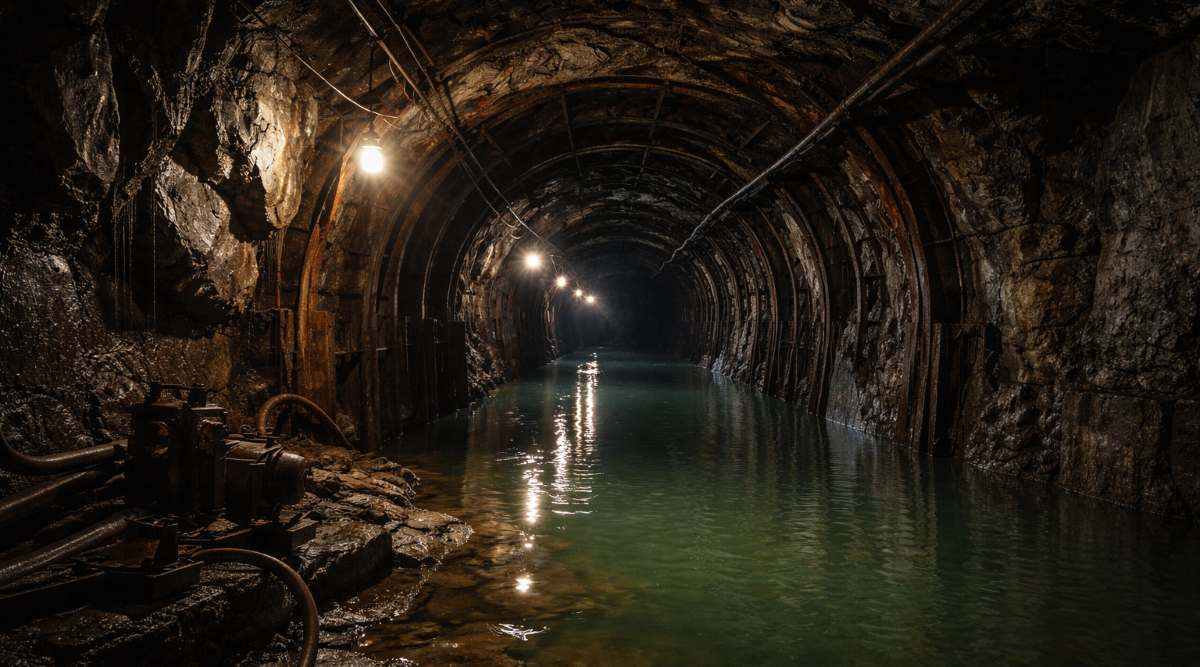
The dormant Roy Point Colliery, situated about 10km south of Newcastle along the N11, is facing a long-term environmental challenge that has continued to develop decades after mining operations came to an end.
Although the former coal supplier to the Iscor Newcastle steel works ceased operations in 1992, technical assessments show that water levels within the old mine workings are continuing to rise.

This condition, described as a “positive water balance”, occurs when groundwater seeps into the mine faster than it can drain away naturally. If left unmanaged, the continued build-up could eventually result in contaminated water reaching the surrounding environment.
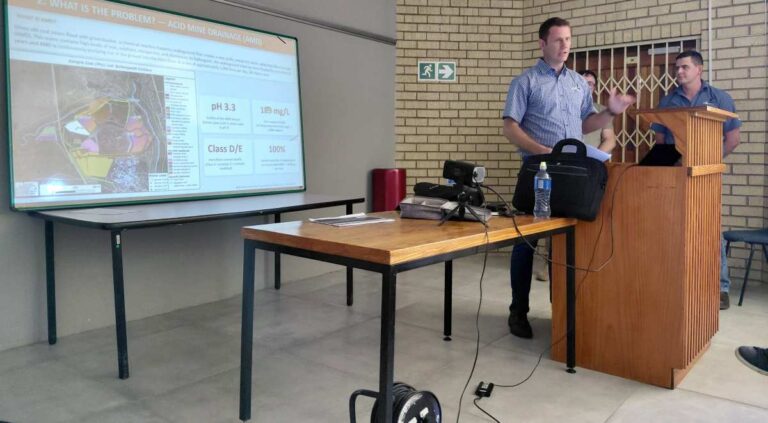
These findings form part of the ongoing Scoping and Environmental Impact Reporting (S&EIR) process tied to a proposed long-term water management strategy for the site. WSP Group Africa (Pty) Ltd (WSP), an engineering, environmental and infrastructure consultancy, has been appointed by Seriti Power (Pty) Ltd (Seriti) to oversee the intervention.
The broader proposal is also linked to plans for forestry as a post-mining land use.
According to WSP, Roy Point Colliery has remained under care and maintenance since closure, yet water has continued to accumulate in both the underground workings and rehabilitated surface areas.
In its report, the consultancy explains: “Since the termination of the mining activities, groundwater recharge into the Roy Point Colliery has exceeded natural drainage into a deeper aquifer which resulted in a positive water balance.”
In practical terms, this means the site is experiencing a net build-up of water over time, placing increasing pressure on the closed mining environment. As a result, Seriti has proposed a long-term management framework that combines ecological rehabilitation with engineered water control measures.
These include forestry establishment, restoration work, the construction of lined evaporation dams, and the controlled release of excess water into the Knockbrex River from the Southern Compartment.
Furthermore, WSP states that a structured, long-term water management system is now necessary to reduce ongoing environmental and geotechnical risks.
At present, surplus water is managed through a controlled release system via a valve in the Southern Compartment. According to WSP, these discharges into the Knockbrex River are undertaken in line with a 2016 directive issued by the Department of Water and Sanitation (DWS), and are generally timed to coincide with peak flows in the Ingagane River to improve downstream assimilation capacity.
The report states: “Seriti proposes an interim water management strategy which includes continued controlled release and construction activities and the long-term strategy which includes forestry and evaporation. By implementing appropriate water management strategies, Seriti can minimize the environmental and geotechnical risks associated with the closed mine.”
Although the site lies outside Newcastle’s urban centre, it falls within the V31J and V31K quaternary drainage regions and forms part of the broader Pongola–Mtamvuna Water Management Area.
WSP further notes that, following the establishment of the Pongola-Umzimkulu Catchment Management Agency under Government Notice 411 in Government Gazette 37676 of 23 May 2014, the site now falls within that agency’s jurisdiction. The settlements of Kilbarchan and Ingagane are situated about 2km south of the project area.
To relieve long-term hydrological pressure, WSP recommends a combination of engineered and nature-based interventions.
These include a lined evaporation dam and forestry-driven evapotranspiration, aimed at reducing groundwater recharge into both the underground workings and rehabilitated opencast areas. The goal is to limit future decant through either seepage or overflow from the legacy mining footprint.
A phased intervention programme has now been proposed. In the early stages, this would include tree planting, the pumping of water from the rehabilitated North-East and North-West opencast areas into the Northern Compartment, which then overflows into the Southern Compartment, and the continuation of controlled releases into the Knockbrex River under the existing regulatory directive during the first two years.
Beyond that, Seriti is expected to carry out a seven-year management programme focused on managed overflow from the Southern Compartment, supported by forestry establishment designed to reduce infiltration through increased evapotranspiration.
Under this model, vegetation is expected to play a growing role in helping regulate the mine’s water balance.
While controlled discharges into the Ingagane River may still occur intermittently, the report makes it clear that such releases would remain limited to high-flow conditions and would continue to require regulatory approval.
Before any of this can proceed, however, the company must complete a range of regulatory and environmental processes to ensure that the proposed project does not negatively affect the environment or neighbouring properties.
Central to the proposal is the development of a large-scale forestry project intended to help manage the site’s positive water balance through natural water uptake.
The Draft Scoping Report describes a forestry area of approximately 4,315,560 square metres, or roughly 431.5 hectares, representing around 43% of the total Roy Point site. Seriti proposes planting Pinus elliottii, a species selected for its tolerance of waterlogged conditions, with the expectation that groundwater recharge could be reduced by an estimated 48% once the plantations reach maturity.
Despite these intended benefits, the report also identifies notable environmental and social risks that would require mitigation. These include the clearing of more than 20 hectares of indigenous vegetation and the disturbance of over 100 hectares of virgin soil, including areas classified as “Optimal” Critical Biodiversity Areas.
Heritage concerns have also been flagged. The northern section of the site lies within 2km of a Grade II Heritage Site, while field surveys have confirmed the presence of historical graves and Late Iron Age stone-walled settlement remains.
In addition, the documentation warns that lowering the regional water table could have an adverse effect on nearby groundwater users.
To address the identified risks, the mining company would be expected to implement a phased management plan.
During the Base Case phase (Years 0–2), the immediate focus would be on tree planting and the installation of a pumping system to transfer water from rehabilitated opencast areas into the Northern and Southern Compartments for controlled release into the Knockbrex River.
In the Interim Phase (Years 2–6), the company would need to construct an overflow management system at the Southern Compartment to regulate water transfers more effectively. This phase would also require the lining of existing evaporation dam compartments with 1.5 mm HDPE geomembrane liners to prevent untreated water from seeping into surrounding soil.
In the Long-term Phase (Year 7 onwards), the emphasis would shift to maintaining mature forest blocks to stabilise the water balance, supported by managed overflows into the lined dams and intermittent releases into the Ingagane River during high-flow periods.
The project is currently still in its scoping phase.
The next step would be a full Environmental Impact Assessment (EIA), which is expected to include specialist studies on terrestrial biodiversity, hydropedology and heritage impacts to refine mitigation measures before any permanent approval is granted.
Speaking with Newcastillian News, Newcastle Municipality’s Municipal Manager, Zamani Mcineka, said the municipality had initially not been aware of the Roy Point Colliery plans, but indicated that the local authority would monitor developments and, should the project move ahead, would ensure that all legal requirements are complied with.
To read the full report by clicking the button below.
In the meantime, WSP has invited community members and interested stakeholders to submit comments and concerns during the ongoing 30-day review period, which is scheduled to close at the beginning of May 2026.
Written submissions can be directed to Patricia Nathaniel at WSP Group Africa (Pty) Ltd via email at [email protected] or telephonically on 011 361 1398.
All comments received will be recorded in a Comments and Responses Report and included in the final submission to the Department of Mineral Resources and Energy (DMRE).
Taken together, the proposal at Roy Point Colliery points to a shift away from conventional mine closure and towards a more integrated environmental management approach, where engineering controls are combined with large-scale ecological rehabilitation.
The reliance on forestry-based water reduction, alongside lined containment systems and regulated discharge, reflects an attempt to stabilise a legacy mining site whose underground water dynamics continue to change decades after closure.
At the same time, the proposal remains dependent on stringent regulatory oversight and the outcome of a full EIA process, particularly given the sensitivity of nearby biodiversity areas, heritage resources and downstream water users.

As the matter moves beyond scoping and into deeper environmental assessment, the strength of the proposed mitigation measures, and their real-world impact on both the landscape and surrounding communities, will ultimately determine whether the strategy delivers long-term stability without creating new risks.
What are your thoughts on this? Let us know below.
Be sure to read:













One Response
Been going on for years all talk and VERY LITTLE ACTION…….
University of the Free State did try once to try and clean the Kilbarchan hill area but never really succeeded, as the hill continued to spew poison into the water system. So really folks don’t hold your breath for any change!