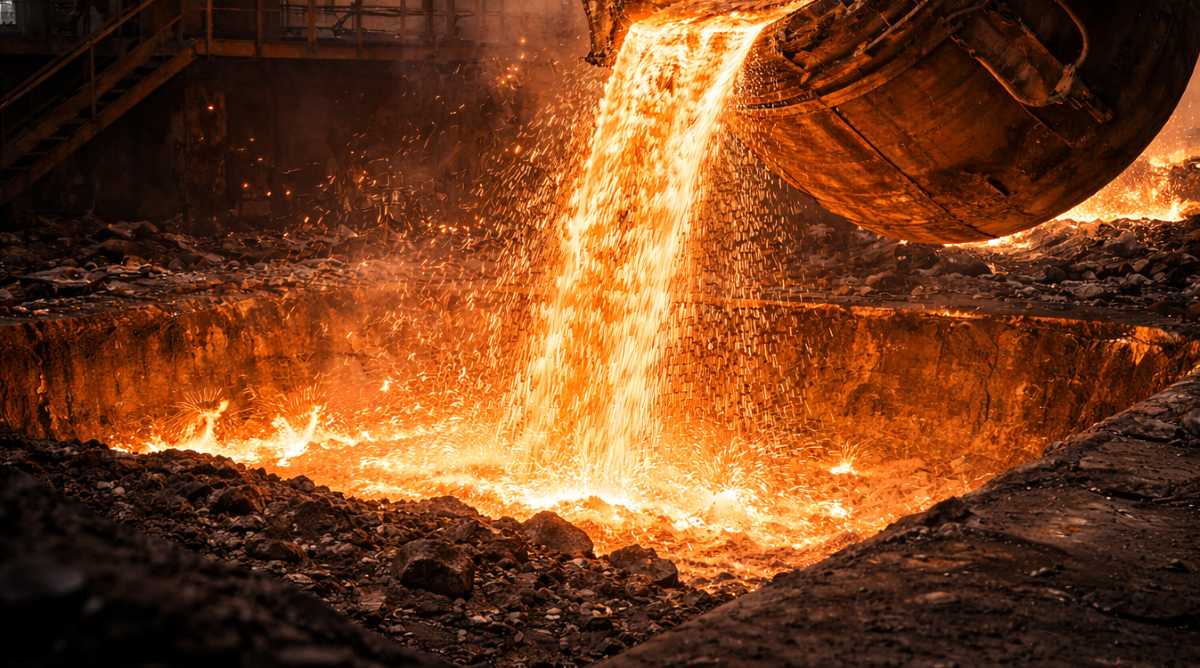
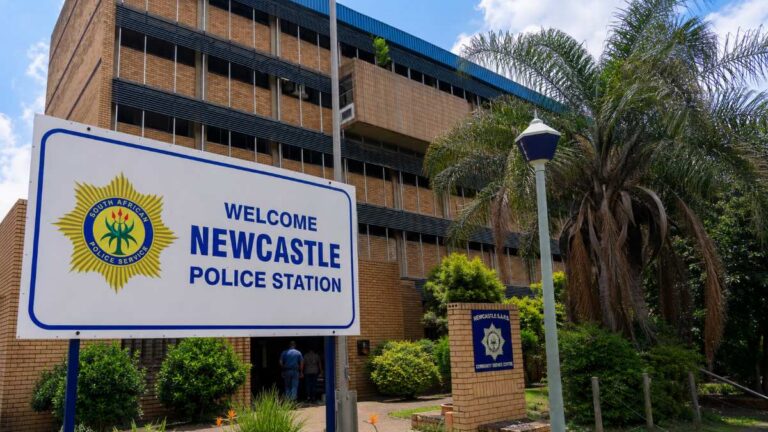
Government efforts to stabilise operations at ArcelorMittal South Africa’s Newcastle Works are intensifying as national and provincial leaders move to prevent the potential collapse of a key pillar of the country’s steel and ferrochrome industries.
Against this backdrop, a media briefing was held in Pietermaritzburg, where KwaZulu-Natal MEC for Transport Siboniso Duma appeared alongside Minister of Electricity and Energy Dr Kgosientsho Ramokgopa to outline government interventions aimed at safeguarding industrial capacity and protecting thousands of jobs linked to the steel producer’s operations.
PAID ADVERTISING
Addressing the briefing on Friday, 6 March 2026, MEC Duma stated that the intervention forms part of a broader directive issued by President Cyril Ramaphosa.
According to Duma, the President has tasked Minister of Trade, Industry and Competition Parks Tau, together with Dr Ramokgopa, with spearheading efforts to prevent ArcelorMittal South Africa (AMSA) from shutting down key operations. He added that the two ministers have already begun addressing several structural pressures facing the company, while simultaneously working to revive South Africa’s struggling ferrochrome sector.
Duma further indicated that government leaders intend to maintain a visible presence in affected regions, including Newcastle and Richards Bay, as part of a broader strategy to support economic recovery and protect industrial employment across KwaZulu-Natal. In this context, he highlighted measures outlined by Dr Ramokgopa that could help safeguard between 3,000 and 4,000 jobs linked directly to AMSA’s operations.
Although the MEC stopped short of disclosing the full scope of the government’s rescue plan, he pointed to the introduction of a comprehensive electricity tariff framework as one of the most significant interventions aimed at stabilising the ferrochrome industry.
As previously reported by Newcastillian News in early March 2026, the government announced a preferential electricity tariff of approximately 62 cents per kilowatt-hour (kWh) for ferrochrome producers. This framework, which was formally introduced on Friday, 27 February 2026, is expected to relieve financial pressures across the sector.
Against a backdrop of repeated warnings from ferrochrome producers, rising electricity costs have rendered many operations financially unsustainable.
Over the past several years, numerous furnaces across the sector have been shut down, while several companies have initiated retrenchment processes in response to mounting operational pressures. It is in this context that MEC Duma emphasised the significance of the tariff intervention, stating:
“This framework articulates debt relief and electricity tariff measures, which will be used to power ArcelorMittal into the future of prosperity. It will also bring back 45 smelters into production by December 2026.”
He further noted the scale of the current crisis within the sector, explaining that South Africa has a total of 66 smelters, yet only 11 are currently operational due largely to escalating electricity costs and market pressures.
Expanding on this point, Duma said:
“Flowing from above, the minister (Dr. Kgosientsho Ramokgopa) further informed us that producers were previously paying around R1.35 per kilowatt-hour. But, as directed by President Cyril Ramaphosa, he engaged with the National Energy Regulator of South Africa (NERSA), resulting in the reduction of tariffs to approximately 87 cents per kilowatt-hour.”
In addition to electricity tariff reforms, Duma also highlighted progress on another major infrastructure intervention.
According to the MEC, Dr Ramokgopa confirmed that construction of a gas-fired power plant at the Richards Bay Industrial Development Zone (IDZ) is moving forward.
The facility, which will incorporate both open-cycle and combined-cycle gas turbines, forms part of a broader strategy aimed at improving energy reliability along the province’s industrial corridor.
“The plant will have a maximum capacity of 3,000 megawatts. Consequently, we are looking forward to a future characterised by the provision of reliable and affordable electricity to the people of KwaZulu-Natal,” stated MEC Duma.
Meanwhile, Dr Ramokgopa indicated that the project would represent one of the largest single infrastructure investments in KwaZulu-Natal and could help address persistent energy constraints affecting major industrial players such as AMSA.
However, he emphasised that electricity interventions alone would not be sufficient to stabilise the company. In parallel, Ramokgopa noted that Minister Parks Tau is leading discussions on other structural challenges facing the steel producer, including engagements with Transnet — an issue AMSA has previously cited as a significant factor in its decision to wind down operations at its Newcastle Works.
“If the situation with AMSA saw it go under without any form of intervention, it would be a great tragedy. Of course, President Ramaphosa has directed us to do everything in our power to save the company. We will work with the industry and demonstrate our commitment, while Minister Tau continues his discussions with AMSA.”
Newcastillian News reached out to ArcelorMittal South Africa for comment on the interventions announced during the 6 March 2026 briefing.
At the time of publication, AMSA had not responded to questions regarding the immediate impact of the electricity tariff reductions, the potential role of the Richards Bay gas-fired power plant, or the progress of parallel measures led by Minister Parks Tau, including structural and logistical discussions with Transnet.
The enquiry also sought clarity on the company’s assessment of employment risks at Newcastle Works and whether the government’s multi-ministerial rescue strategy provides a viable path toward restoring operations.
While AMSA’s perspective remains pending, the briefing underscores the scale and urgency of government action.
Ministers framed the interventions as a coordinated effort to stabilise Newcastle Works, revive the ferrochrome and steel sectors, and protect thousands of jobs. Together, these measures signal that electricity relief, infrastructure investment, and structural engagement must converge to prevent the potential collapse of a cornerstone of South Africa’s industrial landscape.
Independent. Unbiased. Human.
The ultimate outcome, however, will depend on effective implementation and AMSA’s engagement — leaving the future of Newcastle Works delicately balanced as decisions made in the coming months shape the province’s industrial recovery.vince’s industrial recovery.
What are your thoughts on this? Let us know below.
How many jobs could be affected at AMSA Newcastle Works?
Government officials say between 3,000 and 4,000 jobs linked to ArcelorMittal South Africa’s Newcastle Works could be preserved through current interventions.
What government measures are being introduced to support AMSA?
The plan includes electricity tariff relief for ferrochrome producers, infrastructure investment such as a gas-fired power plant at the Richards Bay IDZ, and structural discussions involving Transnet and industry stakeholders.
Why are ferrochrome and steel producers under pressure?
Producers have faced sharp electricity cost increases, logistical constraints, and global market pressures, forcing many furnaces to shut down and threatening employment across the sector.
What role will the Richards Bay gas plant play?
The proposed 3,000 MW gas-fired power plant aims to provide more reliable and potentially more affordable electricity to industrial operations across KwaZulu-Natal.
One Response
They must not waist time, cause at Amsa they are busy breaking everything,they must check what is left inside
Newcastillian News invites your input. We ask that you keep your remarks courteous and on-topic. We do not allow any form of hate speech, such as racist or sexist comments. All comments are subject to moderation in line with our User Rules and Commenting Policy.












One Response
They must not waist time, cause at Amsa they are busy breaking everything,they must check what is left inside