


The bolts are being tightened on Newcastle’s industrial industry, a sector with somewhat of a checkered history. After years of exploitation by certain factories and lax enforcement, local authorities and national departments have now shifted from warnings to decisive action.
During the final week of September 2025, the Department of Labour spearheaded a sweeping inspection operation led by Deputy Minister of Employment and Labour, Jomo Sibiya.

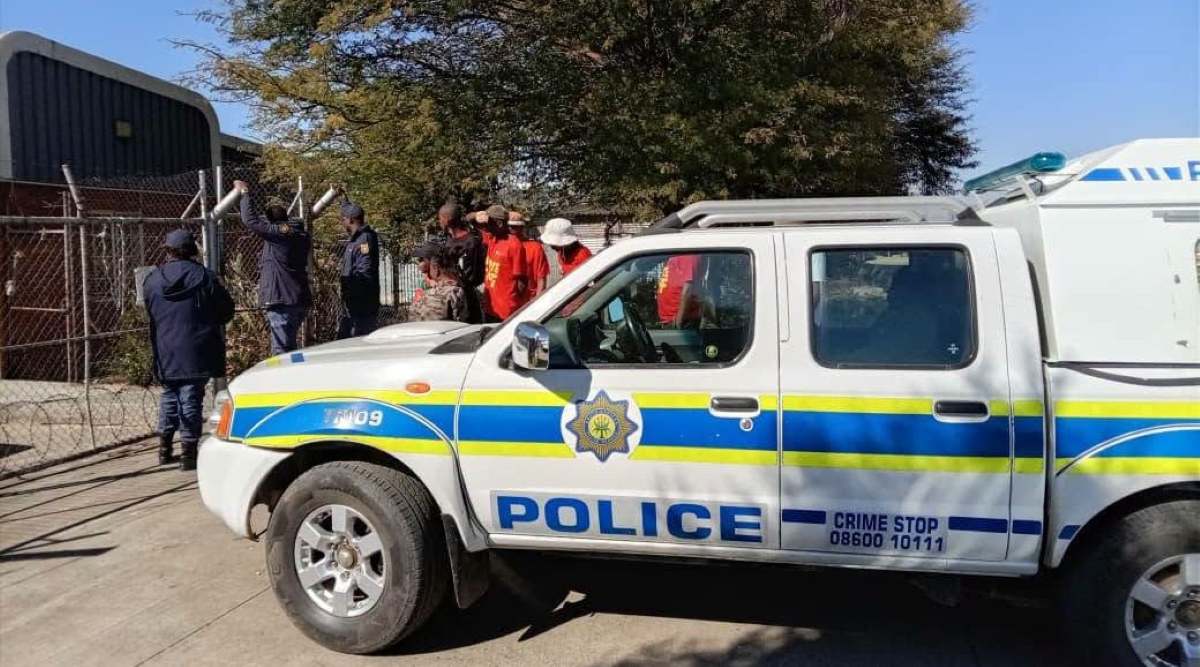
Backed by officials from the South African Police Service (SAPS), the Department of Home Affairs, the Bargaining Council, and the Newcastle Local Municipality, the task force conducted unannounced inspections at eight factories across Newcastle.
What they found was damning. Investigators uncovered serious breaches of labour and immigration laws, prompting the immediate closure of four factories. Authorities detained 256 illegal immigrants found working in deplorable conditions, while one Chinese national was apprehended attempting to hide 48 undocumented workers inside a truck during the inspection.
The operation sent shockwaves through Newcastle’s industrial circles, exposing deep-seated issues that have plagued the sector for years.
In the wake of the revelations, both the Newcastle Local Municipality and SAPS have vowed to tighten their grip on the industry.
On Monday, 13 October 2025, the Newcastle Local Municipality met with the Chinese Consul General and representatives of the Chinese Chamber at the Mayor’s Parlour. The meeting, described by municipal officials as “crucial,” focused squarely on non-compliance and regulatory breaches within the industrial sector.
“The municipality reaffirmed its commitment to upholding the laws and regulations governing industrial operations, stressing the imperative for factories to operate within their designated parameters and adhere to permit requirements,” emphasised the Communications Unit.
Discussions extended beyond factory compliance, touching on allegations of unlicensed tuck shops and taverns, exploitative labour conditions, and substandard living quarters for workers—issues that have long sparked outrage within the community.
In response, municipal representatives announced a new course of action.
“The Municipality intends to convene a meeting with factory owners and leadership to delineate necessary compliance measures. The Newcastle Municipality remains resolute in its dedication to enforcing its bylaws, prioritising worker welfare, and promoting a safe and responsible industrial environment,” stated the Communications Unit.
While the meeting was viewed as a constructive step forward, municipal leaders made it clear that goodwill alone would not suffice. They reaffirmed their determination to work alongside the Chinese Chamber, factory owners, and relevant stakeholders to restore order and accountability in Newcastle’s industrial sector.
However, law enforcement has made it equally clear that oversight will no longer be passive. Amajuba District SAPS spokesperson, Constable Nonjabulo Langa, confirmed that tighter surveillance and enforcement operations are already in motion.
“The SAPS will now monitor the local factories closely. Also, the police will be conducting more operations, although I cannot say what these operations will entail or when they will take place,” said Constable Langa. She added that officers would act decisively to ensure compliance, noting that police would inspect factory premises with or without the owners’ cooperation if necessary.
The crackdown represents a pivotal moment for Newcastle—a city where textile production once symbolised economic promise but has increasingly come to reflect deeper challanges.
As authorities now draw a hard line, the future of the local textile industry may well depend on whether its leaders choose to comply with the law—or face the full force of it.
It should be stressed that the focus on Newcastle’s industrial sector has been a long time in the making. As reported by Newcastillian News, the pattern began crystallising with the 17 November 2022 arrests of around 100 illegal workers during multi-agency raids on Newcastle factories, exposing deplorable living conditions, 24-hour shifts, and wages as low as R500 per week. Inspections on 24 November 2022 revealed results from Department of Labour probes into factories, confirming violations like excessive hours and poor safety.
These incidents echoed later discoveries, like the 11 September 2023 raid uncovering 15 illegal foreign nationals from Lesotho working at a local factory, leading to arrests and planned deportations.
A post-fire inspection on 5 March 2024 at a Gutenberg Street factory exposed similar breaches, such as inadequate ventilation, locked-in workers, and wages below the national minimum, primarily affecting undocumented Lesotho nationals who hid during the raid. Just days later, on 7 March 2024, the department confronted ongoing labour violations in the textile industry, including sub-minimum wages and unsafe conditions.
By 14 March 2024, the clothing sector was facing stern labour law enforcement, with the Department of Employment and Labour highlighting persistent issues like caging workers, employing undocumented nationals, and evading inspections through tactics such as using guard dogs or hiding employees.
This built toward further labour crackdowns, such as the mayor-led engagement on 10 July 2024 to curb illegal immigrant employment in factories, followed by the 22 July 2025 launch of audits targeting 38 factories in the Riverside Industrial area to address widespread non-compliance with bylaws.
This included the discharge of untreated industrial effluent into municipal sewers, which contaminated waterways and overburdened treatment facilities.
Furthermore, Newcastle’s textile industry now faces an uncompromising spotlight.
The recent operations have made clear that violations of labour and immigration laws will no longer be tolerated, and that oversight will be relentless.
This is a pivotal moment in which factory owners are being held accountable not only for compliance but for the broader ethical responsibility of their operations.

The future of Newcastle’s industrial sector will be shaped by the choices made today. Factories that embrace lawful operations, safeguard worker welfare, and commit to transparency may restore public trust and ensure long-term viability, thereby, reigniting this large scale sector.
Conversely, continued non-compliance risks further closures, legal action, and lasting reputational damage. In essence, Newcastle’s textile industry must now reconcile profit with responsibility—setting a precedent for ethical, lawful, and sustainable industrial growth.
With all this in mind, what are your thoughts? Let us know below and be sure to read, SA’s blue-collar decline: Why clinging to old industries could cost the nation its future, if you missed it.