

As uncertainty around ArcelorMittal South Africa’s future in Newcastle continues, positive developments are unfolding at the Karbochem Industrial Park, where Lions Bay Energy has taken control of the long-idle KCE Plant and committed approximately R200 million to its phased redevelopment.
For Newcastle and the wider Northern KwaZulu-Natal region, the project’s significance extends beyond the scale of the investment.
It represents an attempt to reactivate dormant industrial infrastructure, strengthen local energy supply, and put existing skills and services back to work in one of KwaZulu-Natal’s most established industrial towns.
The project’s current direction can be traced back to December 2025, when Newcastillian News reported that AIM-listed Metals One PLC had secured an option to purchase the plant for US$1.8 million, approximately R30.8 million, into Lions Bay Resources.
As Metals One told investors at the time:
“Research and planning has commenced around modifying the Plant to produce power and steam whilst also roasting refractory gold concentrates, common to mines in the region.”
To read more, click here.
In early June 2026, that transition was formally confirmed when the Newcastle Municipality announced that Lions Bay Energy had successfully finalised the acquisition of the former KCE Plant situated within the Karbochem Industrial Park.
As reported by Newcastillian News at the time, the Municipality clarified that the acquisition marked the start of Phase One of a structured investment programme.
In practical terms, this phase involves the refurbishment and recommissioning of the facility over a 12-18 month period, while also laying the foundation for renewed industrial activity, job creation and energy supply capacity in the area.
To read more, click here.
Speaking to Newcastillian News during an on-site interview and tour, Lions Bay Energy CEO Martin Kruse explained that the project’s original concept had changed as technical and commercial assessments progressed.
While early planning included gold refractory processing, Kruse said the focus gradually shifted toward energy production as a more viable and scalable long-term use for the site.
According to him, this was not a sudden change in direction, but rather the result of aligning the plant’s existing engineering purpose with the realities of industrial demand in Newcastle.
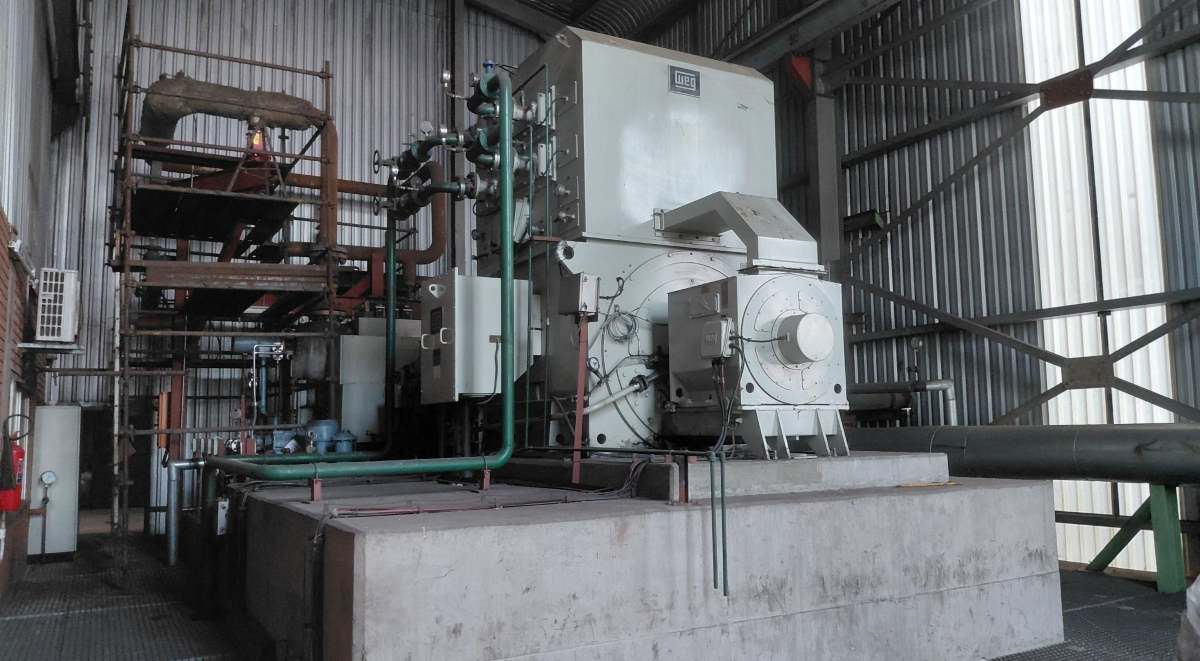
Pointing to the facility’s original design, Kruse explained that the plant was built and integrated directly into the Karbochem site infrastructure.
“Commissioned in 2014, the plant is situated next to the old Karbochem Boilers; this was due to the boilers being old, and the site required a new source of steam,” he explained.
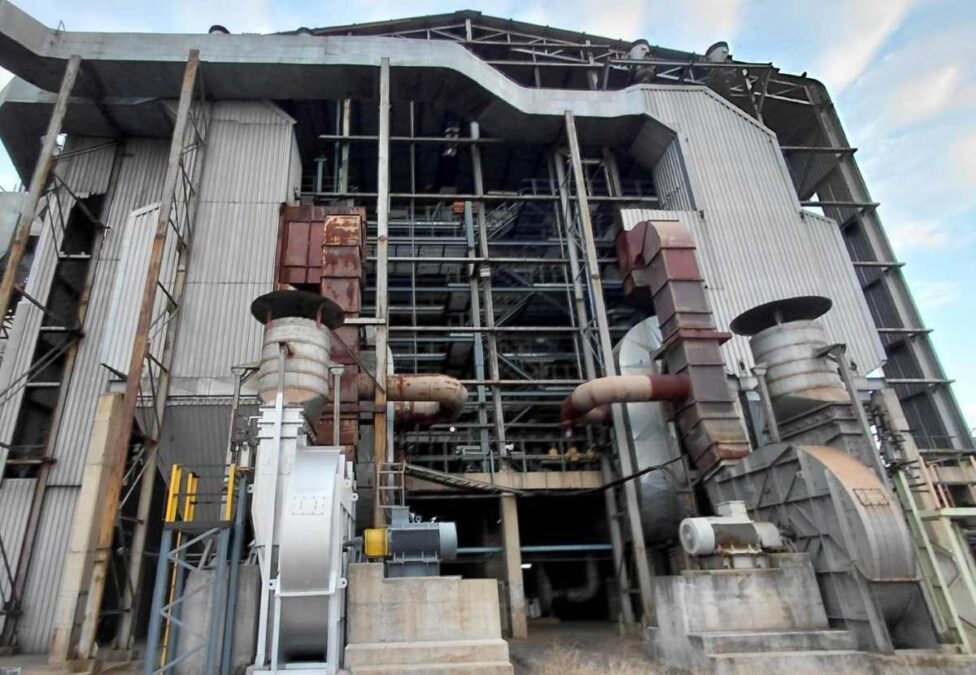
Furthermore, the current strategy is not simply to restart an old facility in isolation, but to reposition it as an embedded energy supplier within a functioning industrial cluster.
“To make this plant fully operational again will cost around R200 million and most of this money will go into this community, as it is highly industrialised, and much of the project’s requirements can be met and provided within Newcastle,” emphasised Kruse.
This point is central to the project’s regional importance.
If delivered as planned, the R200 million redevelopment will not only be spent on equipment and infrastructure, but also on local engineering, fabrication, contracting, and skilled labour.
While certain specialised components will need to be imported, Kruse indicated that much of the work can be sourced from within Newcastle. After erection and construction, he added that the plant will be maintained and operated by local expertise.
“The expertise in this town is enormous,” he said.
For a town with a deep industrial history, this is a significant and valuable statement.
When looking at the town, Newcastle’s challenge has never been a lack of industrial knowledge or skill. Rather, it has been the steady loss of operational demand as key industrial sites slowed, shut down or scaled back over time.
In that context, the Lions Bay redevelopment is not merely another investment announcement. It is a test of whether dormant industrial capacity can be brought back into productive use, with local companies and workers forming part of the process.
Nevertheless, as per Kruse, the plant will be progressively refurbished and recommissioned. Alongside this, supporting infrastructure will be expanded to ensure continuous steam delivery to BroChem, directly linking energy production to industrial consumption on site.
From a technical perspective, the project also introduces a distinct fuel strategy.
Kruse explained that the plant is designed to operate on discarded, low-grade coal that is typically not usable elsewhere.
“We only burn discarded coal which no one wants. So, we never mine, but only use coal that other companies don’t or cannot use,” he highlighted.
From Lions Bay Energy’s perspective, this forms part of a practical fuel model that avoids new coal mining and instead uses material that would otherwise remain as waste.
The company also argues that this approach reduces long-term pollution risks associated with discarded coal stockpiles.
In addition, Kruse said emissions are managed through a desulphurisation process that occurs at high temperatures in the furnaces, which eradicates reliance on conventional water-intensive treatment systems.
He further explained that ash generated during combustion is not simply discarded, but can be repurposed for industrial and masonry applications. This, according to the company, reduces waste outputs and contributes to a more circular operating model.
On efficiency, Kruse distinguished the Lions Bay Energy model and conventional thermal power generation.
He explained that conventional thermal plants typically lose a significant portion of energy once steam passes through turbines and is condensed.
“That’s why you’ll always hear a thermal plant is at about 30% efficient.”
In contrast, Kruse said the Lions Bay Energy plant operates at close to 80% efficiency, as the steam leaving the turbine is reused as process steam rather than being wasted or released into the atmosphere.
As highlighted by Kruse, the practical implication of a co-generation plant is that it must be situated right next to a factory that requires the steam, and this is where the project’s location becomes central to its viability.
Against this backdrop, the facility is not being positioned as a national-scale power station, but as an industrial energy optimisation hub.
Its strength lies in proximity: producing power and steam where industrial users can immediately consume both.
In practical terms, this means the plant’s success depends heavily on the surrounding industrial environment.
The more activity that returns to Karbochem, the stronger the case becomes for embedded steam and power supply.
Conversely, the plant’s ability to provide reliable and competitive energy could make the industrial park more attractive to future users.
Kruse summed up the broader intention perfectly:
“What we are trying to do is reindustrialise Karbochem.”
That statement captures the strategic weight of the project.
For Newcastle, the redevelopment comes at a time when local economic growth depends increasingly on whether existing industrial infrastructure can be restored, modernised and tied to realistic commercial demand.
Building new industrial facilities from the ground up is costly. Dormant sites, by contrast, already have many of the fundamentals in place, including roads, power connections, industrial zoning, engineering layouts, and decades of local knowledge.
However, these assets only become valuable again when capital, technical execution, and commercial demand come together.
In this case, BroChem remains central to the operational roadmap, while Lions Bay Resources appears to be shifting away from its original gold roasting concept locally, in favour of an energy generation-led expansion strategy.
Jointly, during the interview, Kruse explained that Lions Bay Mining is advancing a separate mining initiative, which is expected to draw on Newcastle-based labour during its upcoming phases.
This extends the group’s local economic footprint beyond energy alone.
Furthermore, during Newcastillian News’ site visit, Kruse provided a guided walkthrough of the refurbishment work already underway. The visit offered a direct view of the scale of the project, with long-dormant infrastructure now being assessed, reimagined, and prepared for renewed operation.
Importantly, this was not a staged boardroom presentation or distant project briefing.
Newcastillian News accompanied Kruse through the plant, viewing the infrastructure, planned modifications, and upgrades required to bring the facility back into operation.
This access provided a clearer sense of how the project will be executed on the ground, while also showing that the redevelopment has moved beyond theoretical planning.
The true measure of the project, however, will not rest on announcements alone.
Its impact will be determined by whether the old KCE Plant can return to sustained operation, reliably supply steam and power, support BroChem’s industrial requirements, draw in auxiliary services, and keep more economic value circulating within Newcastle.

For now, the Lions Bay Energy project has become one of the clearest tests of Newcastle’s industrial future: whether legacy infrastructure can be transformed into functioning output, and whether the town’s existing skills base can help drive a new phase of industrial activity rather than watch old assets remain silent.
What are your thoughts on this? Let us know below.
While you are here, be sure to read: ANC and Transport MEC Respond After Former Newcastle Mayor Dies in Allen Street Accident