


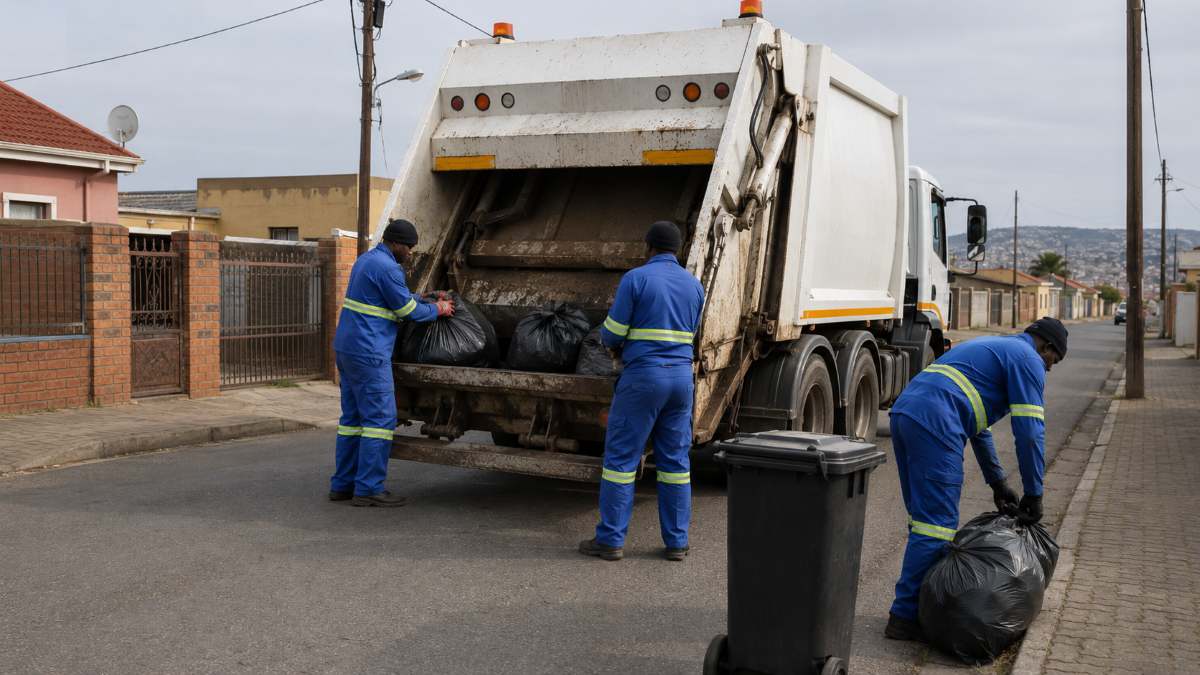
For residents, the temporary withholding of municipal funds is not just an accounting issue in Pretoria.
It raises a more direct question: could this eventually affect water, sanitation, infrastructure repairs and the basic services communities already struggle to rely on?

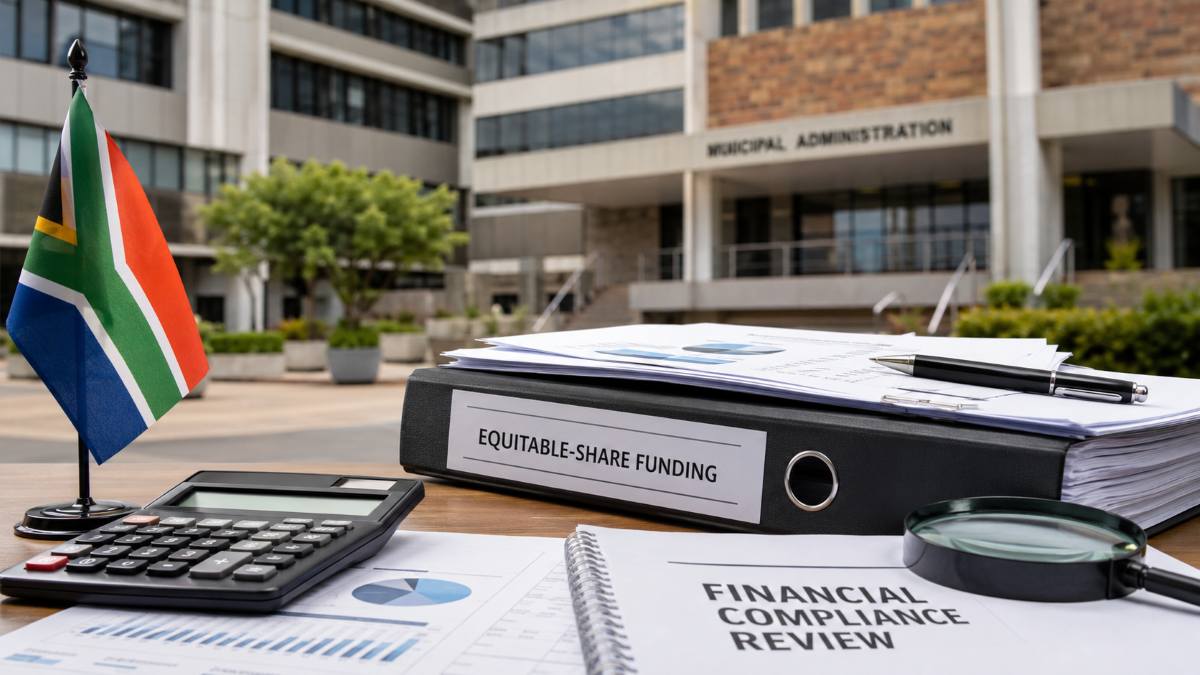
That question now hangs over several KwaZulu-Natal municipalities, including Newcastle Local Municipality, eMadlangeni (Utrecht) Municipality, Amajuba District Municipality and AbaQulusi Municipality, after National Treasury confirmed that 69 municipalities are facing the temporary withholding of their July 2026 equitable share transfers.
Treasury, however, insists the measure is not intended to collapse municipal operations or punish residents.
Addressing the media in Pretoria on Wednesday, 8 July 2026, Deputy Director-General for Intergovernmental Relations, Ogalaletseng Gaarekwe, said the department does not expect the decision to materially affect service delivery.
He explained that municipalities are still largely funded through their own revenue, with the withheld portion forming only part of the broader local government funding picture.
“This time last year, we had withheld for 75 municipalities, but I can assure you that by early August, we had already released the money for everyone. So, it depends on how fast the municipalities sort out the payment plans and send us those payment plans,” said Gaarekwe.
In practical terms, Treasury says the process works in stages.
Once municipalities submit signed payment arrangements with creditors, portions of the equitable share can be released. As municipalities then honour those arrangements, the full allocation may be restored.
“We are not expecting it to impact service delivery because the majority of the funding at local government level is raised from own revenue,” Gaarekwe said, noting that the withheld amount is about R13.5 billion out of a total equitable share allocation of approximately R100 billion.
While that may sound technical, the underlying issue is simple: municipalities are being pushed to pay what they owe, budget realistically and stop allowing financial problems to roll from one year into the next.
Gaarekwe said Treasury’s action is aimed at changing behaviour inside municipalities, especially where councils fail to pay creditors despite having legal and financial obligations to do so.
“In our view, we are correcting the behaviour in municipalities. We need to get into the habit of paying our creditors. There are instances where pension fund monies are taken from salaries, but they are not paid over. So, if something happened… families are not able to claim because the municipality did not pay. We are trying to make sure that people do not get used to not paying,” he explained.
Treasury also said municipalities were given an opportunity to respond before the withholding was implemented.
“The first set of letters was sent to municipalities on the 22nd of June and the 23rd. At that time, we wrote to 99 municipalities and 30 responded in a way that we have not withheld their money,” Gaarekwe said.
Basically, Treasury is not saying municipalities are without problems.
It is saying the withholding is meant to force correction before those problems cause deeper damage.
That damage, according to Chief Director of Local Government Budget Analysis, Jan Hattingh, can move far beyond municipal balance sheets.
He warned that when municipalities fail to pay key creditors, the consequences can eventually reach the public through weakened water services, strained suppliers and delayed infrastructure delivery.
“As a result of this action, jointly with the Department of Water and Sanitation, two water boards that were on the brink of being closed are still operational. If a water board cannot proceed and provide services, the impact of that is much more negative, and that means communities cannot get water.
“There’s certainly a linkage to the Auditor General South Africa’s 2024/25 Consolidated General Report on Local Government Audit Outcomes, but what we are trying to solve is that when the Auditor General’s report is released, it’s after the event. What we have observed is that many councils adopt a budget that is not funded,” Hattingh said.
This is where the matter becomes more than a Treasury compliance exercise.
If a municipality adopts an unfunded budget, fails to deal with irregular expenditure, or does not act against financial mismanagement, the consequences eventually filter into everyday service delivery.
“If you don’t plan well and you overspend your budget, that portion is regarded as unauthorised expenditure,” Hattingh said.
He added that Treasury has provided support to municipalities, including frameworks for consequence management, but stressed that councils still make the final decisions.
“We have even developed a framework for them to deal with consequence management. Ultimately, the councils make the final decisions, and therefore, they make the final choices.
“We are concerned that services are not rendered to communities. This is one of the issues that we are grappling with. However, the real concern is the fact that if municipalities don’t use grants productively and from time to time, the money gets surrendered back to the revenue fund. That is not the desired effect that we want because those services and that funding are meant to facilitate service delivery. Hence, we are working with provincial Treasuries and partners to equip municipalities to improve their planning and budgeting systems so that they can use this money properly, and citizens benefit from allocated resources,” Hattingh said.
As previously reported by Newcastillian News on Tuesday, 7 July 2026, the withholding of the July 2026 equitable share follows what Treasury described as ongoing failures in municipal financial governance. These include failures linked to Unauthorised, Irregular, Fruitless and Wasteful Expenditure, unfunded budgets, weak consequence management and non-compliance with the Municipal Finance Management Act.
Treasury confirmed at the time that the intervention is being implemented in terms of section 216(2) of the Constitution, read with section 38 of the Municipal Finance Management Act 56 of 2003.
To read the previous article, click here.
Following the announcement, Newcastillian News sought comment from Newcastle Municipality, eMadlangeni Municipality, Amajuba District Municipality and AbaQulusi Municipality.
Initially, only eMadlangeni responded, indicating that steps were being taken to address the matter.
Amajuba District Municipality has since provided a more detailed response, stating that it respects Treasury’s constitutional mandate to enforce fiscal discipline and safeguard public funds.
“The Municipality respects the constitutional mandate of the National Treasury under Section 216(2) of the Constitution and Section 38 of the Municipal Finance Management Act (MFMA) to enforce fiscal discipline and safeguard public funds.”
The district municipality confirmed that it is working with the KwaZulu-Natal Department of Cooperative Governance and Traditional Affairs and KZN Provincial Treasury to resolve the outstanding issues.
“The Municipality assures residents that it will continue to engage with relevant stakeholders to resolve this matter to ensure that essential service delivery is not impacted. The Amajuba District Municipality will also continue to monitor operations closely to safeguard access to basic services such as water, sanitation, and disaster management,” the municipality stated.
It added that the District Mayor and Council remain committed to restoring fiscal discipline, strengthening governance systems and rebuilding public confidence.
At the time of publication, Newcastle Municipality and AbaQulusi Municipality had not responded to requests for comment.
While the issue affects several municipalities, financial pressure is also building elsewhere in northern KwaZulu-Natal.
In Endumeni Municipality in Dundee, KZN Finance MEC Francois Rodgers has issued a directive requiring the municipality to adopt its 2026/27 budget by 13 July 2026. This follows the municipality’s failure to pass the budget at a Council meeting held on 30 June 2026.
According to KZN Treasury, failing to adopt a budget before the start of the financial year breaches constitutional and legislative obligations.
Rodgers warned that continued non-compliance could lead to intervention.
“The approval of a credible and funded budget is a legal obligation and is essential to safeguarding service delivery. Endumeni has been advised in no uncertain terms that it must adopt a sustainable budget within the prescribed timeframe. Our objective remains to support the municipality in restoring financial stability while protecting the interests of residents.”
Should Endumeni fail to meet the deadline, and once all other remedial options have been exhausted, Section 139(4) of the Constitution may be invoked.
This could result in the dissolution of the Municipal Council and the appointment of an Administrator.
For now, Treasury’s position is that residents should not see an immediate disruption to services because of the withheld equitable share. But that does not remove the concern.
Instead, the issue exposes a deeper problem: municipalities cannot continue relying on last-minute interventions, delayed payment plans and Treasury pressure to keep their finances on track.
The coming days will show how quickly the affected municipalities move to satisfy Treasury’s requirements and secure the release of funds. More importantly, they will show whether councils are prepared to address the financial habits that placed them under scrutiny in the first place.
For communities, the test is not whether a municipality can submit a payment plan.
It is whether proper financial management begins to translate into stable water supply, functional sanitation, maintained infrastructure and visible service delivery.
Until then, the withholding of funds remains more than a technical Treasury process. It is a warning sign that municipal finances, if left unchecked, can quickly become a service delivery problem for residents.
What are your thoughts on this? Be sure to let us know below.
Do not forget to read: SA Mint’s New Coin Range Includes 1kg Gold Coin Priced at R3.7 Million









2 Responses
Yes yes. They must held it back. Let they suffer. The water is so dirty that we must in anyway get water at the shop.
And i already waiting 1 year and 3 months for them to check my claim after i had a tumble in one of their potholes. I am still waiting.
I’m highly concerned about kgetleng municipality because is also corrupt no service delivery at all,we paying for proof of residence document @ a tune of R8,00 with no receipt,so we request for SIU to come and investigate because there’s a lot b