

South Africa’s sugar industry remains under mounting pressure as a protected wage strike enters its second week, while local producers simultaneously contend with a substantial increase in imported sugar.
Workers in the sugar manufacturing and refining sector are demanding improved wages and benefits after negotiations between organised labour and employers reached a deadlock.

Food and Allied Workers’ Union (FAWU) President Nico Ndima confirmed during an interview with SABC News that workers were demanding a 13% wage increase, while employers had offered 5.4%. Ndima said a proposed 6% settlement had previously been considered during the negotiating process but was rejected, resulting in workers returning to their original position.
While the dispute centres on wages and employment conditions, its significance extends well beyond the workers directly involved.
According to the South African Sugar Association (SASA), South Africa currently has 12 operational sugar mills, with 10 situated in KwaZulu-Natal and two in Mpumalanga. The six milling companies represented within the industry are Illovo Sugar South Africa, Tongaat Hulett, RCL FOODS, UCL Company, Umfolozi Sugar Milling and Gledhow Sugar Company.
This concentration makes KwaZulu-Natal particularly exposed to developments affecting sugar production, with the industry woven into agricultural, manufacturing and rural economies across large parts of the province.
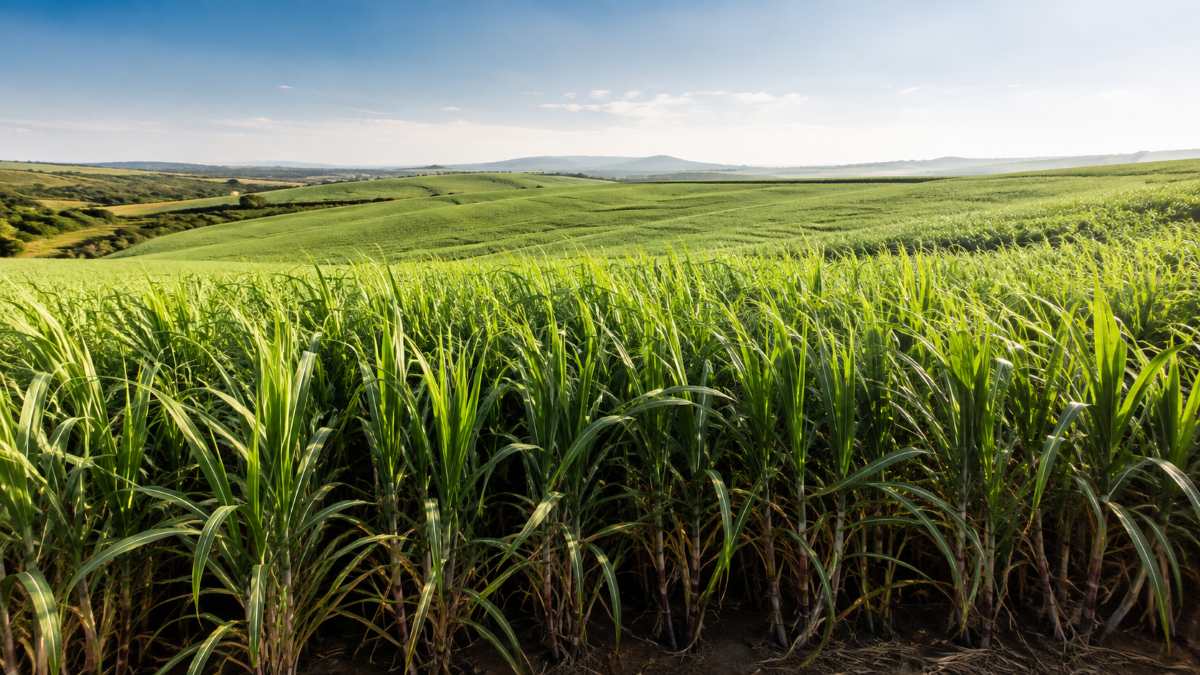
SASA states that the South African sugar industry generates approximately R24 billion in direct annual income, creates around 65,000 direct jobs and 270,000 indirect jobs, while approximately one million people depend on sugarcane growing and milling activities for their livelihoods.
Around 25,000 registered sugarcane growers operate across KwaZulu-Natal and Mpumalanga, while the country’s mills produce an average of approximately 2.2 million tonnes of sugar per season, according to SASA’s industry figures.
The labour dispute also arrives at a difficult point for producers following a sharp increase in imported sugar entering South Africa.
In a media statement issued on 27 July 2026, SA Canegrowers revealed that SARS data showed South Africa imported 94,984 tonnes of sugar between January and May 2026, compared with 55,213 tonnes during the corresponding period in 2025.
For perspective, imports during the first five months of 2022 amounted to just 1,491 tonnes.
SA Canegrowers further reported that local sugar sales between 1 April and 30 June 2026 amounted to 255,015 tonnes, representing a decline of more than 45,000 tonnes compared with the same period in 2025.
The organisation said imported sugar was predominantly entering the country from producers such as Brazil, India and Thailand, arguing that differences in state support and production structures allow foreign sugar to compete aggressively with locally produced products.
SA Canegrowers has consequently called on Trade, Industry and Competition Minister Parks Tau to finalise changes to South Africa’s sugar tariff mechanism, which is currently being assessed by the International Trade Administration Commission.
The scale of the import problem has also been acknowledged directly by government and the wider sugar industry.
When Phase Two of the Sugarcane Value Chain Master Plan to 2030 was signed in Durban in April 2026, the Department of Trade, Industry and Competition reported that deep-sea sugar imports had exceeded 197,000 tonnes during the 2025/26 season, representing estimated industry revenue losses of approximately R1.5 billion.
The second phase of the Master Plan is intended to improve the industry’s long-term competitiveness, preserve employment and expand the sector beyond conventional sugar production into areas including biofuels and other sugarcane-derived products.
Against this backdrop, disruption within the milling industry presents another complication for a sector government has already identified as strategically important.
This is particularly evident in the recent battle to secure the future of Tongaat Hulett, one of the most important companies within KwaZulu-Natal’s sugar economy.
In June 2026, an agreement between the Industrial Development Corporation and Vision consortium created a pathway for Tongaat Hulett to remain in business rescue rather than proceed into liquidation.
According to SA Canegrowers, the agreement provided short-term funding to maintain operations and paved the way for implementation of the company’s business rescue plan. The organisation said more than 17,500 sugarcane growers supply Tongaat Hulett, while the company operates three sugar mills and South Africa’s largest standalone white-sugar refinery.
The national government has similarly described Tongaat Hulett as a systemically important player in South Africa’s sugar value chain, particularly because of its impact on jobs, growers and rural economic activity in KwaZulu-Natal.
The dtic has previously stressed the importance of safeguarding the company, the broader sugar sector and the jobs connected to it.
The current wage dispute therefore lands in an industry already attempting to balance worker costs, the financial sustainability of mills, competition from imported sugar and the economic interests of thousands of growers.
For workers, the dispute revolves around securing better remuneration as household expenses continue to place pressure on earnings.
For employers and growers, it unfolds against an increasingly difficult trading environment in which locally produced sugar is losing domestic market share to imports.
With 10 of the country’s 12 sugar mills situated in KwaZulu-Natal and approximately one million livelihoods nationally linked to the broader industry, the eventual outcome of the wage negotiations will reach considerably further than the mill gates.
The challenge now is whether labour and employers can find common ground without placing additional strain on an industry that remains critically important to KwaZulu-Natal’s rural economy and South Africa’s agricultural and manufacturing sectors.
What are your thoughts on this? Be sure to let us know below.
Do not forget to read: Parliament Scrutinises Stalled KZN Infrastructure Projects