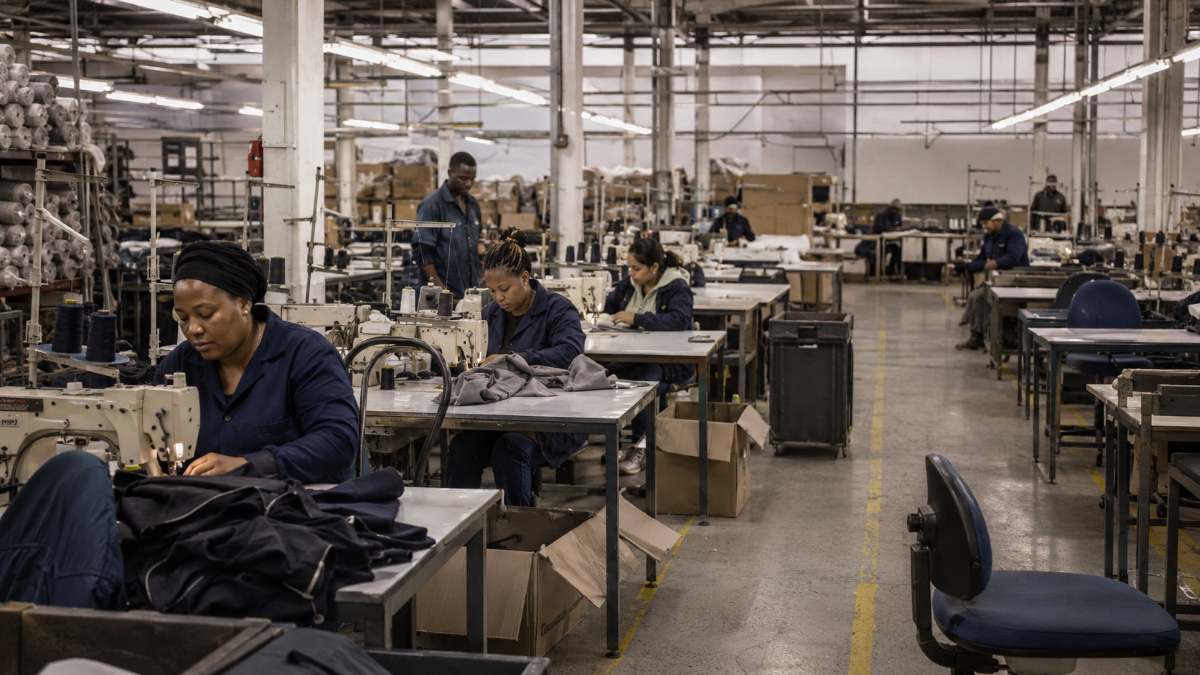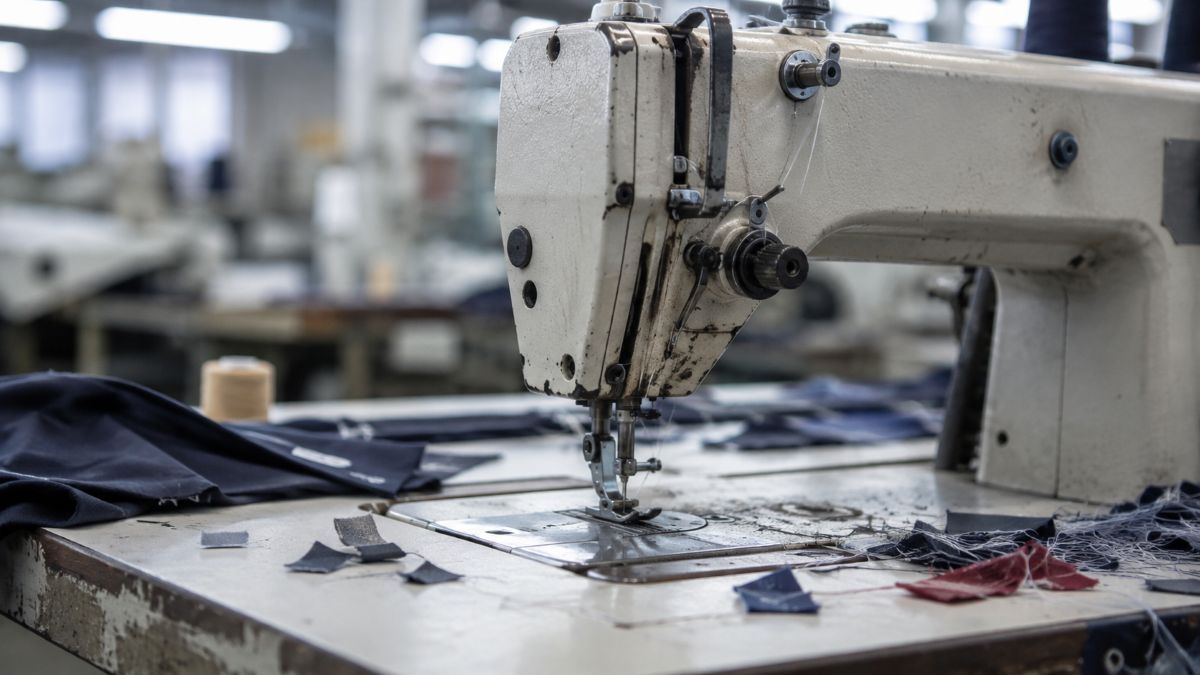
Newcastle’s clothing manufacturing sector is facing a fresh operational challenge, with factory owners reporting difficulty replacing experienced foreign workers who recently left the town, at a time when local Cut, Make and Trim businesses are already dealing with sharply reduced orders.
According to a Reuters report by journalists Nellie Peyton and Thando Hlophe, published on Thursday, 6 August 2026, several Newcastle clothing manufacturers have struggled to fill vacancies following weeks of anti-immigrant protests.

Reuters visited three Newcastle factories during late July, where the respective owners reported losing between 12% and 19% of their workforces.
The Southern African Clothing and Textile Workers’ Union (SACTWU) estimated that approximately 15% of Newcastle’s 15,000 textile workers had left during the protests. However, Reuters noted that it remained unclear how widespread the reported labour shortages were across the wider industry.
Newcastle factory owner, Alex Liu told Reuters that some of the employees who left possessed garment-manufacturing experience that could not immediately be replaced.
“We can’t immediately replace these skills with locals,” he said.
Another factory owner interviewed by Reuters said he had begun training seven South African employees after losing approximately 40 foreign workers during June.
However, he maintained that financial constraints prevented the business from training a substantially larger group at the same time.
While factory owners presented the departures as a skills challenge, SACTWU representative Siyabonga Ntombela disputed the suggestion that South Africa lacked qualified machinists.
“We have plenty of qualified machinists in South Africa,” he told Reuters.
According to Ntombela, the positions were proving difficult to fill because of low pay and the daily transport costs faced by South Africans travelling to Newcastle’s industrial areas.
Reuters reported that some migrant employees lived at or near the factories where they worked, while local employees commuting from surrounding communities had to absorb transport expenses from already limited earnings.
Furthermore, labour market researcher Siphelele Ngidi further told Reuters that attracting South Africans into manufacturing employment depended on more than the availability of vacancies.
He pointed to wages, working conditions and limited opportunities for career advancement as factors influencing whether people considered factory employment worthwhile.
The Department of Employment and Labour reportedly said it was unaware of labour shortages within the sector and advised factory owners experiencing recruitment difficulties to approach the Department for assistance.
The differing positions demonstrate that the situation cannot simply be presented as South Africans being unwilling to work or factory owners refusing to hire local employees.
Instead, it points to a disagreement over whether the main obstacle is a shortage of experienced machinists or employment conditions that make factory work financially unattractive to South African jobseekers.
The worker departures come as Newcastle’s clothing manufacturers are already facing a substantial decline in orders.
As reported by Newcastillian News on 23 July 2026, Liu claimed that manufacturing orders across parts of Newcastle’s CMT sector had fallen by as much as 50% compared with the corresponding period in 2025.
He told Newcastillian News that the decline had forced several factories to place employees on short time, temporarily send workers home and concentrate on remaining operational until the traditionally busier manufacturing period between September and December.
Liu further claimed that retailers and suppliers had become reluctant to place orders with Newcastle factories following the national scrutiny directed at the town’s clothing industry.
According to him, the resulting reputational damage affected factories across the sector, including businesses attempting to improve their compliance and operating standards.
The 50% figure was provided by Liu as a local industry representative and has not been presented as an independently audited measurement covering every Newcastle factory.
However, the reduction in orders described during Newcastillian News’ July interview closely aligns with the financial pressure now being reported by Reuters.
According to Reuters, factory owners said the production prices paid for clothing left little room to increase wages or train large numbers of new employees.
Manufacturers reportedly received as little as R11.50 to produce a pair of jeans, while the production payment for a T-shirt could be less than half that amount.
These figures refer to the amount paid to the factory for manufacturing the garment and not the eventual retail price paid by the consumer.
From the manufacturing payment, factories must cover wages, electricity, machinery, training, administration and other operating expenses.
Reuters further reported that workers in parts of the industry were paid according to the number of garments they completed. According to the report, only the most productive workers were likely to earn the full national minimum wage of R30.23 per hour, while many earned less.
Nevertheless, low production prices do not remove an employer’s responsibility to comply with South African labour legislation.
However, the pricing described by factory owners raises questions regarding whether the amounts paid throughout the clothing supply chain realistically support lawful wages, employee training and financially sustainable local manufacturing.
The pressure created by declining orders also limits the ability of factories to respond to the reported worker departures.
A business receiving less work has less income available to recruit, train and retain inexperienced employees. However, a shortage of experienced workers can further reduce its ability to complete the orders it still receives.
Liu told Reuters that his factory was currently operating at a loss and that he intended to reassess its future during December 2026.
He warned that further factory closures could follow during the coming months should orders and operating conditions fail to improve.
His comments represent his assessment of the industry and not confirmation that widespread closures will occur.
Nevertheless, the possibility carries significant consequences for Newcastle, where the clothing industry supports thousands of workers and the households that depend on their income.
The latest developments therefore present a more complicated outcome than simply replacing foreign employees with South African jobseekers.
Creating sustainable local employment will require factories willing and able to hire and train South Africans, jobseekers with access to the necessary practical skills and working conditions that make the available positions financially viable.
It will also require production prices that allow factories to operate lawfully while remaining commercially sustainable.
Without progress in those areas, foreign workers may leave without the resulting vacancies automatically becoming secure employment opportunities for South Africans.
Instead, Newcastle’s factories could remain caught between declining orders, limited training capacity, difficulties filling experienced positions and growing uncertainty over the future of one of the town’s most important employment sectors.
With all this going on, what are your thoughts? Where do you stand on this?
Let us know below and do not forget to read
Be sure to read: Fuze and Newcastle Municipality Respond as Boycott and Threats Ground 2026 Airshow