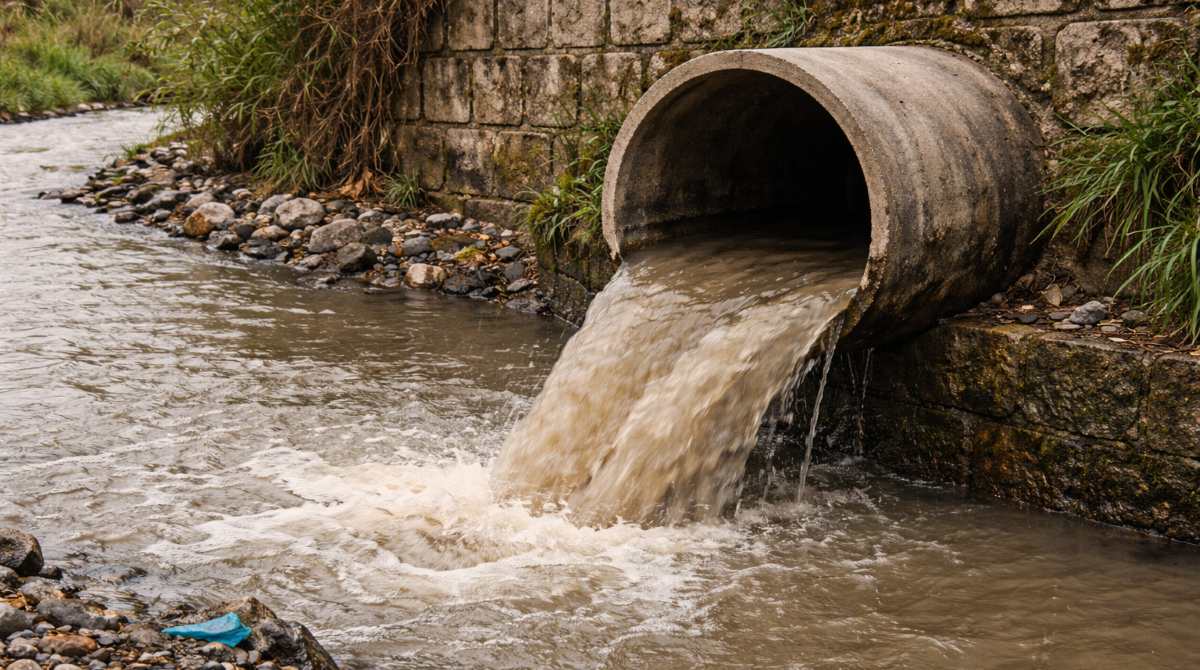
Newcastle is confronting a severe wastewater management problem, with the Department of Water and Sanitation (DWS) signalling that the municipality could be placed under regulatory oversight until its systems are fully restored.
This follows the release of the 2025 DWS Green Drop Report on Tuesday, 31 March 2026, which revealed a nationwide deterioration in wastewater services, showing that nearly half of the country’s systems are now classified as critical.
PAID ADVERTISING
Historically, the Newcastle Municipality has experienced a sustained decline in Green Drop performance. The report indicates that its score has regressed from 78% in 2013 and 58% in 2021, to a mere 30.2% in 2024.
Furthermore, a provincial assessment for KwaZulu-Natal paints an equally concerning picture. Of the province’s 14 Water Services Authorities (WSAs), only four—uMhlathuze Municipality, uMkhanyakude District Municipality, Ugu District Municipality, and Zululand District Municipality—have improved their scores since 2021.
While uMhlathuze emerged as the provincial leader with a Green Drop score of 62% and a Technical Site Assessment (TSA) score of 69%, uMkhanyakude DM followed closely with 61% and 76%, respectively. Notably, uMkhanyakude DM recorded the most significant improvement, rising from 23% in 2021 to 61% in 2024, followed by Zululand DM, which increased from 14% to 43%.
In contrast, the DWS data indicates a sharp regression for the majority of water authorities.
Across the province, 61 wastewater systems are now classified as critical, with an additional 37 systems disqualified and subsequently regarded as critical as well. In the case of Newcastle, the report presents this as a stark warning for local infrastructure.
“The majority of these systems fall under the eThekwini MM, with additional critical systems located within the uThukela DM, Newcastle LM, uMzinyathi DM, King Cetshwayo DM, Ugu DM, Amajuba DM, iLembe DM, and Msunduzi LM,” the DWS noted.
Concerningly, the report identifies Newcastle Municipality as the only municipality in the province unable to provide evidence of either a wastewater flow balance or a ‘Shift Flow Diagram’ (SFD) to demonstrate the volumetric movement of wastewater and the safe disposal of faecal sludge.
As explained by the DWS, these infrastructure challenges are exacerbated by broader systemic issues.
Regarding conveyance, the DWS states that eThekwini, iLembe DM, and Msunduzi municipalities operate the largest wastewater networks in KwaZulu-Natal, managing over 9,000 km, 1,500 km, and 1,350 km of pipelines, respectively.
According to the DWS, “Their extensive networks expose the WSAs to higher conveyance risk, particularly in terms of pipeline failures, pump station breakdowns, and sewer overflow management. However, all WSAs carry significant responsibility to ensure wastewater is reliably conveyed to treatment facilities.”
For Newcastle specifically, the situation is further compounded by significant gaps in asset management. The DWS reports that the municipality, alongside King Cetshwayo DM and uMhlathuze LM, failed to provide complete data on pipeline lengths—a shortcoming that limits effective risk assessment and rehabilitation planning.
Elaborating on these risks, the DWS added, “Pump station reliability remains a major provincial risk driver. Failures or intermittent operation lead to sewer overflows, pollution hotspots, and reduced flows reaching WWTWs. The combination of incomplete pipeline data and pump station vulnerabilities underscores the need for strengthened province-wide sewer network asset management to ensure effective conveyance to treatment works.”
This regression in Newcastle was specifically attributed by the department to substantial sewage losses in the three primary networks of Newcastle, Madadeni, and Osizweni, where records indicated a drastic drop in sewage reaching treatment plants compared to 2016 levels.
The regulatory implications are equally significant. Municipalities failing to achieve a minimum Green Drop score of 31% are required to submit a Corrective Action Plan within 60 days.
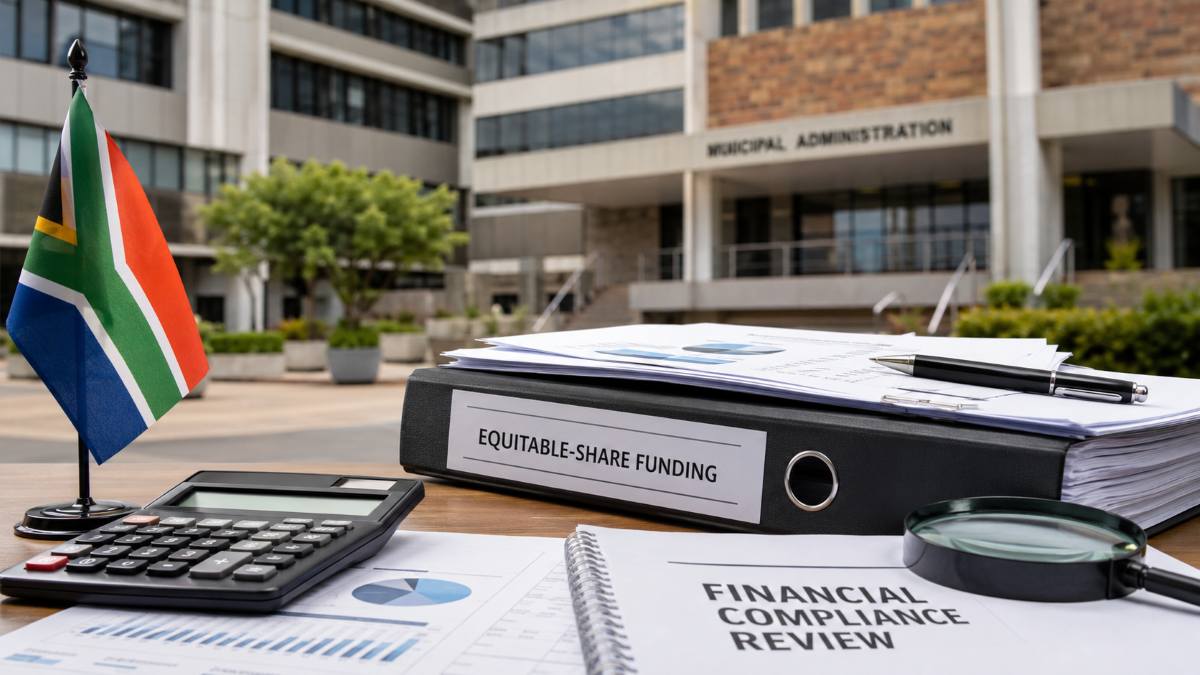
Eleven municipalities, including Newcastle, fall into this category, with 61 wastewater systems now under intense regulatory scrutiny. Authorities are expected to ring-fence water services grants to address these deficiencies, while sector partners such as MISA, COGTA, and the Department of Human Settlements provide external support.
The report’s VROOM (Very Rough Order of Measurement) assessment estimates that R49.8 million is required to restore Newcastle’s infrastructure, largely driven by R25.3 million in mechanical repairs and R21 million in civil works.
The scoring methodology itself highlights the gravity of Newcastle’s current position.
Systems that triggered disqualifiers but still scored above 31% were capped at 30%, while those below 31% remained unchanged. Newcastle’s 30% score therefore reflects what the DWS describes as serious weaknesses in operational flow, technical capacity and effluent quality at its wastewater treatment works.
“These municipalities will be required to assess the underlying risk contributors and develop corrective measures to mitigate and reduce these risks,” the department said.
The report also shows that staffing remains a major problem.
While 98% of supervisors and 56% of process controllers across KwaZulu-Natal meet Green Drop standards, Newcastle is among five municipalities with critical shortfalls. The municipality has no qualified engineering staff, despite a minimum requirement of two, and is short of 19 process controllers across its five treatment plants.
Although training participation has improved to 81% across the province over the past two years, lower engagement in struggling municipalities such as Newcastle continues to deepen poor performance.
There are, however, isolated signs of stronger performance. Newcastle’s Madadeni site achieved a TSA score above 80%, indicating sound control and functional equipment.
Elsewhere, three systems scored below 50%, while uThukela District Municipality in Ladysmith recorded the lowest TSA score at 32%. Newcastle’s 52% gap between its Green Drop and TSA scores, driven by disqualifiers, points to a growing divide between required standards and actual conditions on the ground.
Minister Pemmy Majodina said the Green Drop Report should be seen not only as a warning, but as a call for urgent reform.
The 2025 report assessed 848 wastewater treatment systems for the 2023/24 municipal financial year, compared with 850 systems in the 2022 report for 2020/21, with the slight drop attributed to mergers and decommissioning.
It found that 47% of systems, or 396 in total, are now in a critical state, up from 39% or 334 systems in 2022. Only 14 systems achieved Green Drop certification in 2025, down from 22 previously, which Majodina described as a clear deterioration in municipal wastewater performance.
“This is not merely another report, a routine publication, or a compliance exercise. It shows us how effectively we are protecting our water resources, safeguarding public health, and fulfilling our constitutional responsibility to uphold the dignity of our people,” she said.
For Newcastle, the findings point to the need for more than short-term intervention. Infrastructure repairs, better asset management and stronger technical capacity will all be needed to stabilise the system.
At the same time, the Madadeni site shows that improvement is possible where systems are properly managed, giving Newcastle a clearer picture of what must change to restore confidence, protect water resources and improve service delivery.
What are your thoughts on this? Let us know below.
Oh what a mess I wonder how much sewerage I have drunk from my taps it sickens me I want to be sick someone guys sort this mess out now with the price of petrol I have to drive to town to buy drinking water
Until there are accountability , consequences , fresh new orange overalls and accommodation at Waterval for those who do not comply with The Law, the problem will never, ever be solved/
Newcastillian News invites your input. We ask that you keep your remarks courteous and on-topic. We do not allow any form of hate speech, such as racist or sexist comments. All comments are subject to moderation in line with our User Rules and Commenting Policy.













2 Responses
Oh what a mess I wonder how much sewerage I have drunk from my taps it sickens me I want to be sick someone guys sort this mess out now with the price of petrol I have to drive to town to buy drinking water
Until there are accountability , consequences , fresh new orange overalls and accommodation at Waterval for those who do not comply with The Law, the problem will never, ever be solved/