


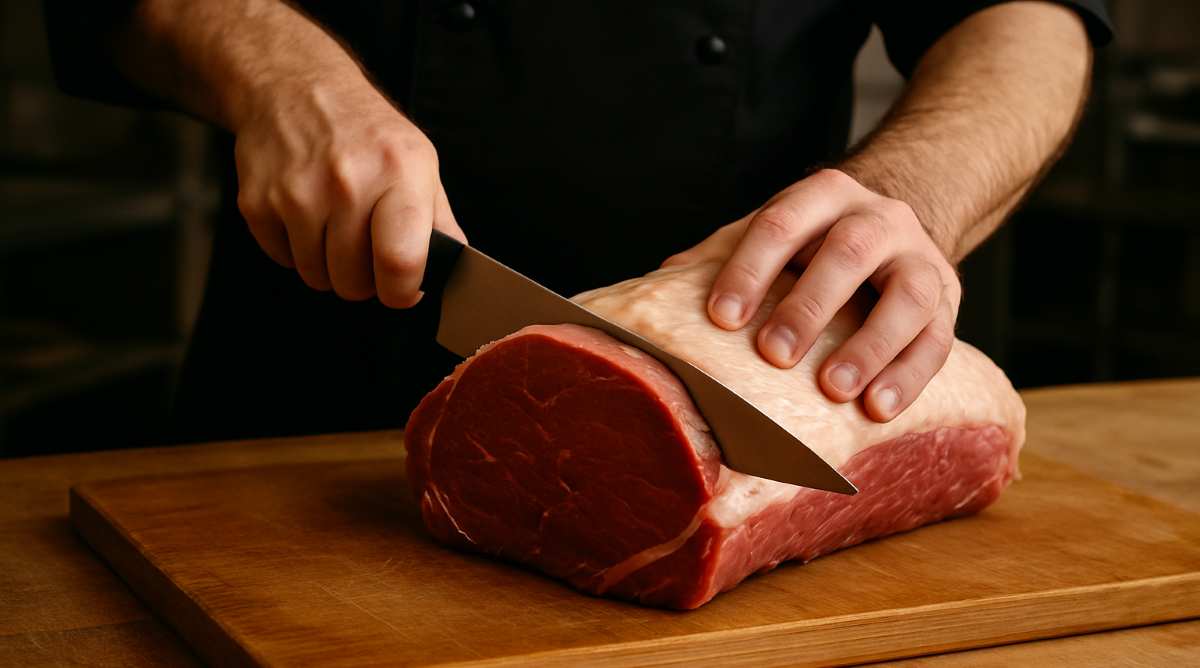
As the festive season approaches, red meat prices in South Africa are set to rise further, propelled by the persistent foot-and-mouth disease (FMD) outbreak that continues to afflict the nation’s livestock sector and fracture supply chains nationwide, according to the Red Meat Producers Organisation (RPO).
With 274 unresolved outbreaks ravaging KwaZulu-Natal as of October 2025—up from 165 earlier this year, per the KwaZulu-Natal Department of Agriculture and Rural Development—the issue now imperils national food security.

Meat inflation reached 6.6% year-on-year in June, according to FNB agricultural economist Paul Makube, and for households already under financial strain, this portends severe hardship: a modest braai could soon demand 20% more expenditure, thereby compounding South Africa’s 3.4% overall inflation surge driven by food costs .
The issue has exposed deep-seated frailties within South Africa’s livestock industry. Illegal livestock movements, pinpointed by the KwaZulu-Natal Department of Agriculture and Rural Development as the chief barrier to containment, endure despite concerted efforts to suppress them. Prolonged quarantines and trade restrictions have, consequently, curtailed market access, thus preventing farmers from transporting or selling stock.
Furthermore, the outbreak endangers South Africa’s FMD-free status as recognised by the World Organisation for Animal Health (WOAH), threatening agricultural exports over the long term.
The repercussions are already evident: China’s suspension of South African beef imports in May 2025, following viral spread to Mpumalanga and Gauteng, has diminished export revenues by an estimated R500 million annually, cautions the USDA Foreign Agricultural Service in its September 2025 update.
Meanwhile, the World Organisation for Animal Health (WOAH) documents ongoing SAT2 virus circulation, with fresh detections in late February 2025 stoking concerns over irreversible market exclusion .
In response, KwaZulu-Natal farmers have instituted independent control points to regulate livestock movement and stem transmission, while additional measures are reportedly under development to reinforce containment, as affirmed by the KwaZulu-Natal Department of Agriculture and Rural Development.
This community-led initiative dovetails with the department’s expanded Disease Management Area (DMA) proclamation on 17 March 2025, encompassing high-risk zones amid 147 active outbreaks; yet, illicit movements through auctions persist in eroding progress, as MEC Thembeni kaMadlopha-Mthethwa cautioned at the October 2025 Provincial FMD Indaba .
Small-scale and communal farmers shoulder a disproportionate load, prohibited from selling cattle—vital for household income, debt settlement, and local economic sustenance.
Certain producers in the province have endured quarantine for up to eight months, thereby precipitating widespread economic ripple effects across adjacent communities, as observed by Peter John Hassard, President of Kwanalu and a commercial farmer in Hluhluwe.
Furthermore, commercial operators, including RPO members, confront constrained trade and mounting herd losses. In the Newcastle-Dundee Disaster Management Area, producers forfeited the crucial window to market weaned calves earlier this year, thus sustaining considerable financial harm. Angus Williamson, second vice chairperson of the RPO, stated: “Tens of millions of rand have been lost. Several farmers had to cash in on life insurance policies, were unable to meet co-op obligations, and struggled to repay bank debts.”
These “tens of millions” in damages remain understated; the Red Meat Producers Organisation (RPO) calculates sector-wide losses surpassing R1 billion since January 2025, encompassing feed expenses for unsold stock during quarantines of up to eight months.
In Newcastle-Dundee, missed calf sales alone inflicted costs of R200,000 per farm, according to local disaster management reports.
Williamson expounded on broader market ramifications: “Currently, the beef market is haemorrhaging and farmers are struggling to sell their stock. Those who could not sell their cattle during winter will now have to continue feeding the livestock, which is impacting them financially, while businesses are also being affected due to the ongoing outbreak.”
Additionally, he described the situation as a “financial disaster” for KZN livestock farmers. Agbiz forecasts red meat prices may escalate another 10–15% by December 2025, atop July’s 5.5% food inflation peak—the highest in 18 months—driven by FMD-induced supply contractions and anticipatory purchasing .
With supply diminishing and costs escalating, Williamson warned: “The prices of red meat have gone up over recent months due to the challenges caused by FMD, and we envision the prices to rise even higher as we move closer to the festive season.”
In Newcastle particularly, the RPO indicates beef prices will likely fluctuate further, thereby intensifying pressure on local markets and consumers.
As reported by Newcastillian News on 03 June 2025, the scale of the FMD crisis in KwaZulu-Natal is substantial and jeopardises the wider agricultural sector. Notwithstanding farmer-led containment efforts, enduring illegal livestock movement and protracted trade impediments continue to splinter the supply chain.
Red meat producers and key food industry figures, including the Association of Meat Importers and Exporters of Southern Africa (AMIE), have voiced pressing alarms, asserting that without prompt intervention, ramifications for pricing and food security could proliferate nationwide.
The RPO and AMIE emphasise that the outbreak exceeds provincial confines—it endangers the entire South African meat industry, with prospective impacts on availability and affordability during the high-demand festive period.
On this note, AMIE CEO Imameleng Mothebe cautions that absent urgent regionalisation accords for FMD-free zones, “consequences for pricing and food security could extend nationwide, hitting low-income households hardest”—mirroring appeals for governmental action at the July 2025 National FMD Indaba.
The unrelenting foot-and-mouth disease outbreak in South Africa lays bare systemic weaknesses in biosecurity and enforcement, with illegal livestock movements and protracted quarantines eroding both producer viability and consumer affordability.
As the Red Meat Producers Organisation (RPO) and the Association of Meat Importers and Exporters of Southern Africa (AMIE) have repeatedly stressed, the problem extends far beyond KwaZulu-Natal, jeopardising export markets, inflating domestic prices, and threatening food security at a time when household budgets are already stretched. Without decisive, coordinated intervention—including stricter auction oversight, accelerated vaccination programmes, and diplomatic efforts to secure regional FMD-free zones—the industry faces a protracted downturn with lasting economic consequences.
Failure to act risks embedding higher red meat prices into the national cost-of-living structure, particularly during the December 2025 festive peak when demand traditionally surges.

The World Organisation for Animal Health (WOAH) continues to monitor SAT2 circulation, while stakeholders await concrete commitments from the Department of Agriculture, Land Reform and Rural Development. For farmers, abattoirs, and consumers alike, the path forward hinges on restoring supply-chain integrity and rebuilding international confidence—objectives that demand urgency, transparency, and resources commensurate with the scale of the threat.
What are your thoughts on this? Be sure to let us know.
Do not forget to read, New R2.5 Billion Chinese Steel Mill Reignites Hope for South Africa’s Steel Industry, if you missed it.
Frequently Asked Questions (FAQs)
The surge is driven by the ongoing foot-and-mouth disease (FMD) outbreak, which has restricted livestock movement and sales through quarantines and trade bans, thereby reducing supply. The Red Meat Producers Organisation (RPO) reports that farmers unable to offload stock face escalating feed costs, thus pushing prices higher .
As of October 2025, 274 outbreaks remain unresolved in KwaZulu-Natal, up from 165 earlier in the year, according to the KwaZulu-Natal Department of Agriculture and Rural Development.
South Africa’s FMD-free status, as recognised by the World Organisation for Animal Health (WOAH), is under severe threat due to persistent SAT2 virus circulation and new detections reported in February 2025 .
KwaZulu-Natal farmers have established independent control points, while the province expanded its Disease Management Area on 17 March 2025. However, illegal movements persist, as noted by MEC Thembeni kaMadlopha-Mthethwa at the October 2025 Provincial FMD Indaba .
Prices are climbing because foot-and-mouth disease has disrupted livestock movement and trade across KwaZulu-Natal and other provinces. Farmers can’t sell or move their cattle freely, which reduces supply and pushes prices up.
Experts warn that red meat could cost between 10% and 20% more by December 2025. That means a family braai or Sunday roast will likely take a bigger bite out of household budgets already stretched by rising food and fuel costs.
Farmers, together with the KwaZulu-Natal Department of Agriculture, have set up control points to manage livestock movement and prevent further spread. However, illegal animal trading remains a major obstacle, and stronger national measures are still needed to stabilise prices.









One Response
Wow chicken and fish is the meat from now on and pork