



A R2.5 billion Chinese-backed steel mill in Nigel, Gauteng, is preparing to commence full-scale operations, marking a significant development for South Africa’s struggling steel sector. According to Chung Fung Metal, the facility has completed test runs and is expected to begin full production shortly, with an annual capacity of 600,000 tonnes of long-steel products.
Chung Fung Metal has stated that the plant is situated on a 120-hectare site in the Kaydale industrial zone, just off Nigel Springs Road near the Dunnottar Airbase (Dunnottar Extension 8), and that it uses electric-arc furnace (EAF) technology, enabling lower carbon emissions compared with traditional blast furnaces.

Furthermore, the company added that the site was selected for its proximity to existing infrastructure, including rail links to the Durban port corridor, thereby providing strategic access to transport networks and integrating into the local industrial landscape previously dominated by legacy operations.
The investment arrives against a backdrop of persistent challenges for South Africa’s steel sector. Ongoing power shortages, rising input costs, and the influx of cheaper imported steel continue to erode the competitiveness of domestic producers.
Over the past year, ArcelorMittal South Africa (AMSA) — the country’s largest steel manufacturer — has announced several plant closures, retrenchments and production curtailments, citing unsustainable financial pressures.
As reported by Newcastillian News, AMSA began preparatory steps to wind down its long-steel operations in Newcastle, KwaZulu-Natal, effective 1 September 2025.
This has since been paused by a Labour Court ruling on 29 October 2025 ordering worker reinstatements (To read more, click here).
However, AMSA applied for leave to appeal. Click here to read more about this.
Nevertheless, the company stated that despite engagements with government and stakeholders it had been unable to secure a viable path forward to sustain operations without incurring significant financial risk.
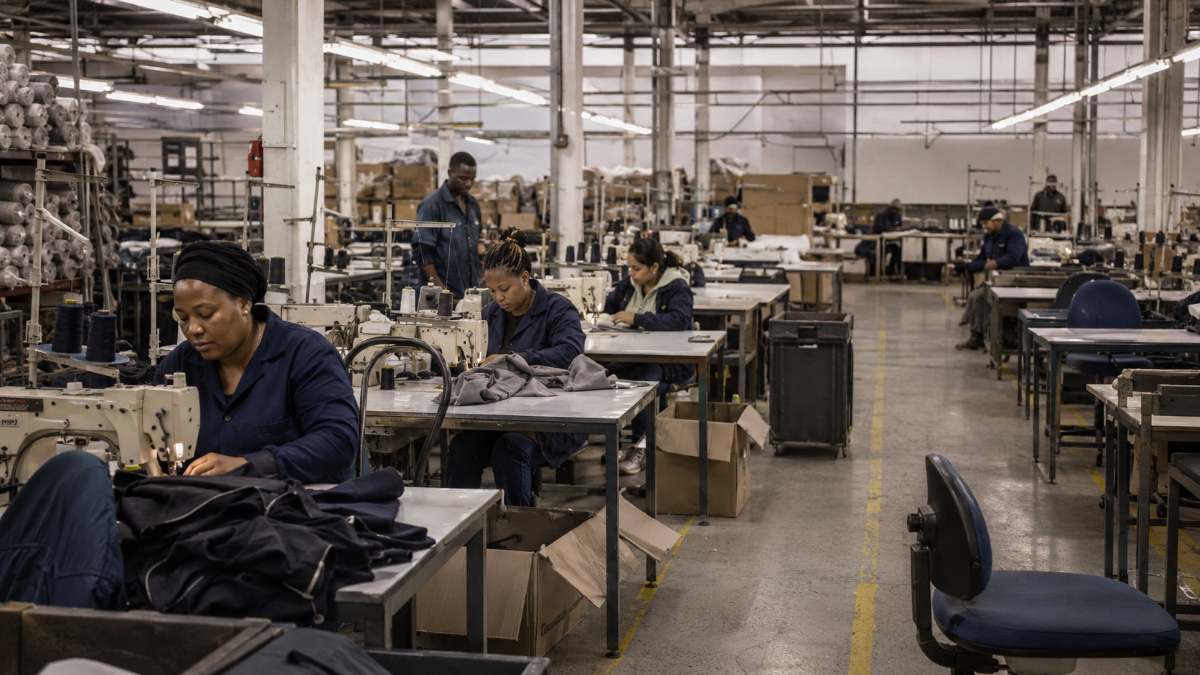
Despite the challenges faced by AMSA, Chung Fung Metal has projected the Nigel project will create approximately 1,200 direct jobs, with 1,000 positions already filled during phase one and further employment expected as operations expand.
The company reported that over 70% of the current employees are drawn from local townships, including Duduza, Tsakane and KwaThema, in line with its local economic empowerment commitments.
Recent job postings emphasise general-worker roles requiring red-seal qualifications and experience in the metal or civil-construction industries. In August 2025, local community groups petitioned the company to clarify recruitment processes and expand local-hiring quotas; Chung Fung Metal responded by increasing recruitment in line with regulatory and empowerment objectives.
It should be pointed out that in September 2025, the Industrial Development Corporation (IDC) announced a separate partnership—via a Memorandum of Understanding with China’s Hebei Iron & Steel Group (HBIS) and the China-Africa Development Fund—estimated at up to R90 billion, to explore a new green-field steel plant with projected output of up to five million tonnes per year (drawing from ambitions in a 2014 MoU, with the 11 September 2025, agreement emphasising initial feasibility studies for a major iron and steel project).
Although unrelated to the Nigel project, the IDC stated the agreement reflects growing Chinese engagement in South Africa’s metals and processing industries.
Earlier in April 2025, the City of Ekurhuleni Metropolitan Municipality’s State of the City Address summary highlighted the Nigel mill as part of broader regional industrial initiatives, valued at R2.5 billion, aimed at revitalising manufacturing, supporting township economic development and promoting sustainable employment.
Construction tenders for the smelter were issued under Project PPA 30180, confirming the 120-hectare site’s development timeline from planning to test runs.
Furthermore, Chung Fung Metal has confirmed the installation of dust-extraction systems, water-recycling plants and real-time air-quality monitoring, in accordance with the National Environmental Management Act (NEMA) standards (as assured in recent community meetings, with full audits to follow commissioning). The facility aims for 80% water reuse and zero liquid discharge.
Additionally, the company emphasises that the mill is strategically positioned near key transport corridors in order to meet demand from infrastructure projects and housing programmes, even as the wider industry capacity utilisation remains below 60%.
Analysts note that the facility could support steel exports to Asia, though long-term benefits will depend on addressing challenges such as dumping practices, energy instability and policy uncertainty.

While the Nigel steel mill offers a potential boost to production and employment, experts emphasise that sustained recovery will require policy consistency, energy reliability and operational transparency. The Department of Trade, Industry and Competition (DTIC) is reviewing steel import tariffs and master-plan incentives, with announcements expected in the 2026 Mid-Term Budget Policy Statement.
If executed as planned, the Nigel facility could serve as a pivotal example of industrial renewal in South Africa’s steel sector. Conversely, without supportive policy and infrastructure, it risks becoming an isolated case of foreign investment constrained by systemic inefficiencies.
But, what are your thoughts on this? Let us know below.
Do not forget to read, Dunlop Tyres Ladysmith: Business restructure strengthens operations and sustainability, if you missed it.
FAQs:
The R2.5 billion steel mill is situated in the Kaydale industrial zone near Nigel, Gauteng, just off Nigel Springs Road and close to the Dunnottar Airbase.
The facility is owned and operated by Chung Fung Metal, a Chinese-backed company investing in South Africa’s steel manufacturing sector.
Once fully operational, the mill will produce up to 600,000 tonnes of long-steel products annually using electric-arc furnace (EAF) technology.
The project is expected to create around 1,200 direct jobs, with 1,000 positions already filled during phase one, and over 70% of employees sourced from local townships.
Unlike conventional blast furnaces, the facility uses EAF technology, which reduces carbon emissions and improves environmental efficiency through 80% water reuse and zero liquid discharge.
While AMSA has faced retrenchments and suspended operations due to financial strain, the Nigel steel mill represents a new wave of industrial investment aimed at revitalising South Africa’s steel output.
Chung Fung Metal has installed dust-extraction systems, water-recycling plants, and real-time air-quality monitoring in line with NEMA standards to ensure compliance and sustainability.








7 Responses
I suspected all along with especially with the stripping of machines in AMSA.
Good day Quiton
What will the company be using as an input in the manufacturing of the long steel product? This is critical info.
Thank you,
Ernest
Electric Arc Furnaces melts scrap metal
70% is scrape metal 30% pig iron to maintain the steel recipe.
Much cheaper way of steel production as compared to traditional ways
What type of steel will they supply i.e., mild steel, stainless, tool steel?
This depends on further furnace applications
Eg BOF furnace and again further heat treatment processes
In short if there is demand for different stainless steel grades you further process the steel in different furnaces adding various amounts of allowing elements like nickel and chromium.
This is the reason the movement allowed Mittal to close. Some one has lined their pockets well ..