



With millions awaiting confirmation on whether ArcelorMittal South Africa (AMSA) will wind down operations at Newcastle Works and Vanderbijlpark Works by 30 September 2025, the steel producer is under mounting scrutiny.

At the centre of the storm are allegations that AMSA misused a R3.75 billion government bailout, intended to stabilise its struggling plants, to instead undercut competitors by selling steel at below-market prices.
Industry stakeholders argue that AMSA has weaponised the 2023 Industrial Development Corporation (IDC) loan to influence market dynamics. The funds were originally allocated to support the company’s survival during difficult trading conditions at Newcastle and Vanderbijlpark.
However, critics, including Cape Gate and Scaw, say AMSA’s pricing strategy is distorting the market and placing pressure on local manufacturers already under strain. Smaller producers and downstream industries warn that being forced to compete against steel sold at reduced rates — sometimes below production costs — jeopardises their sustainability.
Some opponents go further, alleging predatory pricing, where AMSA temporarily drops prices to squeeze out rivals before raising them again.
Moreover, industry leaders insist this contradicts the purpose of the IDC loan, which was meant to stabilise AMSA, protect jobs, and safeguard domestic production capacity, not provide a competitive advantage.
In response, AMSA has rejected the claims. Tami Didiza from AMSA explained, “the pricing reflects market realities, not IDC subsidies.” He further clarified that bailout funds have been used to modernise operations, improve efficiency, and safeguard jobs. The company emphasised that the IDC loan came with strict conditions, including maintaining employment and investing in capital upgrades for long-term sustainability.
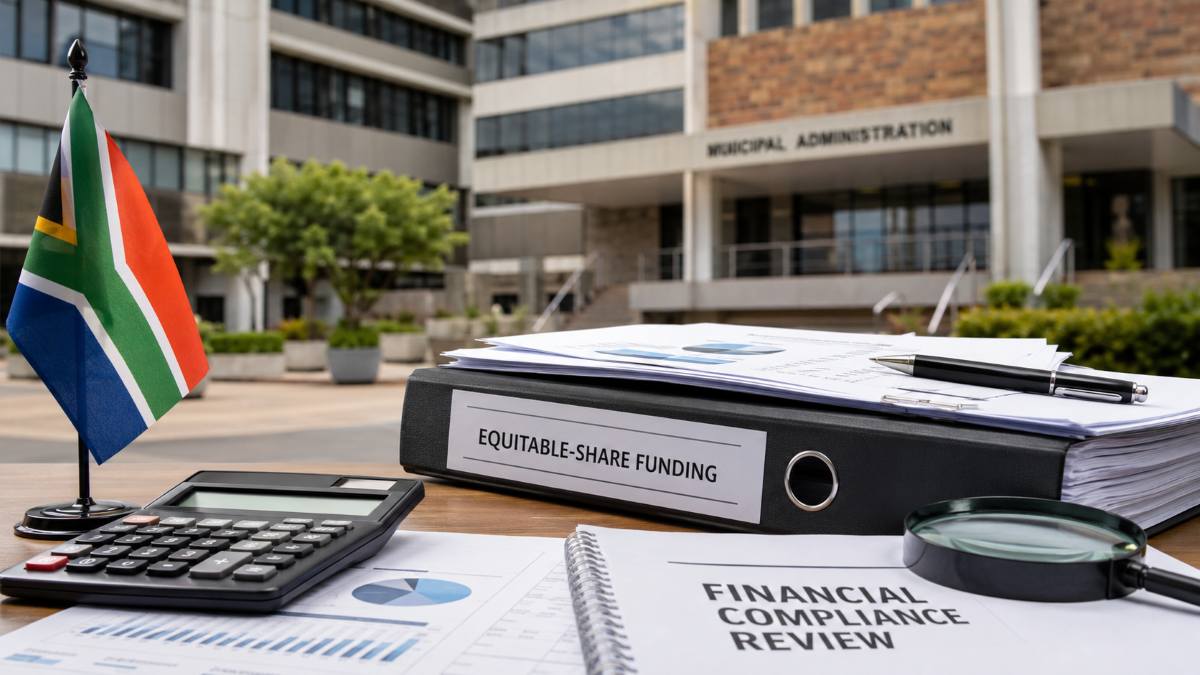
Nevertheless, critics argue that the government and IDC have failed to enforce sufficient oversight to ensure compliance. Some claim that instead of focusing on operational recovery, AMSA redirected relief funding into aggressive pricing strategies. As a result, calls have been made for the Department of Trade, Industry and Competition (DTIC) and the Competition Tribunal to launch a formal investigation.
SAISI has also raised concerns with the DTIC, warning that unchecked practices could trigger job losses and the closure of smaller steel producers and downstream businesses.
Tariff Proposals Add Pressure
As the loan debate intensifies, the broader steel industry faces another challenge: proposed tariff increases from the International Trade Administration Commission (Itac).
The National Employers’ Association of South Africa (Neasa), representing 1,800 companies and 65,000 employees, is mobilising against what it calls “devastating” measures that appear to favour AMSA at the expense of downstream manufacturers.
Itac’s proposals include new customs duties of 10 per cent on flat-rolled steel, bars, rods, and wires, and 15 per cent on tubes, pipes, and nails. Justified under World Trade Organisation emergency provisions, the measures aim to reduce imports, which account for roughly 35 per cent of domestic consumption, mainly from China. The review covers more than 600 tariff codes valued at R67 billion, with public submissions still being considered.
Neasa, however, has warned that the proposals, if implemented, could accelerate the decline of South Africa’s steel sector. It argues that public hearings appear largely procedural, with decisions seemingly resistant to evidence highlighting potential job losses and closures. According to Neasa, the policies will “drastically accelerate the decimation” of downstream industries.
High Stakes for South Africa’s Steel Sector
Meanwhile, sources inside AMSA confirm ongoing discussions with government representatives to prevent the closure of Newcastle and Vanderbijlpark. Still, as the deadline for AMSA’s unwinding process approaches, the company told Newcastillian News that, due to the complexity of the matters and prior cautionary announcements, it cannot comment further at this stage.

Nevertheless, what’s your take on AMSA’s bailout and the future of South Africa’s steel sector? Share your views in the comment section below.
Be sure to read, How to Take Over the World Through Social Media, if you missed it.








4 Responses
Stop the imports of cheap Chinese steel.
Problem solved.
The Chinese dumping their inferior products in South Africa is the root cause of the problem.
But Oom Cyril is in bed with the Chinese, so the imminent closure of South Africa factories remains on the horizon.
Thus, a huge dankie to Oom Cyril, who only looks after his own couch…
Fully agree. Cupcake Ramaphosa’s net worth is north of R6 Billion! I can’t, for the life of me, recall any single business that this clown owns. But, as you so rightfully have said, he is in bed with the Chinese, which explains all the Chinesium trash that gets dumped on our shores. As for looking after “his nation”…I think not.
Half of its workers are currently sitting at home. What “maintining employment” is this Tami talking about ? As it stands today the 28th of August 2025 close to 400 contractors are being placed on layoffs for a period of an estimated 8weeks with NO PAY.So whatever the response is, that’s totally MISLEADING.The bailout was to sustain salaries till the end of September yet workers were sent home mid of August.
CORRUPTION AT ITS LEVEL BEST
South African labour too expensive, management incompetent and supporting structures non functional and also expensive.(water & electricity) Close all including Sadanha.