



In an era of equal rights, are women truly seen as the contemporaries of men? Or are women still judged under a different light? Are women still objectified according to their beauty and the clothing that they wear? Do religion and culture still hold sway of the way we treat women?
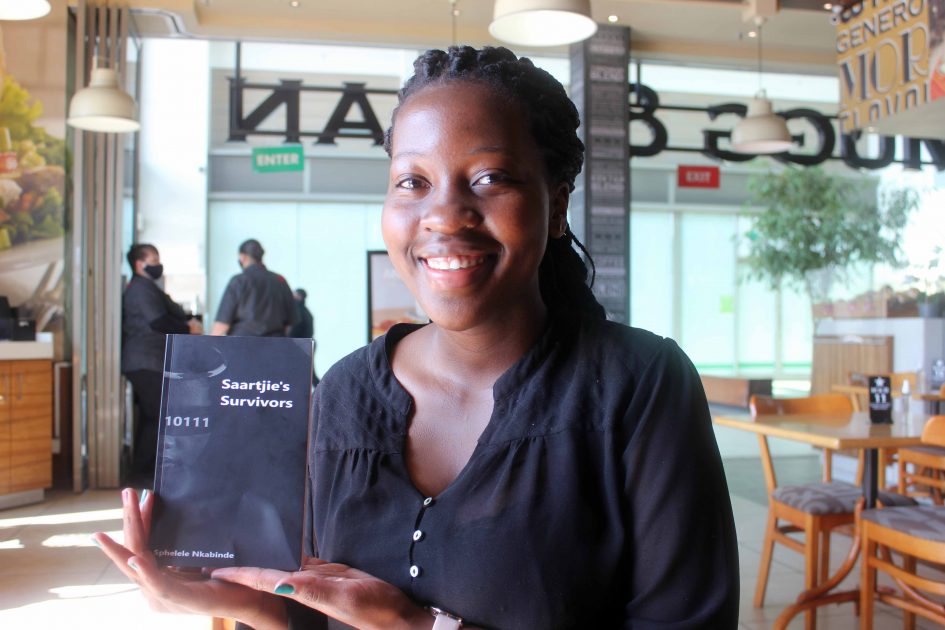
These are the very questions that Sphelele Nkabinde addresses in her book, Saartjie’s Survivors. A book that takes an in-depth look at women through a series of short stories and poetry.
What is Saartjie’s Survivors all about?
Sphelele explains the book is a memoir and dedication to Sara ‘Saartjie’ Baartman and the contemporary versions of her.
For those who don’t know, Saartjie Baartman was the most well-known of at least two South African Khoikhoi women who, due to the European objectification of their buttocks, were exhibited as freak show attractions in 19th-century Europe, under the name Hottentot Venus.
“Hottentot” was the name for the Khoi people, however, it is now considered an offensive term, and “Venus” referred to the Roman goddess of love and fertility.
Sphelele explains when looking back, there are not many articles written on Saartjie’s life. However, it is known that she suffered immensely.
“She was exhibited in museums and art galleries, all because of her body. Following her death, her liver showed substantial damage as she drank away her pain,” says Sphelele.
Making matters worse, following her death, Saartjie’s body was mutilated and her organs were put on display. An atrocious act, which Sphelele reiterates stems from her body being objectified.
Through Saartjie’s Life, Sphelele’s book looks at the way women are perceived by society, through the eyes of culture, religion and upbringing. Then there is the issue of adultery, where people are more understanding of men having extra-marital affairs than they are of women. These issues are which are addressed head-on in the book.
Then there is Gender-Based Violence and rape, which also come to the forefront. “On the cover of my book, I have the 10111 covering the woman’s eyes. This is because those who are meant to protect us often side with the perpetrators and are in a sense blinded to our issues.”
Looking at rape, Sphelele says this is a harsh reality within South Africa. But, the victims don’t always realise they have been violated, as the perpetrator is not always a stranger.
“It might be a brother taking his small sister with him to the bedroom and then buying her sweets afterward.”
This is an issue that needs to be addressed and why Sphelele’s book puts great emphasis on how women are often sexually objectified.
“It feels like we are on display the whole time. If you get into a taxi or a vehicle with just men, I find myself wondering if I should speed dial someone, send my GPS location to my brother or another family member.”
The sexual objectification of women does not end there. Saartjie’s Survivors also touches on the subject of trophy wives.
“I have a friend who is a trophy wife. She is a beautiful woman and her husband is a qualified doctor. However, she goes to all the necessary functions and events with him, where she is showed off, yet he has extra-marital affairs.”
While her friend enjoys financial security, this is a lifestyle that Sphelele feels no woman should endure. As important as financial security is in an individual’s life, respect and love are just as important.
But why are women objectified and expected to be at their husband’s beck and call?
Sphelele feels the South African culture plays a big role in the way women are seen, at times expected to serve their husbands, boyfriends or fiancés. It is an issue which she says is passed down from generation to generation.
Women, she elaborates, do not want to be subservient to men. Especially in modern-day society, where equality amongst the sexes can promote development and growth within the community and family environment. “We want a partnership, but it does not seem to be a reality as of yet,” she says.
With her book being published on 9 March 2020, Sphelele is working with a bookstore in Johannesburg, Kalahari books. She is currently working on getting Saartjie’s Survivors to other bookstores, determined to spread her message of equality.
“I would really like younger women to read it, especially those between the ages of 18 and 19, has it has valuable lessons and morals that I wish I knew before entering the world after school,” Sphelele concludes.
Be sure to be on the lookout for Saartjie’s Survivors by Sphelele Nkabinde, as she tackles an age-old issue in modern-day society.
Author: Quinton Boucher
Edited: Calvin Swemmer












One Response
Thank you so much for this article, I appreciate it immensely and I hope the message is received well. Great work!