


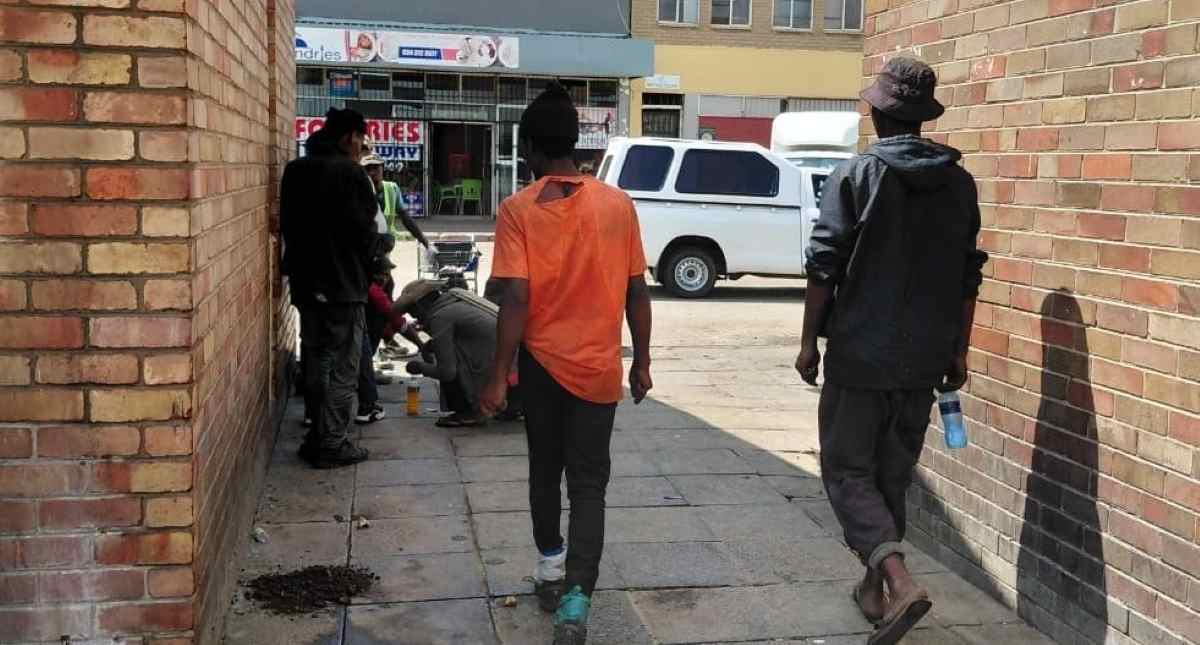
What is really happening in Newcastle’s CBD — where drug users appear so comfortable, so fearless of the SAPS, that they openly inject narcotics in broad daylight?
In pursuit of answers, Newcastillian News engaged multiple entities to shed light on the persistent problem. Yet, after reviewing their statements, one truth stands out — something in this system has gone seriously wrong.
Eyewitnesses report that open drug use in Newcastle’s Central Business District has become commonplace, with addicts injecting themselves in full public view, seemingly indifferent to residents, business owners, or law enforcement.
This is not a new issue for the town, but its escalation once again raises the question that no one seems able to answer: What is the solution?

Along Kirkland Street, at the Mosque Parking Lot, on Tuesday morning, 11 November 2025, a Newcastillian News journalist, alongside local security officials, observed a group of men seated in the lot, armed with syringes and preparing to inject themselves.
Despite the presence of residents walking into nearby shops, the men remained entirely unbothered. They simply turned their backs and continued, muttering under their breath, as if the public did not exist.
One local businessman, speaking anonymously for safety reasons, confirmed that these incidents are far from isolated.
“This happens daily, and while everyone knows about it, nothing is done to resolve the matter. These men are responsible for so much crime in town to support their habits, but as you can see, nothing gets done and they are not even worried about being caught,” he said.
Imran Ghafoor of the Newcastle Crime Fighter Task Team corroborated these observations, explaining that the problem is persistent and public. “These individuals sleep around town as well, and will get up during the night to commit crime to feed their habits. Unfortunately, when they move into an area, they seldom leave, unless they are caught for breaking the law,” he said.
Furthermore, Jan van Rensburg of Magenta Security echoed the concern, pointing to the scale of the issue across Newcastle. “We recently did an operation at the Mosque Parking Lot and at Congo Passage, and the drugs were everywhere and it is like this, because nothing gets done about it,” he said.
SANCA social worker Nokukanya Ndlovu highlighted the specific substances driving the problem, noting that codeine, crystal meth, and nyaope dominate the local drug scene. “The drug situation in Newcastle is extremely bad, and they are readily available in the CBD itself. You will find places like Congo Passage and the Mosque Parking Lot are hotspots, with certain informal traders selling drugs from their tables,” she explained.
Moreover, Ndlovu stressed that the fact that Newcastle only had one official rehabilitation centre did not help the drug problem.
“We only have the one facility, which is situated in Madadeni, and it cannot hold all the people who are seeking help,” she emphasised.
Newcastle Community Policing Forum’s spokesperson, Sandile Mdluli, added that “drug usage in Newcastle is a significant issue, manifesting in public spaces like the CBD. As per Mdluli the most commonly used drugs in town from his experience include substances such as heroin, mandrax, methamphetamine (tik), cocaine, and prescription medications, with these drugs posing serious health risks and contributing to social problems in the community.”
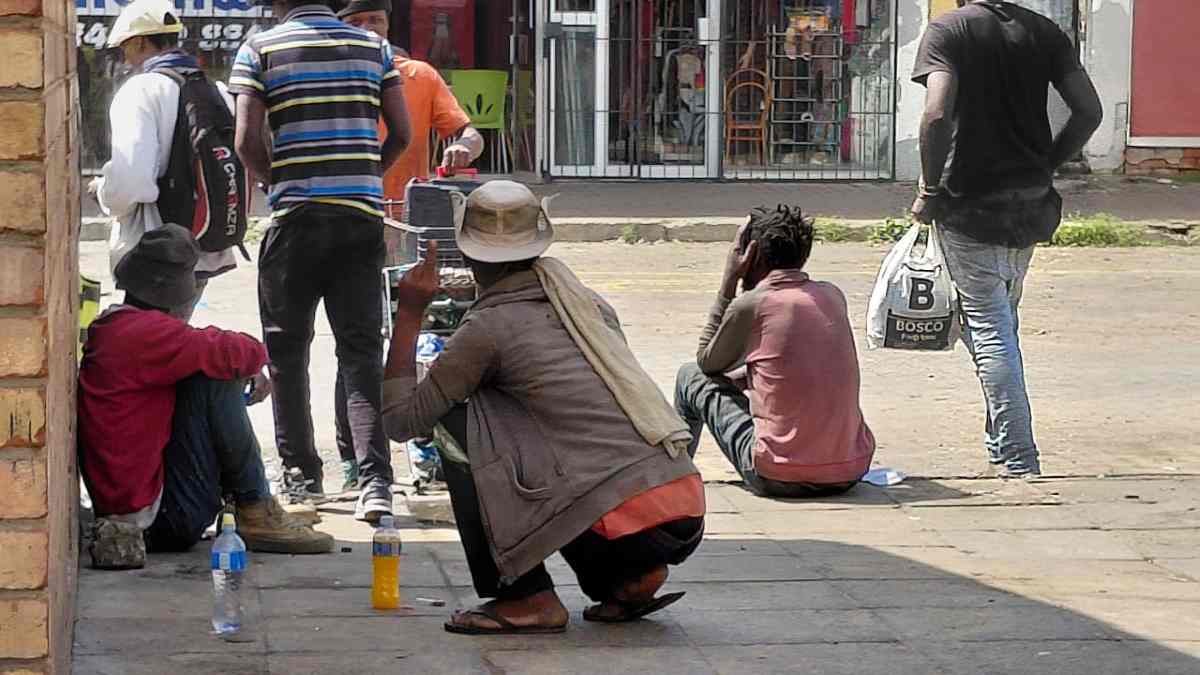
He also warned that the men using drugs so openly in the streets face severe risks, noting that “they face immense health risks, including increased vulnerability to infections, bloodborne diseases, and overdosing due to unhygienic injection practices. It also exposes them to safety concerns, including potential violence, exploitation, and harm from the environment or other individuals in the area.”
Mdluli further stated that the broader impact of drug usage included:
- Increased Criminal Activity: “Users may resort to theft, prostitution, or other illegal activities to support their drug habits.”
- Social Disruption: “Drug use in public spaces can create a sense of insecurity and discomfort among residents and business owners, affecting the overall safety and well-being of the community.”
When looking at the challenges faced in combatting drug usage in the CBD, Mdluli stated, “From what I have seen, challenges officials face in combating drug usage include:
- Resource Constraints: “Limited funding and manpower for drug enforcement agencies to tackle the widespread issue effectively.”
- Supply Chain Complexities: “The intricate network of drug trafficking and distribution makes it challenging for officials to identify and dismantle the supply chain.”
- Addiction Treatment Access: “Limited availability of affordable and accessible addiction treatment programs for those struggling with drug dependency.”
- Stigma and Perception: “Overcoming societal stigmas associated with drug addiction that may hinder individuals from seeking help and support.”
Moreover, Van Rensburg also highlighted a particularly dangerous local practice, explaining that drug users often engage in “Bluetoothing” in town. “This entails drug users using the syringe, drawing blood from a person who has just used the syringe and drugs, and then injecting it into themselves,” he said.
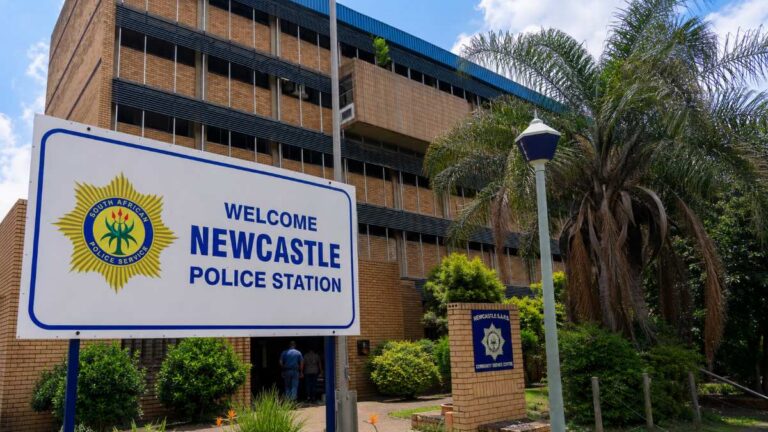
Speaking from the percpective of law enforcement, Amajuba SAPS District spokesperson, Constable Nonjabulo Langa, acknowledged that “As in many towns across South Africa, Newcastle continues to face challenges related to the use and distribution of illegal substances. The SAPS is aware of areas where drug-related activity is more prevalent and is working closely with various stakeholders to address these concerns through both enforcement and community-based initiatives.”
When questioned on measures to curb public drug use, Constable Langa explained that “The Newcastle SAPS, together with the Community Policing Forum (CPF) and local security partners, conducts ongoing operations targeting drug hotspots. These include visible policing patrols, stop-and-search operations, and undercover intelligence-led investigations aimed at identifying suppliers and distributors. Efforts are also being made to increase collaboration with the Department of Social Development and local rehabilitation centres to support individuals struggling with addiction.”
Regarding police visibility and patrols in Kirkland Street, where drug use is most visible, Constable Langa acknowledged that “We acknowledge community concerns regarding limited police visibility in certain areas. The Newcastle SAPS management has reviewed patrol routes and is in the process of deploying additional resources to improve visibility in key areas, including Kirkland Street. Patrol frequency is also being adjusted based on crime pattern analysis to ensure more effective coverage.”
Constable Langa also explained that “among the challenges faced in addressing crimes such as this, local officers continue to work under resource constraints, including vehicle shortages, high call volumes, and limited personnel. Despite these challenges, our members remain committed to their duties and to ensuring the safety of all residents. We are also strengthening partnerships with private security companies and community structures to enhance overall response capacity.”
In closing, Constable Langa addressed the Newcastle community, urging residents to remain vigilant and report suspicious activities. “Members of the public are encouraged to continue reporting suspicious activities through official channels. Anonymous tips can also be shared via the Crime Stop number 08600 10111 or the MySAPS app,” she concluded.
Businesses and residents cannot continue to accept this as the norm under the pretext of logistical or manpower constraints. While history shows that eradicating addiction entirely may be unrealistic, these entities can — and should — work together more effectively to ensure such behaviour is no longer permitted to occur publicly. One would think, that is not alot to ask for.

But, what are your thoughts on this? What suggestions do you have? Let us know below.
Do not forget to read, Alleged Fraud Forces Temporary Closure of Utrecht Motor Licensing Centre, if you missed it.
FAQs:
According to SANCA social worker Nokukanya Ndlovu and the Community Policing Forum, the most commonly abused substances in Newcastle include codeine, crystal meth, nyaope, heroin, mandrax, cocaine, and certain prescription medications. These drugs are widely accessible in hotspots such as Congo Passage and the Mosque Parking Lot.
Observers and security officials report that drug users openly consume narcotics in public spaces due to a combination of law enforcement resource constraints, lack of accessible rehabilitation options, and a culture of impunity among addicted individuals.
Sandile Mdluli, spokesperson for the Community Policing Forum, highlighted that openly using individuals face significant risks, including infections, bloodborne diseases, overdoses, exposure to violence, and potential exploitation by others in the environment.
The Newcastle SAPS, in collaboration with the Community Policing Forum and local security partners, conducts targeted patrols, stop-and-search operations, and intelligence-led investigations. Partnerships with the Department of Social Development and rehabilitation centres aim to support addicted individuals while law enforcement addresses criminal activity linked to drug abuse.
Currently, Newcastle has only one official rehabilitation centre in Madadeni, which cannot accommodate all individuals seeking help. However, there are private facilities. This limited capacity contributes to the ongoing public drug crisis and underscores the need for expanded treatment and support services.







One Response
THERE ARE ALOT, OF DRUG SALES, AROUND MACKENZIE PASSAGES, I WUD LIKE VISSIBILTY OF POLICE ALL THE TIME