

Plans to strengthen public hospital services across northern KwaZulu-Natal have moved beyond broad policy commitments, with official provincial records confirming progress on the proposed transformation of Vryheid and Dundee hospitals into regional healthcare facilities.
However, despite movement in the planning and procurement processes, the KwaZulu-Natal Department of Health has acknowledged that it does not currently have sufficient funding within its existing budget to finance the construction phase of the projects.

According to the KwaZulu-Natal Provincial Treasury’s 2026/27 Estimates of Capital Expenditure report, Vryheid, Dundee, Christ the King and Bethesda hospitals remain earmarked for conversion from district hospitals into regional facilities.
The objective is to establish a stronger secondary level of healthcare across the province, allowing patients to access more specialised treatment closer to home instead of being referred to already congested tertiary and central hospitals.
For northern KZN residents, this could eventually reduce the need to travel considerable distances to facilities such as Ngwelezane Hospital, Grey’s Hospital and Inkosi Albert Luthuli Central Hospital for treatment that cannot currently be provided locally.
The latest infrastructure report confirms that the required district masterplan compliance process has now been finalised for all four hospitals.
This represents an important planning milestone, as the proposed upgrades must align with the broader healthcare needs, population demands and infrastructure requirements of the districts they are expected to serve.
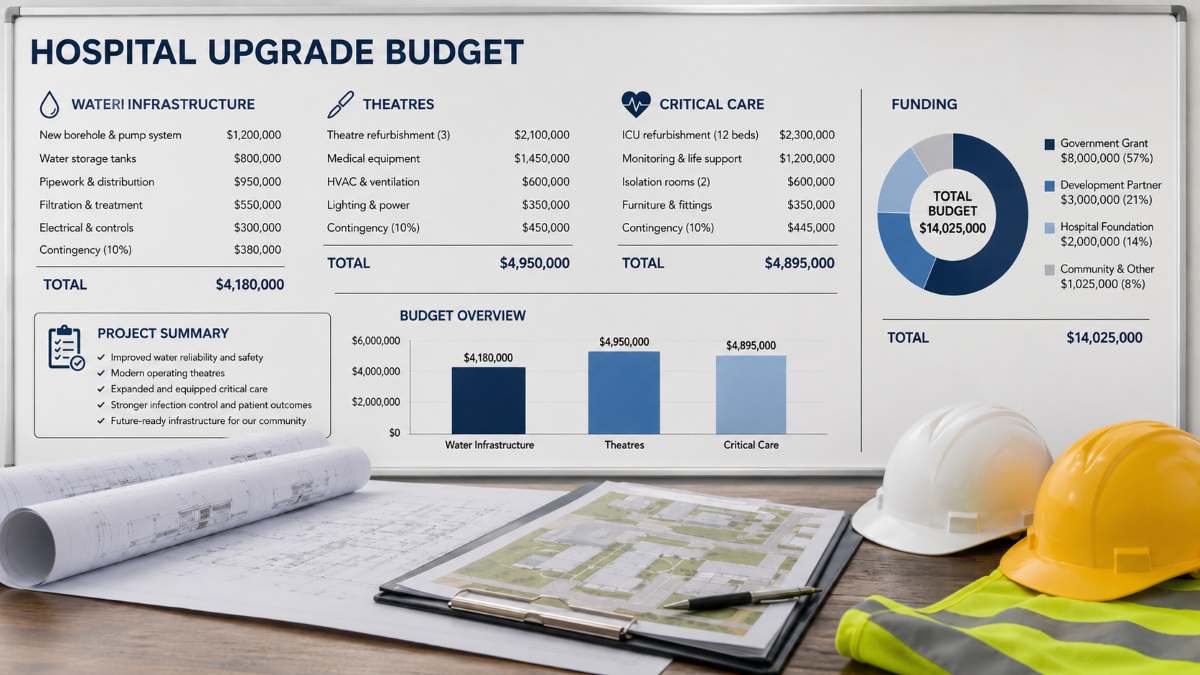
At Dundee Hospital, the planned work includes upgrades to the facility’s bulk water services, operating theatres and critical-care infrastructure.
Upgrades and additions are also planned for the hospital’s Mother and Child Unit, with the Department confirming that the relevant projects have been advertised for the appointment of design consultants.
Vryheid Hospital’s immediate regionalisation work includes a proposed upgrade of its bulk water infrastructure, for which a design consultant has also been sought.
Separately, the Department’s detailed infrastructure schedule lists additional proposed work at Vryheid Hospital, including a new maternal, child and women’s health unit, a new outpatient department and main entrance, and upgrades involving air-conditioning, fire protection and mechanical services.
These developments follow earlier commitments made by KwaZulu-Natal Health MEC Nomagugu Simelane during an Isibhedlela Kubantu outreach programme in Vryheid.
As reported by Newcastillian News in the July 2025 article, Major Upgrades for Vryheid and Northern KZN Hospitals in the Works, Simelane said the intended conversion would provide the hospital with improved medical technology and specialist services.
“You deserve quality healthcare and proper infrastructure,” the MEC said at the time.
At that stage, the plans were largely presented as part of the province’s wider effort to improve healthcare access in rural communities and reduce the burden placed on major referral hospitals.
Furthermore, the latest Treasury report now provides evidence that the process has advanced, particularly through the completion of masterplan requirements and the procurement process for professional design services.
Yet the same document exposes a substantial obstacle standing between the plans and physical construction.
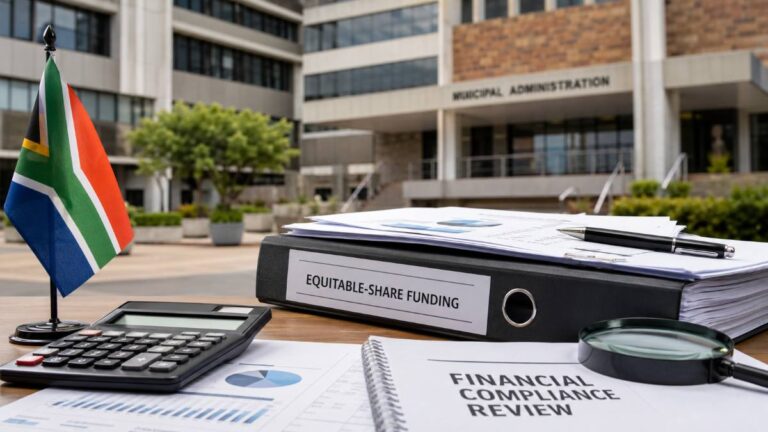
While the design-related tenders are being implemented through the Health Facility Revitalisation Grant, the Department admitted that “funding within the existing health baseline is insufficient” to support construction.
The report attributes the shortfall to existing spending pressures, fiscal constraints and continuing reductions to the provincial health budget.
Therefore, although professional planning and design work can progress, the Department cannot yet confirm that the major construction required to transform the hospitals will proceed under its current allocation.
In an attempt to address the shortfall, the provincial Department of Health is engaging National Treasury and the National Department of Health to secure alternative financing through the Budget Facility for Infrastructure.
A transaction advisory partner has also been appointed to help prepare the hospital projects for funding applications and examine possible funding models.
Planning and procurement work may continue under the Health Facility Revitalisation Grant, but the report makes clear that construction will depend on the Department securing additional funding through the Budget Facility for Infrastructure or another suitable funding model.
The financial uncertainty is especially relevant when viewed against the recent experience at Newcastle Regional Hospital, where a separate infrastructure project suffered prolonged delays before approaching completion.
As detailed by Newcastillian News in April 2026 in Newcastle Regional Hospital Upgrade Nears Completion After Years of Delays, construction began on 1 June 2022 and was initially expected to be completed by 31 May 2024.
However, the project was only reported to have reached 98% completion in April 2026 after encountering financial constraints, delayed materials, contractor-performance problems and disruptions at the site.
The contract value was also revised from approximately R35.28 million to R40.51 million during the course of the development.
During an oversight visit to the Newcastle facility, KZN Public Works MEC Martin Meyer acknowledged the problems that had affected the project, saying the Department had decided to “own our problems” rather than avoid accountability.
While the Newcastle project is separate from the proposed regionalisation of Vryheid and Dundee hospitals, its trajectory illustrates the risks that can emerge when public infrastructure developments face funding pressures, weak contractor performance and coordination difficulties between departments.
Moreover, the Department of Health’s current approach appears intended to address some of these risks before construction begins by completing the necessary planning, appointing professional consultants and securing a viable funding model.
Nevertheless, the ultimate significance of the programme will not be determined by completed plans or consultant appointments.
For residents of Vryheid, Dundee and the surrounding rural communities, the real measure of progress will be whether upgraded theatres, critical-care facilities, reliable water infrastructure, maternal and child services and expanded specialist care are ultimately delivered.
Yes, there has been measurable movement since the regional hospital plans were publicly detailed in 2025.
However, until construction funding is approved and work begins on the ground, the proposed transformation of these facilities remains an important healthcare commitment that has yet to be fully financed.

The planning is moving forward. The next and considerably more difficult test will be turning those plans into functioning hospital infrastructure.
What are your thoughts on this? Let us know below.
Be sure to read: