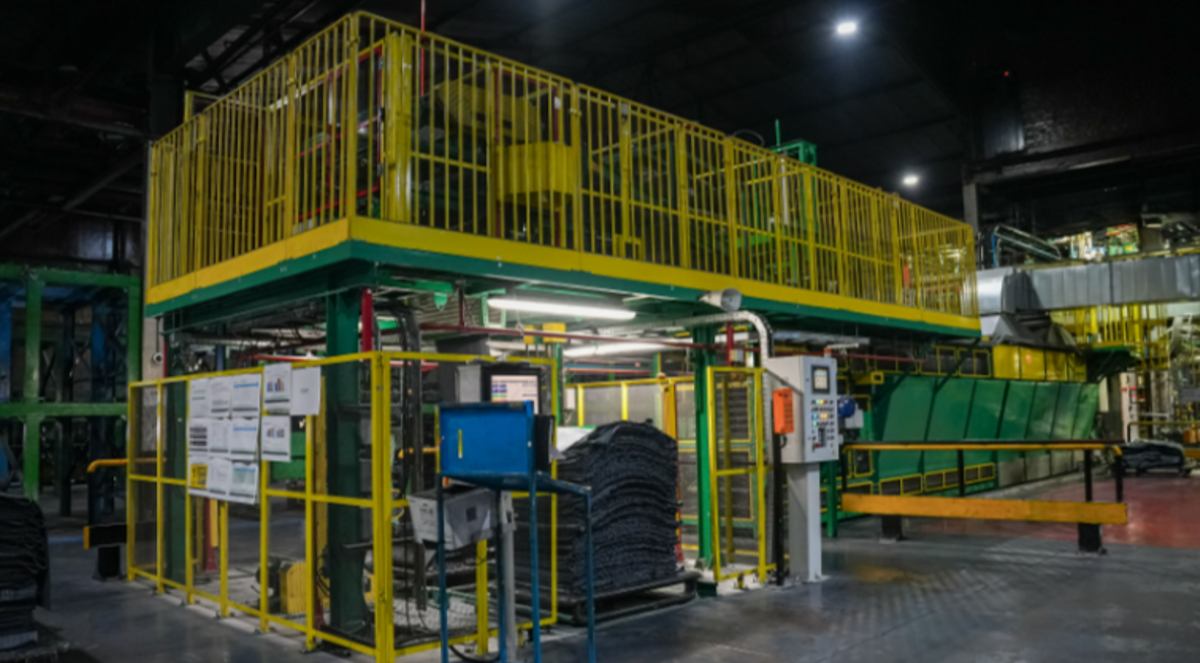
Dunlop Tyres South Africa has completed a R1.7 billion investment programme at its manufacturing facility in uMnambithi, Ladysmith, bringing new production technology into one of Northern KwaZulu-Natal’s most established industrial operations.
Completed over three years with the backing of Dunlop’s Japanese parent company, Sumitomo Rubber Industries (SRI), the investment expands the plant’s ability to manufacture passenger, SUV and light truck tyres for vehicle manufacturers and markets across Africa.
The programme includes a new compound mixer, tread line, sidewall line and advanced curing technology.

To every Durban reader who continues to read, share and engage with our reporting—thank you for being part of our ever growing KZN readership
According to Dunlop, the equipment will improve production quality, manufacturing consistency and efficiency while bringing the facility in line with current international manufacturing standards.
The expanded capabilities will support tyre production for leading vehicle manufacturers, including applications such as the Toyota Land Cruiser.
Dunlop’s original equipment partners include Toyota, Isuzu, Ford, Volkswagen and Nissan.
Speaking during an event marking the completion of the investment, SRI President and CEO Yasuaki Kuniyasu said the development reflected the company’s longer-term commitment to South Africa and its automotive industry.
“Dunlop is a brand that is built on a long history and deep trust, and it represents our mission to deliver safe, high-quality tyres to customers around the globe. Within our global strategy, our business in South Africa holds a very important place. Here, the automotive industry is one of the key industries that supports the nation’s economy and employment. To take part in that industry means a great deal to us. As a tyre maker rooted in this region, supplying high-quality tyres reliably to our OE customers is both our responsibility and our great pride,” said Kuniyasu.
He added that the investment demonstrated SRI’s continued confidence in South Africa as an investment destination while reinforcing the relationship between South Africa and Japan.
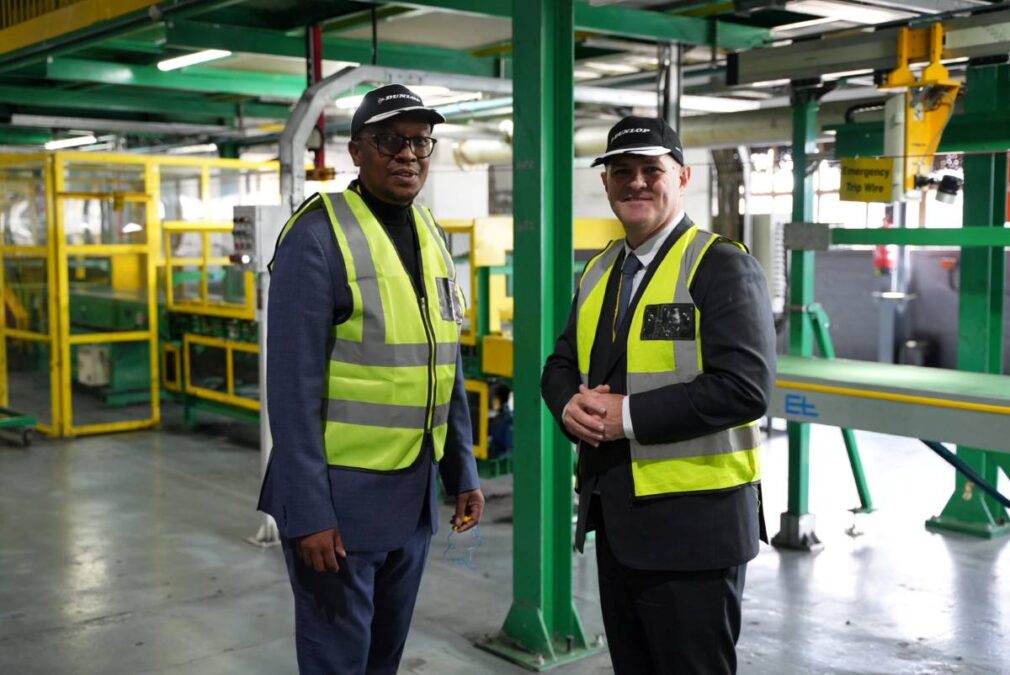
Trade, Industry and Competition Minister Parks Tau welcomed the investment, noting that the Ladysmith plant forms part of the country’s broader automotive manufacturing network.
“Thank you to Sumitomo Rubber Industries for continuing to bet on this country. This plant does not stand alone. It sits at the centre of South Africa’s automotive value chain, supplying original equipment partners that include Toyota, Isuzu, Ford, Volkswagen and Nissan. A R1,7 billion investment in local manufacturing is sustained by a fair and level playing field, and government understands that building that playing field is our collective responsibility.”
Tau said the South African Automotive Masterplan and its primary support instruments were being reviewed against the country’s 2035 targets for employment, localisation and economic growth. The review will also consider the international automotive industry’s transition towards new-energy vehicles.
“Second, and most fundamentally, we will keep choosing to invest in facilities like this one, because the answer to import pressure is not retreat. It is competitiveness—the kind this plant is demonstrating today,” Tau added.
Beyond increasing production capacity, the new equipment will allow Dunlop to manufacture very low rolling resistance tyres.
These tyres require less energy to keep a vehicle moving and can contribute to improved fuel efficiency and reduced emissions. This capability is expected to become increasingly important as vehicle manufacturers face stricter efficiency and environmental requirements.
The new compound mixer is also intended to improve compound performance and production consistency while using energy more efficiently.
Meanwhile, the upgraded curing technology provides more precise temperature control during production, which directly influences tyre quality, durability and performance.
Dunlop Tyres South Africa CEO Lubin Ozoux said the investment marked an important step in the company’s manufacturing and sustainability plans.
“This investment is about far more than infrastructure and technology. It positions our uMnambithi operation at the forefront of tyre manufacturing innovation in Africa while enabling us to produce the next generation of tyres required by vehicle manufacturers and consumers,” said Ozoux.
“The new technologies improve quality, efficiency and performance while supporting the production of very low rolling resistance tyres that will help vehicle manufacturers meet future emissions and efficiency requirements.”
KwaZulu-Natal MEC for Economic Development, Tourism and Environmental Affairs Reverend Musa Zondi said the investment demonstrated the role that public-private cooperation could play in driving economic growth.
“This is the type of investment that demonstrates the value of strong public private partnerships in driving economic growth, strengthening local manufacturing and supporting jobs and livelihoods, and positions our province as a competitive destination for investment.”
Dunlop did not announce how many new jobs, if any, resulted directly from the upgrade. However, the company remains one of the Ladysmith area’s largest employers and said its economic contribution extended beyond those employed at the plant.
According to Ozoux, local suppliers, contractors and service providers also benefit from the facility’s operations and continued investment.
“Dunlop plays a vital role in the uMnambithi economy, and our investment extends well beyond our factory walls,” said Ozoux.
“Through our support of local suppliers, contractors and service providers, the benefits of this investment ripple throughout the community, strengthening local businesses and contributing to long-term economic growth.”
Established in 1973, the Ladysmith plant manufactures passenger car, SUV, light truck, truck and bus tyres. Dunlop currently has a branded presence in 23 African countries and supplies markets including Nigeria, Kenya, Côte d’Ivoire, Zambia and Zimbabwe.
The completed upgrade is expected to strengthen the Ladysmith facility’s role in supplying these markets while supporting South Africa’s position as an automotive manufacturing and export base.
The development also comes amid further private investment activity across Northern KZN.
In neighbouring Newcastle, Lions Bay Energy is progressing with an approximately R200 million phased redevelopment of the former KCE Plant at the Karbochem Industrial Park. The project is intended to restore the facility’s electricity and process-steam production capabilities while supporting renewed activity at the industrial site.
Meanwhile, Mulilo’s proposed multi billion rand Newcastle Wind Energy Facility is expected to comprise 33 wind turbines and connect to the Eskom grid through the Incandu Main Transmission Substation.
The projects are unrelated and remain at different stages. Nevertheless, they point to continued private-sector interest in Northern KZN’s industrial infrastructure, energy capacity and skilled workforce.

In Dunlop’s case, the investment has already moved beyond planning and construction. The new equipment has been installed, the investment programme is complete, and the Ladysmith facility’s expanded manufacturing capacity is now in place.
What are your thoughts on this? Let us know below.
Be sure to read: Where Are Newcastle’s SAPS Vehicles? Security Firm Raises Alarm as CPF Confirms Resource Constraints