


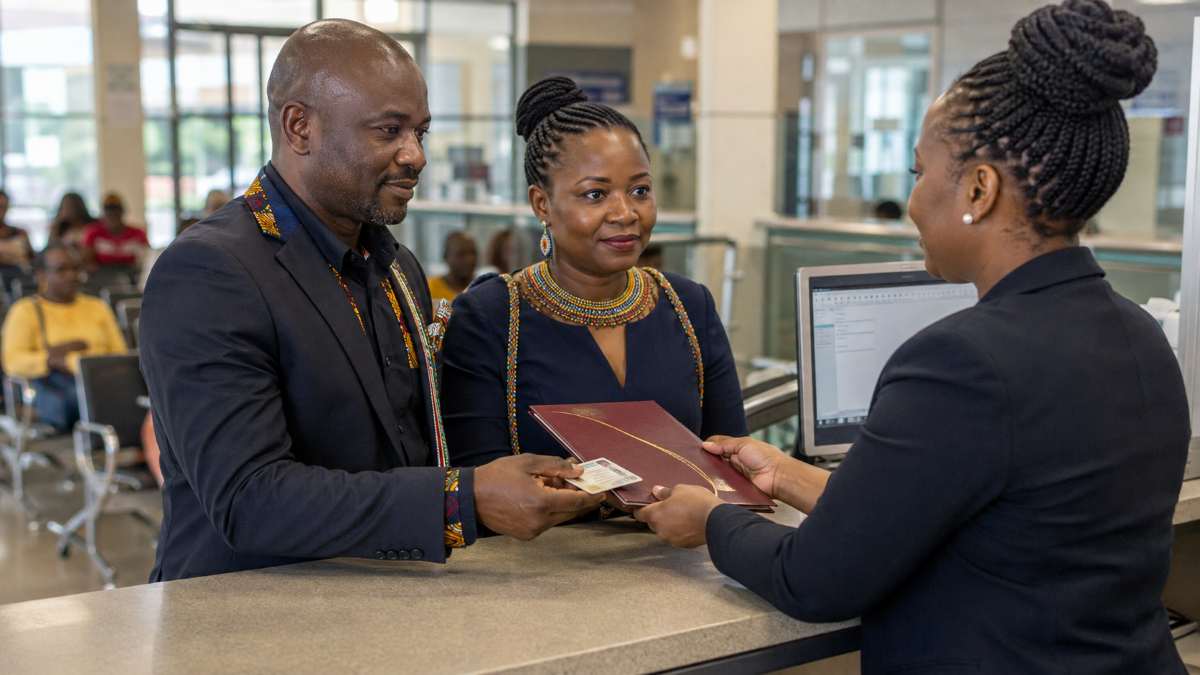
South Africans whose customary marriages were not registered within the required period have until Monday, 31 August 2026 to place their unions on the official marriage register under a special registration window.
With just over two weeks remaining, the Department of Home Affairs has urged qualifying couples not to wait until the final days, warning that a last-minute rush could result in longer queues and processing delays.
The special registration period began on 1 September 2024 and applies to customary marriages concluded before the Recognition of Customary Marriages Act took effect on 15 November 2000, as well as marriages entered into after that date but not registered within the prescribed period.
According to the Department of Home Affairs, the temporary window allows parties to previously unregistered customary marriages to regularise their marital status.
While the approaching deadline is important, it does not mean that every unregistered customary marriage automatically becomes invalid on 1 September 2026.
Section 4(9) of the Recognition of Customary Marriages Act states that failing to register a customary marriage does not, by itself, affect its validity.
However, registration provides spouses with an official certificate that serves as prima facie proof that the marriage exists and records important details concerning the union. Without this certificate, proving the marriage can become significantly more difficult if its existence is later disputed.
This can create complications during the administration of a deceased estate, inheritance claims, divorce proceedings, property disputes and other legal or administrative processes requiring proof of marital status.
The Department of Justice and Constitutional Development warns that proving an unregistered customary marriage can be particularly difficult after one spouse has died, when witnesses or supporting evidence may no longer be readily available.
“Registration of a marriage is fundamental to the protection of the rights of women and children in customary marriages,” the Department explains in its guidance on customary unions.
Who qualifies for the special registration period?
The 31 August deadline applies to parties to valid customary marriages that were not registered within the legally prescribed period.
This includes:
- customary marriages concluded before 15 November 2000 that remain unregistered; and
- customary marriages entered into after 15 November 2000 but not registered within the required period.
For a customary marriage entered into after the Act came into effect to be valid, both parties must have consented to marry each other under customary law, and the marriage must have been negotiated and entered into or celebrated according to the applicable customary law.
The Act generally requires both prospective spouses to have been older than 18. It also contains provisions governing marriages involving people who were minors at the time.
Lobola can provide evidence that a marriage was negotiated in accordance with custom, but the Department of Justice states that the payment of lobola is not, on its own, an absolute legal requirement determining whether a customary marriage exists.
What couples should take with them
The Department of Justice’s published guidance advises both spouses to attend the registration process with:
- copies of their valid identity documents;
- a lobola agreement, if one is available;
- at least one witness from the bride’s family;
- at least one witness from the groom’s family; or
- appropriate representatives from the respective families.
Where either spouse was a minor when the customary marriage was concluded, the relevant parents may also need to be present.
Customary marriages are registered using the prescribed documentation, with an acknowledgement of receipt issued once the application has been lodged.
Requirements may differ according to the circumstances of a particular marriage. Home Affairs has therefore advised couples to visit or contact their nearest office beforehand to confirm the supporting documents and people who must accompany them.
Where can a customary marriage be registered?
Applications can be made at a Department of Home Affairs office. The Department of Justice’s public guidance also indicates that registration may be completed through a designated traditional leader in an area without a Home Affairs office.
However, couples intending to use a traditional leader should first confirm that the person has been formally designated to perform the registration function.
Either spouse may initiate an application under the Act. In practice, having both spouses and the necessary family witnesses present can assist the registering officer in confirming that a valid customary marriage was concluded.
The registering officer must be satisfied that the marriage exists before entering it into the register. If the officer is not satisfied, the application may be refused. A court may also, after an application and investigation, order the registration, cancellation or correction of a customary-marriage record.
Why the registration certificate matters
Once the marriage is registered, Home Affairs issues a certificate recording the marriage and its prescribed particulars.
The certificate provides official evidence of the union, reducing the likelihood that a spouse will later have to reconstruct the marriage through family testimony, lobola records, photographs or other evidence.
This can be especially important when:
- a spouse dies and an estate must be administered;
- inheritance rights are disputed;
- property ownership or marital assets must be determined;
- a spouse applies for benefits or services requiring proof of marriage;
- the couple divorces; or
- the existence or date of the marriage is challenged.
The consequences can become more complicated where a person has entered into more than one customary marriage. Additional customary marriages are subject to further requirements, including measures governing the matrimonial property interests of all spouses. People in these circumstances should obtain guidance from Home Affairs or independent legal advice rather than assuming that ordinary registration requirements are sufficient.
Home Affairs has not indicated that the current special period will be extended beyond 31 August 2026.

Qualifying couples should therefore begin the process as soon as possible and retain copies of all documents submitted and any acknowledgement received.
Official information is available from Home Affairs’ deadline notice, the Department of Justice’s customary-marriage guidance and the Recognition of Customary Marriages Act.
What are your thoughts on this and be sure to read:









One Response
What if my partner doesnt want us to register our Lobola and we already built house together what woyld happen of we separate ,and can i register without him