After more than two years of delays, construction at Newcastle Regional Hospital has now entered its final phase, with completion expected within the next month.
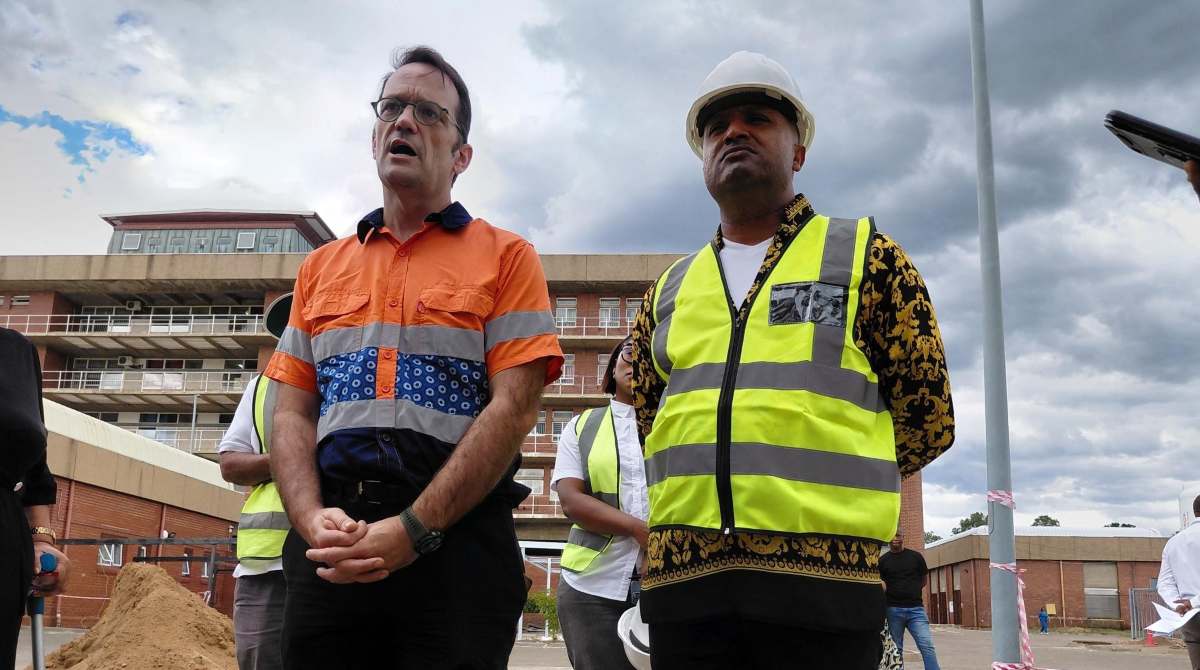
The long-overdue project, which is central to strengthening public healthcare infrastructure in northern KwaZulu-Natal, was the focus of a recent oversight visit by KwaZulu-Natal MEC for Public Works, Martin Meyer.
PAID ADVERTISING
This, as his department intensifies efforts to address stalled and backlogged developments across the province.
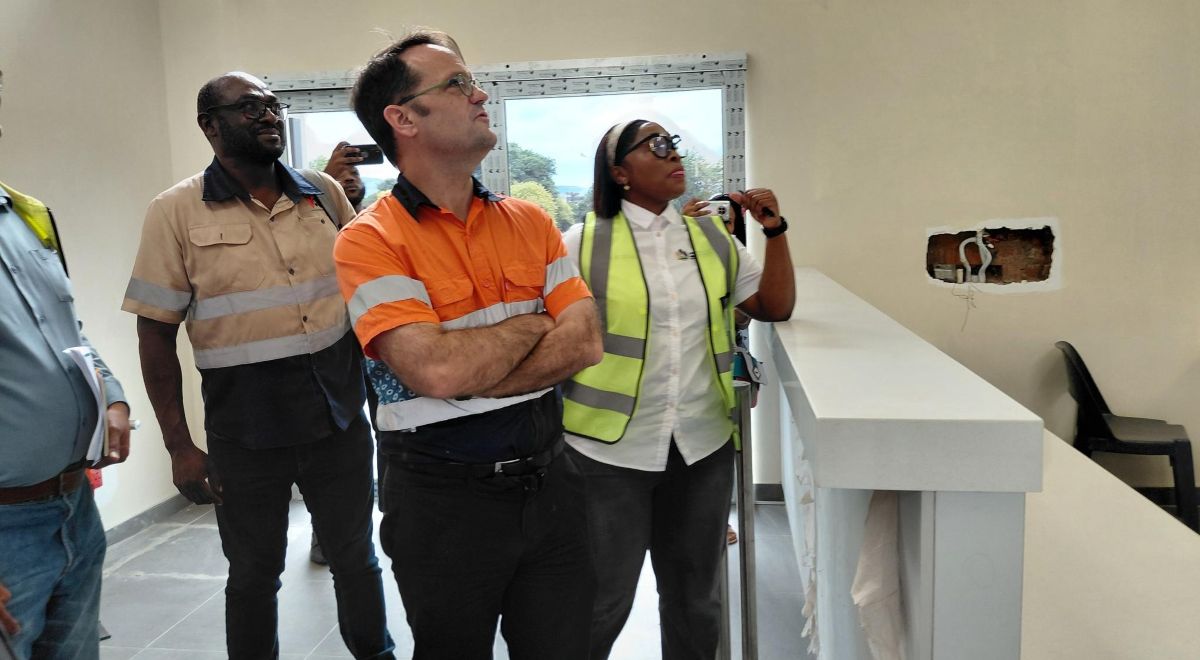
During the visit, MEC Meyer and his delegation from KZN Public Works met with contractors and hospital management at Newcastle Regional Hospital, the town’s primary mother-and-child facility, to assess progress and confirm revised completion timelines.
The engagement formed part of a broader drive to restore confidence in the delivery of public infrastructure projects.
When looking at the hospital project, construction began on 1 June 2022 and was initially scheduled for completion by 31 May 2024. The project’s primary aim has been to upgrade hospital services to a standard more closely aligned with those of private healthcare facilities.
However, as previously reported by Newcastillian News in August 2023, the development was beset by multiple setbacks during an earlier oversight visit by former MEC for Public Works, Sipho Nkosi.
These included financial constraints, delays in the delivery of materials, and disruptions linked to a forum attempting to impose its own contractors on the site.
Despite these earlier challenges, contractors reported that the project has now reached 98% completion.
While acknowledging that initial delays were largely attributable to failures by the previous contractor, they indicated that work has since stabilised, with final completion anticipated within the next three weeks.
In financial terms, the contract value was revised upward from R35 280 974,41 to R40 508 131,56.
Nevertheless, a representative of the construction company confirmed that expenditure has remained controlled, with only R35 484 80,90 of the allocated budget spent thus far.
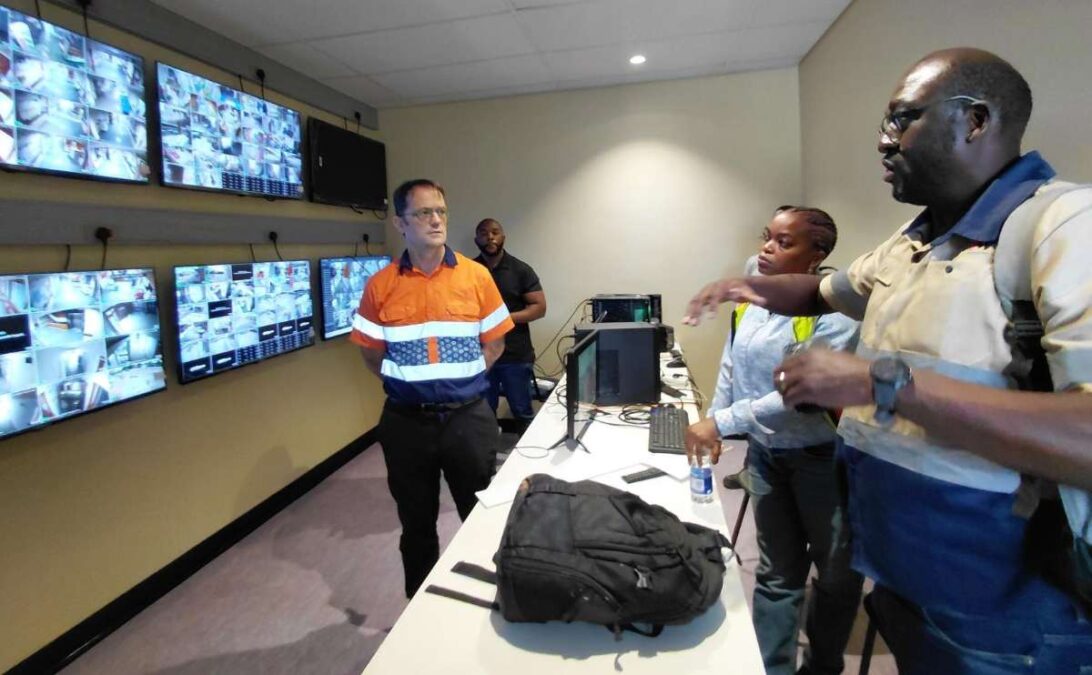
Moreover, attention has now shifted to the final phase of upgrades, with a strong emphasis on security and infrastructure resilience. A representative from Isimo Engineers outlined that the remaining work includes the installation of 150 motion-activated CCTV cameras within the hospital and an additional 50 externally, all integrated into a centralised access control system.
In addition, fire detection and prevention systems are being upgraded, while the hospital’s boiler system is being converted to energy-efficient heat pumps. Security enhancements will also extend to new gatehouse control centres and a central command room.
For hospital management, the nearing completion marks the end of what has been a complex and often disruptive process.
Newcastle Regional Hospital CEO, Dr Jabu Duze, underscored the importance of the security improvements, particularly given the hospital’s responsibility to vulnerable patients and children under the age of 13. At the same time, she acknowledged the operational strain caused by ongoing construction within a live healthcare environment.
“It’s been quite a rough ride. When you think of running a project live in a hospital, it is always going to be a problem, as a lot has been happening, disrupting the flow of the hospital. So, we are excited we are nearing the end of the project” she explained, adding that contractors have kept hospital management informed throughout.
From a departmental perspective, the project reflects broader systemic challenges inherited by the current administration.
Head of Department for KZN Public Works, Dr Vish Govender, noted that 66 backlogged projects were handed over to the department, with Newcastle Regional Hospital among them. Under MEC Meyer’s leadership, he said, addressing these delays has become a central priority.
“A key focus needs to be projects such as this, and we have set ourselves at Public Works a mammoth task to ensure that under our stewardship, KZN would not suffer a lack of development and progress.”
Govender further stressed that extended delays are unacceptable, adding that where such issues arise under the current administration, accountability mechanisms will be enforced to prevent recurrence.
Against this backdrop, MEC Meyer acknowledged that strained relations between the Department of Public Works and the KZN Department of Health had contributed to the project’s difficulties.
He maintained, however, that efforts to rebuild that relationship are now yielding results, supported by a renewed focus on delivery and accountability within Public Works.
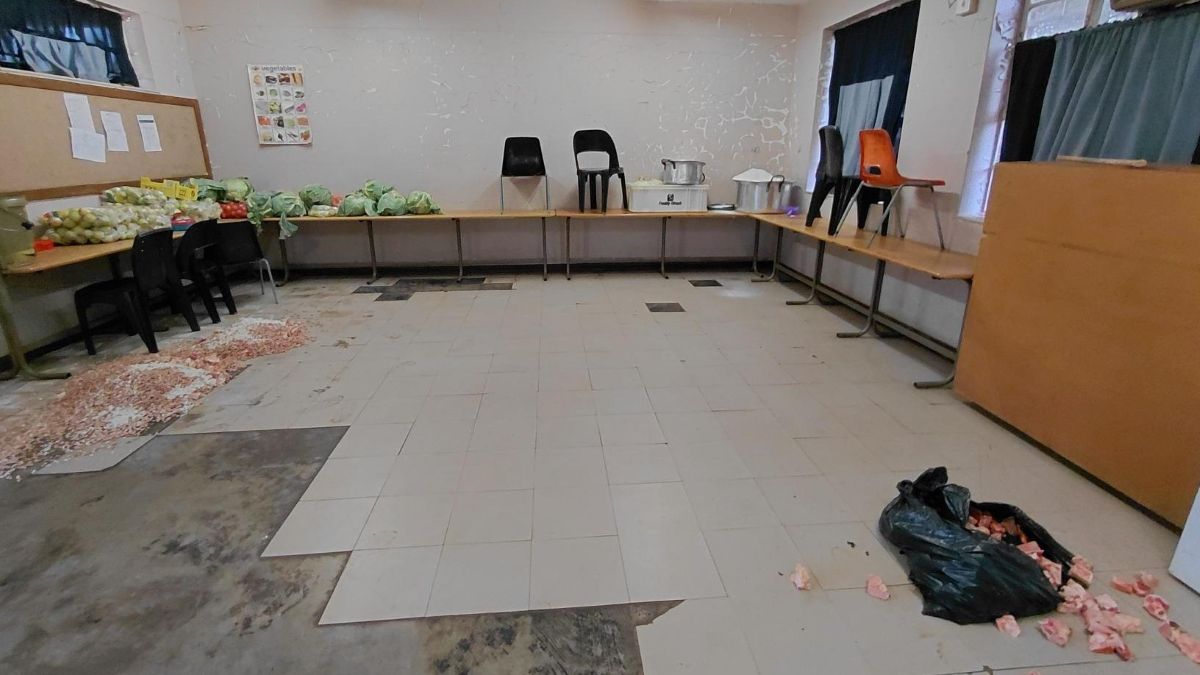
Following the oversight inspection—which also included the newly constructed Celani Primary School in Madadeni—MEC Meyer said the department is adopting a more transparent approach to project management.
“Both these projects had problems, and as a Department we’ve decided to take a different stance in that we are going to own our problems. If there’s a problem, we are going to admit to it.”
He added that the department is placing increased emphasis on institutional learning and performance improvement.
“I think we are learning very fast and improving from so many stalled projects. I know I repeat this often, but I feel this is important for my officials as well. Public Works does not teach your children, and we don’t deliver the babies, but we provide the infrastructure for you, your team, your nurses, and your doctors to deliver those babies, who our teachers will then teach, and we are proud that we are doing it better.”
At the same time, MEC Meyer highlighted the operational complexity of executing large-scale upgrades within an active hospital setting.
“It is always very challenging, as we have two government departments working simultaneously, the Department of Health and ourselves. Another big challenge is that the hospital does not close down when we do things like this. The hospital has to remain 100% functional, while we are doing this work, so they have to work around us, while we have to consider the safety and security of the patients and staff at all times.”
Such conditions, he noted, require careful coordination between the Department of Health, the Department of Public Works, contractors, and hospital management to ensure that construction progresses without compromising patient care.
Reflecting on earlier setbacks, MEC Meyer stated the following:
“This project, that is where the problem lies. The contractor was not able to provide the services, and we are grateful for the contractors we have, who have stepped up and are doing the work for us. There are so many good contractors in this province, and we are now weeding out the bad ones, and building the relationship with the good ones,” said the MEC.
He further noted that the hospital’s CCTV system would be the first of its kind installed at a government hospital in KwaZulu-Natal, marking a significant step forward in facility security.
Addressing the Newcastle community, MEC Meyer concluded, “From my side to the community of Newcastle, we apologise for the delay, we take ownership of the mistakes we’ve made. But the improvements we have seen in this department are amazing, and we are looking forward to providing this world class healthcare institution that looks as good as the services it offers.”
As the project moves into its final stretch, the near-completion of Newcastle Regional Hospital stands as both a recovery milestone and a test of whether sustained oversight can translate into long-term delivery.
After prolonged setbacks, the visible progress on site signals a shift from stagnation to execution—one that provincial authorities will be under pressure to replicate across other delayed infrastructure projects.
For a facility that plays a critical role in maternal and child healthcare in northern KwaZulu-Natal, the upgrades are expected to significantly improve both patient experience and operational efficiency.
At the same time, the project’s trajectory underscores the importance of accountability, coordination, and contractor performance in public sector delivery.
With enhanced security systems, modernised infrastructure, and renewed interdepartmental cooperation now taking shape, the hospital is poised to re-emerge as a more resilient and capable institution. Whether this marks a broader turning point for infrastructure delivery in the province will depend on the consistency with which these lessons are applied beyond Newcastle.
What are your thoughts on this? Let us know below.
Newcastillian News invites your input. We ask that you keep your remarks courteous and on-topic. We do not allow any form of hate speech, such as racist or sexist comments. All comments are subject to moderation in line with our User Rules and Commenting Policy.















One Response
Will the hospital be open to all now i hope so