


Opinion Piece:
Every day, Newcastle carries the weight of a regional centre, even if it does not always speak about itself that way.
People arrive from surrounding towns, townships, farms and rural communities for shopping, medical care, schooling, legal matters, government services, vehicle repairs, specialist appointments, work opportunities, business meetings and access to services that are not always available closer to home.
They come from historic Northern KwaZulu-Natal towns such as Utrecht, Dannhauser, Dundee, Vryheid, Ladysmith and Charlestown.

They come from Madadeni and Osizweni, from farming communities and smaller settlements, and in some cases from areas stretching beyond the provincial boundary.
For many people outside Newcastle, the town is not simply another point on the map. It is where they go when something needs to be sorted out.
Yet within Newcastle itself, the town is often spoken about as if it is fading, shrinking or waiting for divine intervention to rescue it.
That contradiction speaks directly to Newcastle’s identity problem. Northern KZN still depends heavily on Newcastle, but Newcastle does not always seem convinced of its own importance.
This is where the conversation needs to become more honest.
Official planning documents have, for years, described Newcastle in far stronger terms than many locals use in everyday conversation. The Newcastle-Madadeni-Osizweni node has repeatedly been recognised as the key economic centre of Amajuba District, as well as one of the larger economic centres in KwaZulu-Natal.
The bulk of the district’s industrial, commercial and service activity remains concentrated in and around Newcastle, particularly along the N11 and the route linking Newcastle to Madadeni and Osizweni.
In plain terms, Newcastle is not merely a town trying to remain relevant.
It is the main urban, commercial, industrial and service centre of the district. It is where government functions gather, where regional services are concentrated, where transport routes meet, where surrounding communities spend money, and where smaller towns often turn when they cannot carry certain functions on their own.
Its position also strengthens this role.
The N11 connects Newcastle north and south, linking the area to important economic movement between KwaZulu-Natal, Gauteng and Mpumalanga. The R34 gives the town east-west relevance, connecting it to surrounding towns and broader regional activity.
These routes are not just lines on a map. They shape trade, movement, investment, labour, service delivery and the way people across Northern KZN access opportunity.
Basically, Newcastle already behaves like the unofficial capital of Northern KZN, and my hope is that more people begin to see it through that same lens.
The question is therefore not whether Newcastle matters. The evidence clearly suggests that it does.
The harder question is whether locals understand the extent of the town’s own role, and whether Newcastle is prepared to act with the adaptability and confidence required of a regional driver.
Ask most locals and there is a strange emotional gap in the town.
From the outside, Newcastle remains the place people travel to. From the inside, many residents speak about it as the place that used to be.
Like many South African towns, Newcastle’s future and identity have somehow become linked almost entirely to municipal and government performance. When the municipality struggles, the town is viewed as struggling. When roads deteriorate, the whole town is described as broken.
When crime rises, people speak as if the entire community has lost its way.
There is truth in those frustrations. But there is also a danger in allowing government failure to become the only lens through which a town sees itself.
In reality, especially in rural and regional areas, towns do not only move forward because government suddenly gets everything right.
They move forward when the business sector, residents, schools, civic organisations, young professionals and community structures begin to work better together.
If the local business sector starts working with more purpose, more business is created. When more business is created, more jobs follow. When more jobs follow, industry and opportunity expand. Over time, the business sector and the community become far more influential in shaping the direction of the town.
That is why, at least in my experience, many Newcastle residents no longer value their town properly. They are viewing it almost entirely through government-controlled sectors such as the municipality, policing, infrastructure and public services.
In all fairness, and as a local, that devaluing did not appear without reason.
We are all sick of damaged roads, failing infrastructure, rampant drug abuse, increasing crime, struggling police services and divided communities. Business owners are frustrated. Families are uncertain about the town’s next chapter. Young people look around and ask what is really here for them.
But those complaints also tell us something important. In many ways, the answers are already in plain sight.
People are not simply complaining for the sake of complaining.
Beneath the frustration, they are asking for growth.
They are asking for a stronger local economy. They are asking for development that can actually be seen and felt across the town, not only spoken about in meetings or planning documents.
They want safer public spaces, cleaner streets, better business confidence, stronger opportunities and a town that gives families peace of mind. Most importantly, they want young people to be stimulated, included and given a reason to stay.
That is what makes Newcastle’s current mood so important. The anger is not only about potholes, crime, infrastructure or poor service delivery. It is also about expectation. People are frustrated because they know, whether they say it directly or not, that Newcastle should be further ahead than it is.
But when that frustration becomes the only language a town uses to describe itself, the conversation begins to turn against the town itself. It stops being a demand for better and becomes a habit of defeat.
That is when a town starts losing something bigger than confidence. It begins losing the ability to explain its own value.
After years of speaking to people across the area, that is where Newcastle currently appears to be caught.
From an outsider’s perspective, Newcastle has not lost all relevance. Far from it. In actual fact, it remains a good place to invest, trade, serve and build.
What it has lost, or at least weakened over time, is a clear public story about what it is, what it serves and what it could still become.
That story does not rest on the shoulders of government alone. It is dependent on residents as well. It is shaped by how businesses speak about the town, how schools position themselves, how young people see their future here, how investors view the area, and how ordinary residents describe Newcastle when they speak to people from outside.
For decades, Newcastle’s identity was much easier to explain.
It was an industrial town.
Coal, steel, manufacturing, textiles, engineering, transport and large-scale, stable employment shaped how the town understood itself. Families were built around shift work, workshops, factories and blue overalls. That history still carries weight. It is part of Newcastle’s economic memory and part of the reason the town developed the scale it has today.
However, economic memory is not the same as future direction.
A town cannot move forward only by pointing to what it once was. It must also understand what it has become, what it is becoming, and what it needs to become if it wants to stay relevant.
That is where Newcastle’s story becomes more interesting, because the town is no longer only an industrial centre.
It is also a regional service centre, a retail hub, a medical destination, an education centre, a legal and government access point, a media market, a township economy powerhouse and a business base for companies serving the wider Northern KZN region.
That combination should be one of Newcastle’s greatest strengths. It should be developed, packaged and promoted with far more intention.
Instead, it often feels underused and underpromoted.
The town has the bones of a regional city, but too often carries the confidence of a place still waiting for permission to act like one.
This is why the local conversation needs to become more honest, but also more ambitious. Newcastle’s challenges must be acknowledged clearly, because residents live with them every day. But those challenges should not be allowed to erase the town’s wider regional function.
People continue to come here because Newcastle still provides services, access and economic activity that many surrounding areas cannot fully offer. That daily movement is one of the clearest signs of the town’s importance.
This movement does not always arrive with ribbon cuttings, speeches or official announcements. Much of it happens quietly, through ordinary routines.
Yet those routines are the real economy of Newcastle.
It is not only what appears in reports. It is not only what gets announced by officials. It is not only what can be seen from Allen Street, Victoria Road or the entrances to major shopping centres.
It is the daily exchange of people, money, labour, services, frustration, trust and opportunity across a much wider region.
That is why Newcastle cannot afford to see itself as small anymore. Its responsibilities are too large, and the time frame to respond is getting tighter.
This is also why so many companies based in Johannesburg, Durban and other major centres continue to focus on this region. They see what many locals have stopped seeing clearly. They see the movement, the demand, the spending power, the access routes and the opportunities still sitting across Northern KZN.
In many ways, that should make Newcastle pause.
If outside businesses can see value in the region, then surely the town itself needs to start recognising, protecting and developing that same value with far more confidence.
But any serious conversation about Newcastle’s future must widen the lens.
It cannot focus only on the CBD, the suburbs, the main roads and the formal business zones. It must also stop treating Madadeni and Osizweni as secondary parts of the story.
Too often, Newcastle is spoken about as if the CBD and suburbs represent the whole town, while Madadeni and Osizweni are treated as separate, distant or purely residential.
That view is outdated and economically shallow.
The greater Newcastle-Madadeni-Osizweni area is where population, spending power, labour, culture, transport, education, entrepreneurship, faith communities, sport and informal trade all meet. It is also the area that official planning documents identify as central to the district’s economic activity.
If Newcastle wants to define itself properly, it must stop treating township economies as separate from its future. They are part of the centre. They are part of the market. They are part of the workforce. They are part of the culture. They are part of the story.
That is why the town’s identity cannot be reduced to one neat label.
Newcastle has many pieces of a strong identity: industrial history, regional importance, township energy, schools, private healthcare services, battlefield and heritage links, road connections, business infrastructure, media reach and surrounding towns that continue to depend on it.
The problem is that these pieces do not always form a clear public narrative.
Is Newcastle an industrial town? A regional business hub? A gateway to Northern KZN? A service centre? A family town? A logistics point? A tourism link? A city in waiting?
in all honesty, the answer may well be all of these things.
But unless that story is shaped properly, Newcastle will continue to drift between old pride and present frustration. It will keep remembering what it was, complaining about what it is, and struggling to explain what it could become.
Growth and movement are not only the responsibility of the municipality. A town’s identity cannot be left to official documents, development plans or political speeches.
It must be lived, repeated and strengthened by everyone who has a stake in the place. Business owners, residents, schools, civic organisations, churches, young professionals, developers, media platforms and community leaders all have a role to play.
Government entities still matter, of course. They must provide the infrastructure, planning, safety and basic services needed for a town to function properly. But they should not be the entire stage on which Newcastle’s future is performed.
At best, government should play a supporting role in a much wider civic effort.
The real movement of a town comes when its people, businesses and communities begin to believe in the place enough to build around it.
Of course, none of this means Newcastle’s problems should be ignored.
Residents have every right to question poor service delivery, failing infrastructure, unsafe areas, business decline, dirty public spaces, weak planning and a lack of urgency from those in authority. Accountability remains necessary, especially in a town carrying regional responsibility.
However, accountability and hopelessness are not the same thing.
There is a difference between demanding better from a town and speaking about it as if it is already finished. The first can build pressure for progress. The second slowly teaches people to give up and leave.
This is where the local conversation needs more balance and productivity.
It is easy to say Newcastle is dying when looking only at the things that frustrate residents every day. The damaged roads, service delivery failures, crime concerns, struggling public spaces and general lack of visible progress all feed that feeling. People are not wrong to be angry about those things.
But that is still not the full story.
Even with those frustrations, surrounding communities continue to use Newcastle. Businesses continue to operate. Families still travel here for schools, hospitals, shopping and services. Contractors still collect supplies.
Young entrepreneurs still try to build something. Professionals still work here. Investors from outside the town still look at the wider region and see opportunity.
That is why the truth is more complicated than the complaint.
Newcastle is not dead. It is underdefined.
Perhaps the town’s deepest frustration comes from the fact that it has always felt as if it should be further ahead. It has always carried a larger role than its title suggests. Bigger than a small town. Bigger than a stop along the N11.
When progress feels slow, that expectation easily turns into anger. People begin to measure the town against what they believe it should have become by now, and when reality falls short, frustration becomes the default response.
But that same expectation can also become direction, if Newcastle learns how to use it properly.
The town does not need to pretend it is Durban, Pietermaritzburg, Johannesburg or anywhere else. It does not need to copy larger cities to prove its worth. Its opportunity lies in becoming a stronger, more confident version of what it already is: the main regional hub of Northern KZN.
That means a town able to connect smaller towns, support families, serve businesses, anchor services, grow township economies and give young people more reasons to stay.
This future is not some distant fantasy. Parts of it already exist. However, the task now is to bring those fragments together into a clearer civic identity.
Northern KZN depends on Newcastle more than Newcastle sometimes admits.
That dependence should not make the town arrogant, but it should make it more responsible in how it plans, how it markets itself, how it treats businesses, how it supports young people, how it includes Madadeni and Osizweni, how it protects public spaces and how it speaks about itself.
Because the way a town speaks about itself eventually shapes what others believe about it.
If Newcastle keeps describing itself only as broken, forgotten and finished, that becomes the story people inherit.
But if Newcastle starts seeing itself more clearly, not through fake positivity, but through an honest recognition of its regional role, then a different conversation becomes possible.
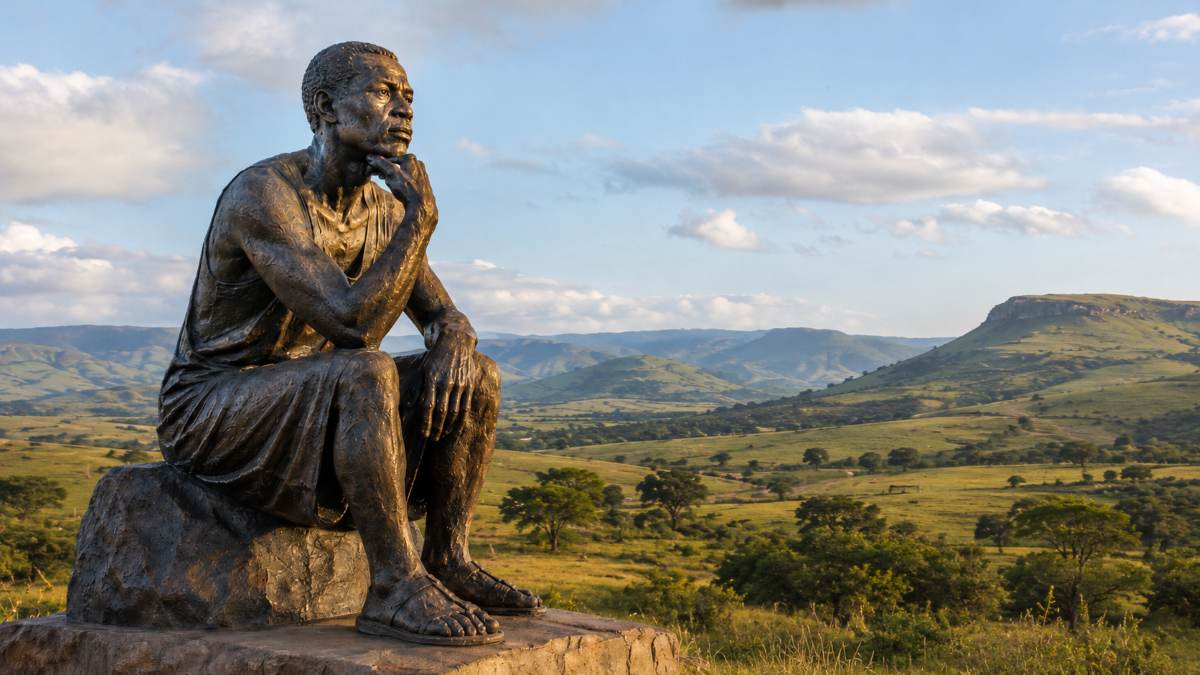
Newcastle is the Northern KZN capital without a crown.
It is already carrying much of Northern KZN on its shoulders.
The question is whether it will keep waiting for someone else to recognise that, or whether it will finally start acting like the regional centre it already is.
With all of this in mind, what are your thoughts? What do you believe is a practical step forward?
While you are here, be sure to read: Help Shape Newcastle’s Tourism Future by Completing New Municipal Survey
FAQs:
Newcastle is important because it serves as a major regional hub for Northern KwaZulu-Natal. People from surrounding towns, townships, farms and rural communities travel to Newcastle for shopping, healthcare, education, government services, business, legal matters and work opportunities.
Yes. While Newcastle faces challenges, it remains one of the main economic centres in the region. Its retail sector, industrial history, healthcare services, schools, township economy, transport routes and business activity continue to support surrounding communities.
Newcastle is underdefined because it plays a much larger regional role than many locals acknowledge. The town functions as a service centre, business hub, industrial base, education point and gateway to Northern KZN, but it does not always promote or explain that identity clearly.
Madadeni and Osizweni are central to Newcastle’s future. They contribute population, labour, spending power, culture, entrepreneurship, informal trade and community energy. Treating them as separate from Newcastle’s growth story is outdated and economically shallow.
Newcastle is not dead. It is facing serious challenges, including infrastructure problems, crime concerns and business pressure. However, surrounding communities still depend on the town, businesses continue to operate, and opportunities still exist across the wider region.
Newcastle needs a clearer civic identity, stronger business confidence, better public spaces, improved infrastructure, youth development and greater cooperation between residents, businesses, communities and government. Its future cannot depend on the municipality alone.
“Capital without a crown” means Newcastle already carries many of the responsibilities of a regional capital, even though it does not officially hold that title. It serves surrounding towns and communities, but still needs to recognise and develop that role with more confidence.








One Response
Great article. Sick of all the stupid people focussed on what government is doing that you would think they are their kings and queens. Newcastle people are famous in KZN for complaining all the time and not understanding the bigger picture.