


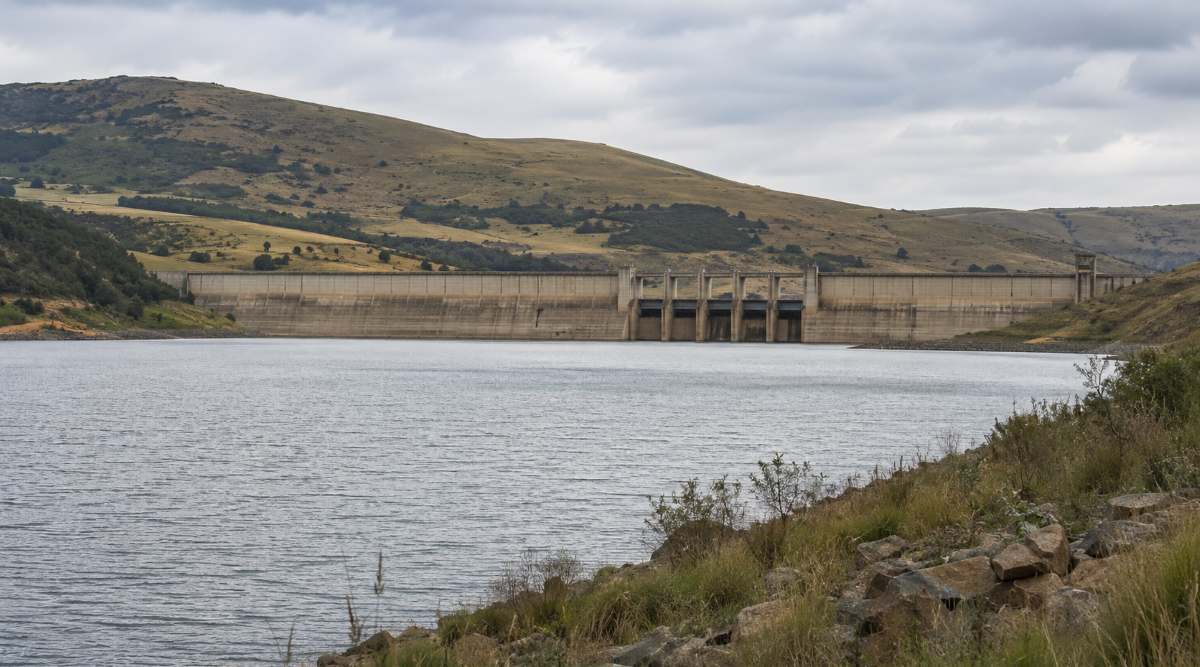
In assessing the early stages of the winter period, the Department of Water and Sanitation (DWS) has indicated that dam levels across KwaZulu-Natal remain largely stable, despite minor declines in several major water storage systems.
In an official statement, the DWS stated:
“KwaZulu-Natal’s overall dam storage currently stands at 91.1%, a marginal change from 91.2% recorded last week. While this remains lower than the 97.7% recorded during the same period last year, the province’s water storage systems continue to be in a relatively healthy state, with many dams still above 90%.”
Against this backdrop, and notwithstanding slight week-on-week fluctuations, some key dams continue to hold firm at strong capacity levels.
A closer examination of the latest available figures from the DWS offers further insight into the province’s current water outlook:
- Albert Falls Dam’s water levels are currently at 97.5%, reflecting a slight decrease from the previous week’s reading of 98.3%.
- Similarly, Midmar Dam registers at 95.8%, marking a marginal decline from 96.4% recorded last week.
- In contrast, Nagle Dam has recorded a notable increase, with levels rising from 91.3% to 93.8%.
- Spring Grove Dam, which stood at 100.4% last week, has edged down slightly to 99.0%, representing a minimal adjustment.
- Meanwhile, Inanda Dam remains stable at 100.8%, showing only a negligible variation from the previous reading of 100.7%.
- Hazelmere Dam has recorded a modest decrease, moving from 97.1% to 96.3%.
- Ntshingwayo (Chelmsford) Dam has also declined, from 75.5% to 74.7%; significantly, the DWS noted that this remains well below the 94.8% recorded during the same period last year.
- Elsewhere, Spioenkop Dam remains unchanged and full at 100.0%, underscoring continued stability in that system.
- Wagendrift Dam stands at 100.4%, reflecting only an insignificant change from last week’s 100.7%.
- Goedertrouw Dam is currently at 97.6%, down slightly from 98.0% recorded previously.
- Hluhluwe Dam has eased marginally to 93.9%, compared to 94.6% last week.
- Klipfontein Dam, however, has remained consistently strong at 99.7%, unchanged week-on-week.
Taken together, these figures point to a generally stable, albeit gradually shifting, water storage landscape across the province.
Nevertheless, the DWS has cautioned that winter conditions typically introduce prolonged dry spells, which, in turn, place sustained pressure on water resources.
“The Department therefore continues to encourage all residents, businesses, and water users across the province to use water responsibly and avoid unnecessary wastage. South Africa remains a water-scarce country, and responsible water use remains essential in protecting this shared resource. Small everyday actions such as fixing leaks, using water sparingly, and avoiding waste can make a meaningful difference in securing water supply for communities now and into the future,” concluded the DWS.
Set against this backdrop, the province enters the winter period from a position of relative strength, yet not without clear pressure points beginning to emerge.
While overall storage remains high, the slower declines and uneven performance across key dams—particularly where levels trail well below last year—point to a system that will require careful management rather than complacency.
As the dry months deepen, the margin for error inevitably narrows, placing greater emphasis on consistent oversight and disciplined water use. In that regard, the coming weeks will be less about headline figures and more about whether stability can be sustained under tightening seasonal conditions.
Be sure to read: Ladysmith Protest Set For Tuesday As Estcourt Looting And N3 Arrests Raise Tensions Over Illegal Immigration













One Response
What is being done to improve water quality at Albert Falls dam to enhance bass fishing
This dam has fallen from a top bass dam to a none bass dam
This years Albert Falls Classic has been cancelled