


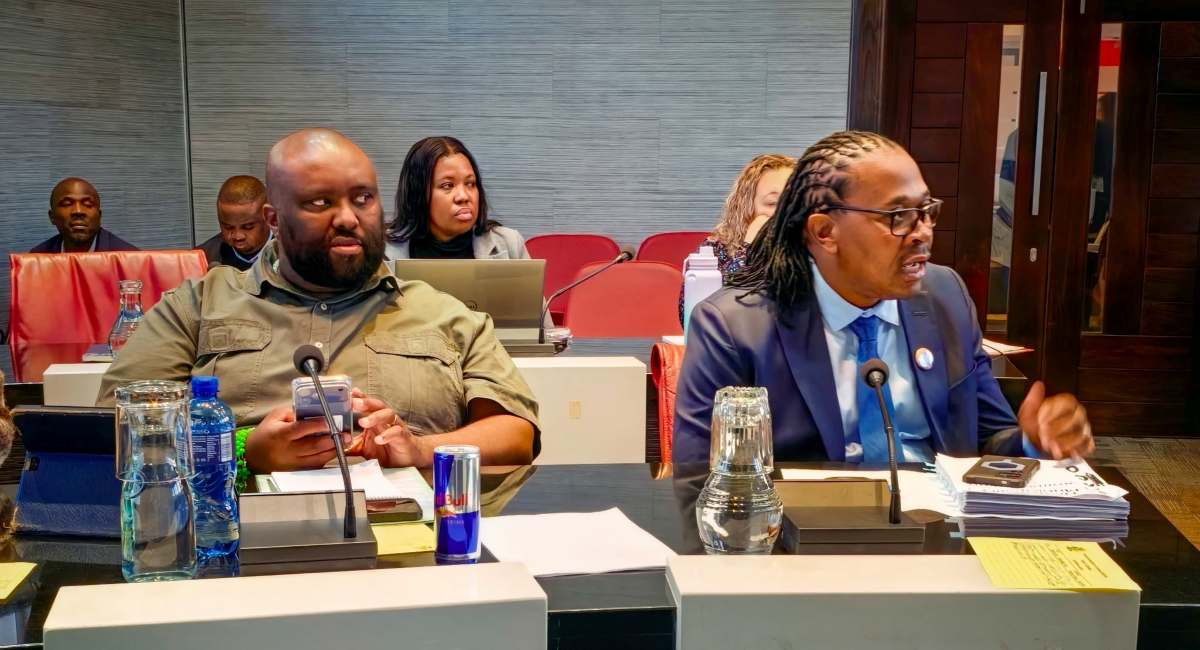
Newcastle Municipality’s latest Executive Committee meeting unfolded under mounting financial pressure, with KwaZulu-Natal Treasury’s latest municipal budget performance report placing the municipality among those flagged for financial problems, while also recording major outstanding bulk-service obligations to Eskom and uThukela Water.
The municipality’s Executive Committee convened its Ordinary Executive Committee Meeting on Tuesday, 19 May 2026, where key planning, budget and governance matters for the 2026/2027 financial year were tabled.

However, the meeting took place against a difficult financial backdrop, with KZN Treasury’s third-quarter report for the 2025/2026 financial year identifying Newcastle Municipality as one of the municipalities meeting one or more criteria for financial problems.
The provincial report, compiled by KZN Provincial Treasury for the period ending 31 March 2026, is based on data submitted by municipalities through financial reporting systems. Treasury also cautioned that the information had not been audited and that the reliability of municipal data remained a concern in some cases, particularly where reporting systems, data capturing and mSCOA classifications were problematic.
Despite those reporting caveats, the figures attached to Newcastle remain substantial.
According to the Treasury report, Newcastle was among the municipalities with bulk electricity amounts in the over 90-day category, with R2.1 billion recorded as owing to Eskom for unpaid electricity.
Furthermore, the report also recorded Newcastle Municipality at R256.9 million in amounts owing to water boards for unpaid bulk water in the over 90-day category.
Treasury further stated that Newcastle Municipality has a payment arrangement with uThukela Water (Proprietary) Limited Company, which is currently being honoured.
The municipality indicated that the bulk of the creditors outstanding as at 31 March 2026, which fall into the over 90-day category, are due to financial constraints facing the municipality.
Provincially, Finance MEC Francois Rodgers warned that unpaid Eskom and water board accounts are not simply accounting matters, but systemic service delivery risks.
His remarks formed part of the broader Consolidated Municipal Budget Performance Report, which stated that 20 municipalities in KwaZulu-Natal had been flagged as facing serious financial challenges.
Rodgers also made it clear that provincial support cannot replace accountability at municipal level, warning that interventions cannot succeed where political leadership interferes with administration, unfunded budgets are adopted, supply chain controls are undermined, or consequence management is absent.
Against this backdrop, the Executive Committee moved through several key items linked to the municipality’s strategic direction for the coming year. According to the Newcastle Municipality Communications Unit, EXCO considered the Final 2026/2027 Integrated Development Plan, the Final 2026/2027 Medium-Term Budget, and the Final 2026/2027 Top-Layer Service Delivery and Budget Implementation Plan.
The Communications Unit stated that these documents remain central to the municipality’s commitment to responsive governance, infrastructure development, community upliftment and sustainable economic growth.
The meeting also dealt with the Enterprise Resource Planning System contract, the implementation of Municipal Cost Containment Regulations, and governance compliance matters relating to the correction and reclassification of unauthorised expenditure.
EXCO further reviewed the implementation of previous Council resolutions, with emphasis placed on institutional accountability, effective execution and strengthened oversight across municipal departments.
Addressing the meeting, Newcastle Mayor Cllr Dube reaffirmed Council’s commitment to clean governance, prudent financial management and improved service delivery outcomes.
“The work of the Executive Committee is not merely administrative, it is about ensuring that every decision taken contributes meaningfully towards improving the lives of our people. As leadership, we remain committed to responsible governance, accountability, fiscal discipline and the implementation of programmes that respond directly to the needs and aspirations of our communities,” said the Mayor.
The meeting therefore reflected two realities facing Newcastle Municipality at the same time.
On one side, the municipality remains under pressure from large creditor balances, particularly relating to bulk electricity and water.
On the other, it is still required to move through its statutory planning, budgeting, oversight and governance processes for the year ahead.
Treasury’s report also noted that Newcastle has embarked on community outreach programmes to educate residents about the importance of paying for municipal services as part of its revenue enhancement strategies. It further stated that the municipality is making payments towards the Eskom debt, while continuing to honour its bulk-water payment arrangement with uThukela Water.

The practical test now lies in whether the municipality can turn these planning documents, cost-containment measures and governance processes into measurable results under ongoing financial strain.
With provincial monitoring already sharpened, Newcastle’s ability to stabilise its finances, manage creditor pressure and maintain service delivery will remain firmly under public and Treasury scrutiny.
What are your thoughts on this? Be sure to let us know below.
Make sure you read the follow up article to this: Newcastle Eskom Debt Figures Raise Fresh Questions After R2.1bn Error











5 Responses
I really do not understand how municipalities continue falling into debt with Eskom while residents are paying for services every month. It is painful to see hardworking people paying their accounts, yet the municipality fails to manage funds properly and does not pay service providers as it should.
Now Eskom is planning to cut power to the City of Johannesburg because of unpaid debt, and towns like Newcastle could face the same situation if this pattern continues. Unfortunately, it is ordinary residents and businesses that suffer the consequences of poor leadership and financial mismanagement.
We place people in positions of responsibility expecting them to develop and improve our towns, but instead many municipalities are being pushed backwards financially. There must be accountability, transparency, and proper financial management.
We need to vote wisely and elect leaders based on competence, integrity, and their ability to deliver services not politics alone. Municipalities should be run professionally and independently from political interference so that public funds are used correctly and communities can receive the services they deserve.
As a resident, it is deeply frustrating and heartbreaking to witness this happening while communities continue to struggle
The management of the municipality must realise the money given to them is to provide for our town, maintaining it and fixing our town, the money given to them is not to push up their salaries and have roadshows etc. This is precisely why our country has gone to the dogs. Our government receives money to maintain our country but they use and abuse it. Our government has no clue how to keep our country moving foward
Can the Council confirm when budget submissions close and when the Special Council Meeting will be held to consider these submissions.
Attending the budget consultation meetings is a waste of time. The information in the booklet is incorrect and misleading especially after comparing information with the Annual Financial Statement by AGSA
What’s budgeted does not materialise.
It’s about time Municipalities strategise less meetings and more Actions are required on what’s impacting service delivery.Stop complaining under constraints and find resources to bring money to the coffers.Supply Chain needs to be more cost effective rather than confide what politics dictate.Wr as consumers face financial constraints with rising costs but most of them meet their financial obligation.Municipalities should stop employing more people and try utilize the skills of employees on hand who can do more.
The fact that we pay for our utiliteis to the municipality and fhey dont pay ESKOM. Comes back to us with the next increace in tarriffs