

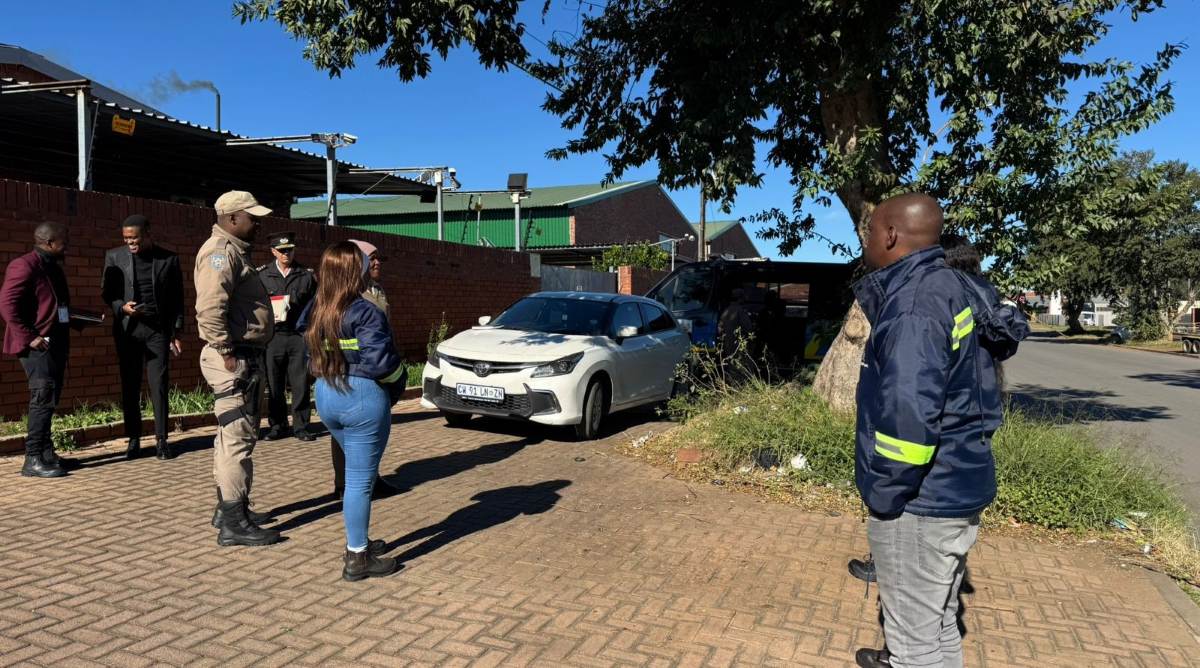
A Newcastle factory owner was taken into custody after 24 undocumented foreign nationals were found working at his premises in the Riverside Industrial Area during a textile sector compliance inspection.
The operation took place on Thursday, 7 May 2026, as part of ongoing oversight within Newcastle’s textile industry.

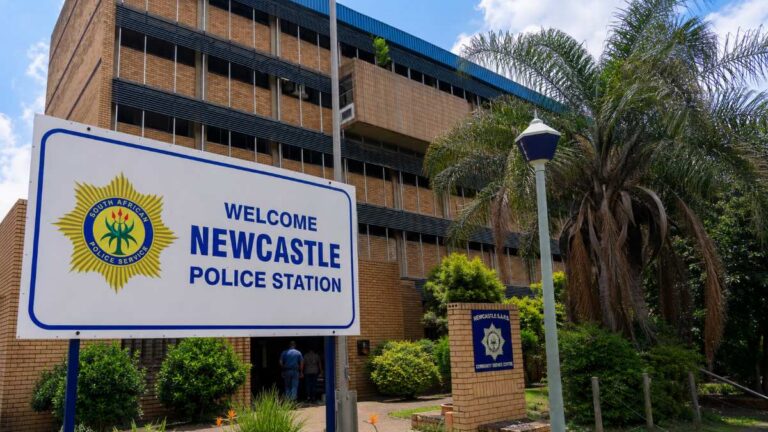
It was led by the Textile Bargaining Council, working alongside officials from Newcastle Municipality, the South African Police Service, and the Department of Home Affairs.
However, the inspection was not without difficulty. According to a municipal source, who requested anonymity, inspectors were initially denied access to the premises, requiring intervention from a local councillor before officials were allowed inside.
“At first, the factory owners would not allow us on the premises, and when we were able to enter the premises with the help of a local councillor, we found 24 undocumented immigrants working in the factory,” the source said.
Following the discovery, both the undocumented workers and the factory owner were taken into custody.
The latest inspection adds to a series of enforcement actions targeting Newcastle’s textile sector in recent months.
In February 2026, a major joint inspection conducted on 5 and 6 February led to the arrest of two Chinese factory owners after authorities allegedly found 34 undocumented foreign nationals working under unsafe conditions at textile facilities in the Newcastle Industrial Park.
As reported by Newcastillian News, those inspections, overseen by the Parliamentary Portfolio Committee on Employment and Labour, also revealed broader compliance failures across multiple factories, including safety concerns and regulatory breaches linked to occupational standards.
Subsequently, in March 2026, it was reported that at least 31 factories in Newcastle had engaged with authorities to seek guidance on labour law compliance, signalling a gradual shift among some operators towards regulatory alignment following heightened scrutiny.
As reported by Newcastillian News, by April 2026, the ripple effects had extended further, with reports indicating that several major retailers had begun reviewing or suspending supply arrangements linked to factories flagged for non-compliance, placing additional pressure on the local manufacturing chain.
Against this backdrop, Newcastle Municipality Councillor Alex Liu confirmed that he had been contacted to assist in facilitating access to the factory during the latest inspection.
Reflecting on the broader enforcement approach, he said that while regulatory action remained necessary, there were concerns about how such operations were being implemented on the ground.
“They arrested the undocumented workers, the factory owner, his wife, and his manager as well, with officials noting that they needed to ensure all their paperwork was in order, which it was. While the wife and manager were released later that day, the factory owner was only charged the next day before being released after 12 hours. The problem is, he had to pay wages to his factory workers on Friday, which was explained to the officials, but they only released him at the end of the day, resulting in many of his employees not being paid that day,” he explained.
He further cautioned, “While I believe in the rule of law, when factory owners and staff members are asked to cooperate, they often find themselves arrested in the process, making them scared to open up, even though they may have nothing to hide, because there is a stigma attached now.”
At the same time, Liu stressed that enforcement challenges should not be interpreted as justification for non-compliance.
He also pointed to wider structural pressures facing the sector, particularly the economic knock-on effects of earlier enforcement operations. According to him, following the February 2026 raids, several major retailers reportedly halted orders from Newcastle suppliers, resulting in retrenchments and reduced working hours across parts of the industry.
Compounding this, Liu highlighted an ongoing shortage of skilled labour as a contributing factor to employment practices within the sector.
“There are not a lot of qualified machinists in town, and this needs to be looked at,” he said.
Similarly, another local factory owner—who requested anonymity—supported continued enforcement operations but emphasised the reputational strain placed on compliant businesses.
“I feel further operations like this should be held to keep undocumented foreigners from coming into our town through factories. I am third-generation and have grown up in Newcastle, opening a factory a few years back, and people such as this make it difficult for the younger generation to do business, as we are all painted as sweatshop owners who hire undocumented foreigners desperate for money. It is also time to encourage local workers to get the necessary training so we can build the town together,” the owner said.
Meanwhile, spokesperson for the South African Police Service (SAPS), Lizzy Arumugam, confirmed that both the factory owner and the undocumented foreign nationals were taken in for questioning. However, she could not provide further details into the case at the time of publication.
What emerges from the latest enforcement action is a sector still caught between regulatory tightening and persistent structural pressures that continue to shape employment practices on the ground.
While authorities maintain that compliance with immigration and labour legislation remains non-negotiable, the recurring tensions within Newcastle’s textile industry point to a more complex operating environment, where enforcement, economic survival, and workforce availability are increasingly intersecting.
At the same time, the broader trajectory of recent months suggests that the issue extends beyond isolated incidents, with sustained inspections, supplier disruptions, and compliance shifts gradually reshaping the local industrial landscape.
But, what are your thoughts on this? Let us know in the comment section below.
Be sure to read: Madadeni Hospital CEO to Face KZN Health Committee After Doctor’s Arrest