



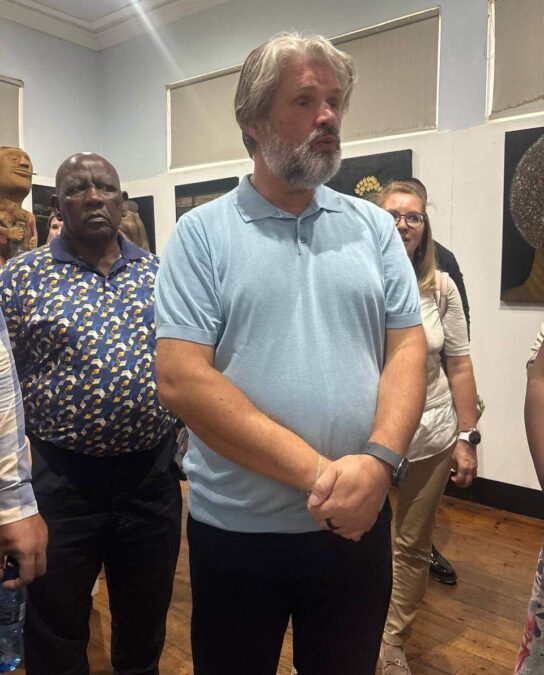
Newcastle’s Anglo-Boer War heritage formed the backdrop to a diplomatic and cultural visit on Tuesday, 21 April 2026, when Russian Ambassador Roman Amabarov and his delegation visited several local historical sites linked to the town’s wartime past and its lesser-known Russian connection.
While Newcastle is widely associated with its role during the Anglo-Boer War, the town also holds a more specific historical link to Russia through medical support provided during that period.

That connection was central to the ambassador’s visit, which included a programme focused on heritage sites tied to this shared history.
Speaking to Newcastillian News, Newcastle Municipality’s Curator for Fort Amiel Museum, Louis Eksteen, explained;
“Ambassador Amabarov’s trip to Newcastle is part of a courtesy visit, visiting historical sites, with cultural connections between Russia and Newcastle.”
Among the sites visited was St Dominics Newcastle, where the chapel and museum reflect part of the town’s wartime history.
Eksteen further explained that during the Anglo-Boer War, the institution, then operating as a convent, was used as a medical facility. It was there that Russian nurses, together with the Russian Red Cross Ambulance, rendered wartime medical support in Newcastle.
The ambulance was stationed at the former St Dominics Convent, giving the site a direct link to this international humanitarian involvement during the conflict.
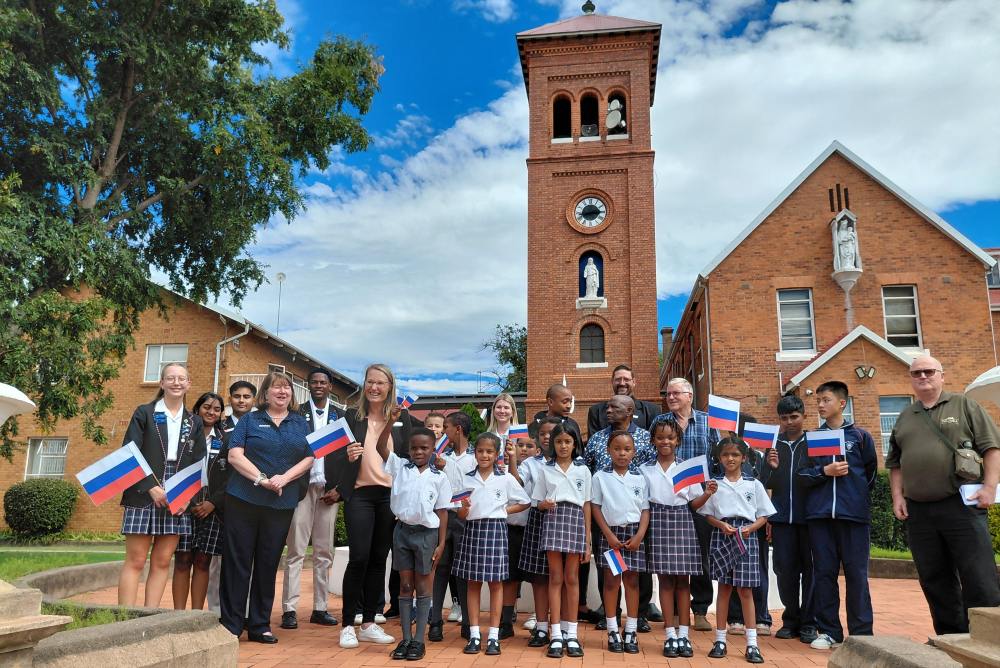
Furthermore, the delegation also visited the Newcastle Town Hall, which remains the only civic building from that period still standing in the town. Eksteen noted that its continued presence added historical significance to the visit, particularly in the context of preserving structures connected to Newcastle’s wartime era.
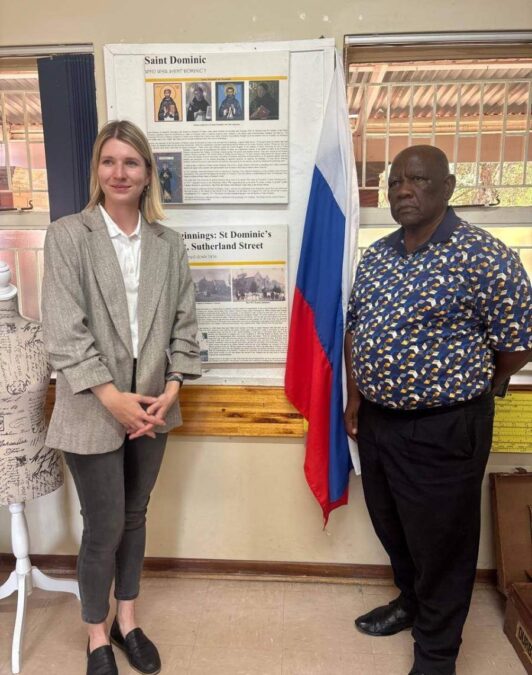
At Fort Amiel Museum, the visit produced a tangible addition to the town’s historical record. Ambassador Amabarov donated a 126-year-old Bible, along with a Russian flag, to the museum.
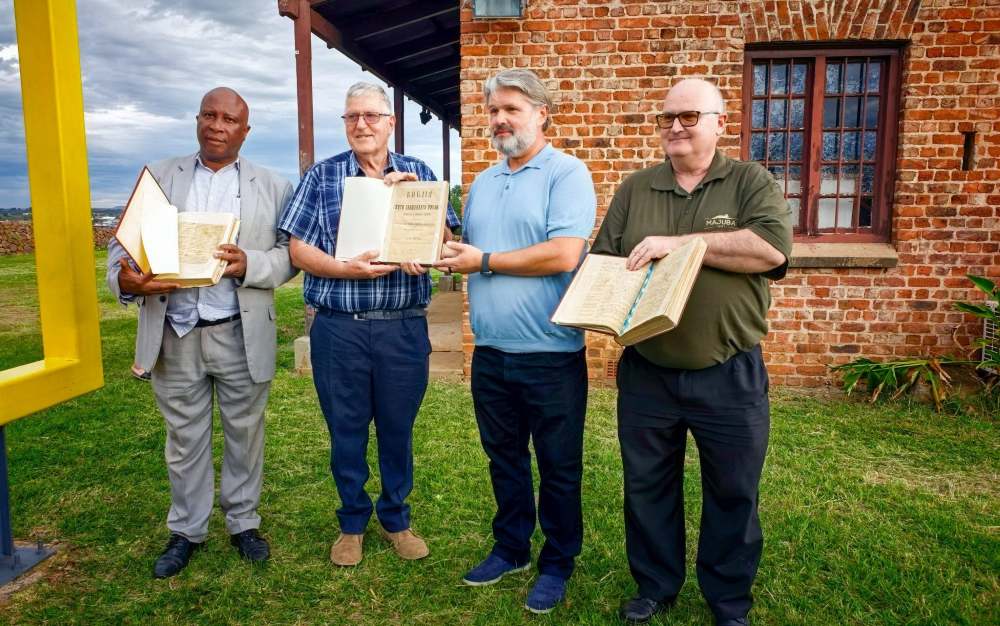
According to Eksteen, the Bible is historically significant because it was printed during the Anglo-Boer War period. It has since been formally added to the museum’s collection and placed on public display.
As the visit concluded, the ambassador expressed appreciation for the hospitality extended by local representatives and for the efforts made to preserve Newcastle’s heritage sites.
The visit served as a reminder that Newcastle’s historical landmarks continue to hold relevance beyond local heritage interest alone.
Sites such as St Dominics, the Town Hall and Fort Amiel Museum do not merely preserve the past; they also provide context for historical connections that continue to be acknowledged through present-day cultural and diplomatic engagement.
At the same time, the visit reinforced the importance of preserving heritage assets in a way that protects their educational and historical value.
In Newcastle’s case, these invaluable historical sites continue to offer insight into the town’s place within a broader wartime narrative, including links that extended beyond South Africa’s borders.
What are your thoughts on this? Let us know below.
Be sure to read:












One Response
That is lovely