


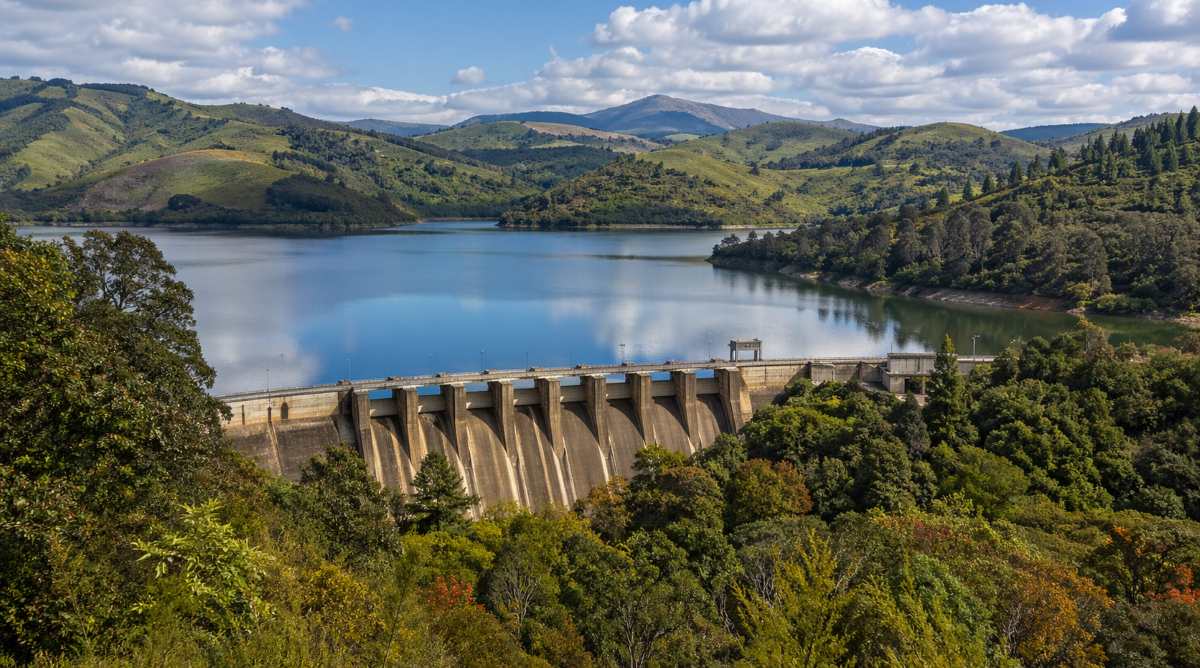
As autumn takes hold across South Africa, with rainfall patterns beginning to taper off ahead of the country’s typically dry winter season, scrutiny is once again turning to the state of key water resources. In KwaZulu-Natal, where dam levels play a critical role in both domestic supply and agricultural stability, the latest figures offer a largely reassuring, albeit nuanced, outlook.
According to the Department of Water and Sanitation’s most recent state of dams report, the province’s reservoirs remain in a generally healthy position, with the majority recording levels at or above 90%.
However, the data also points to some unevenness across the system, with certain dams, most notably Ntshingwayo (Chelmsford) Dam, still operating below the 80% threshold.
While the broader picture remains stable, the figures continue to reinforce the need for measured water use as the province transitions into drier months.
Against this backdrop, a closer analysis of individual dam readings provides further insight into shifting conditions across the province:
- Albert Falls Dam stands at a strong 100.6%, reflecting only a marginal dip from last week’s 100.7%.
- Bivane Dam has edged slightly lower, moving from 100.2% to 99.8%.
- Craigie Burn Dam has eased from 100.7% to 100.4%, maintaining stable levels.
- Driel Barrage Dam has recorded a significant recovery, rising sharply from 78.4% to 90.3%.
- Goedertrouw Dam has experienced a slight decline, shifting from 100% to 99.6%.
- Hazelmere Dam remains relatively steady at 99.4%, compared to last week’s 99.9%.
- Hluhluwe Dam has registered a modest decrease, dropping from 98.5% to 97.2%.
- Inanda Dam continues to exceed full capacity at 101.5%, slightly down from 102.3%.
- Klipfontein Dam remains stable, easing marginally from 100.5% to 100.2%.
- Mearns Dam has seen a more pronounced drop, falling from 117.4% to 104%, though it remains well above capacity.
- Midmar Dam has improved slightly, rising from 99.2% to 99.8%.
- Nagle Dam has crossed the 100% mark, increasing from 96.5% to 100.2%.
- Ntshingwayo (Chelmsford) Dam remains below optimal levels at 77.9%, reflecting a marginal dip from 78.2%.
- Pongolapoort Dam has inched upward slightly, from 84.4% to 84.7%.
- Spioenkop Dam has recorded a minor decrease, moving from 100.6% to 100.3%.
- Spring Grove Dam has eased from 101.4% to 100.7%.
- Wagendrift Dam has declined slightly, from 102.3% to 101.1%.
- Woodstock Dam has experienced a more noticeable drop, decreasing from 102.2% to 98.5%.
- Zaaihoek Dam remains unchanged, holding steady at 100.5%.
Taken together, the latest readings indicate that KwaZulu-Natal’s water reserves remain broadly stable and, in many areas, comfortably above capacity as the province moves closer to winter.
However, the data also presents a more measured reality. The uneven performance across certain reservoirs, particularly those still below optimal levels, serves as a clear indicator that water security cannot be assessed on provincial averages alone. Instead, it requires continued monitoring at a localised level, where deficits may begin to emerge more sharply as inflows decline.
In this context, while there is no immediate cause for concern, the transition into the drier winter months will test the resilience of these reserves.
Be sure to read:













One Response
Have the sluices been repaired, on the wall of Chelmsford Dam?