


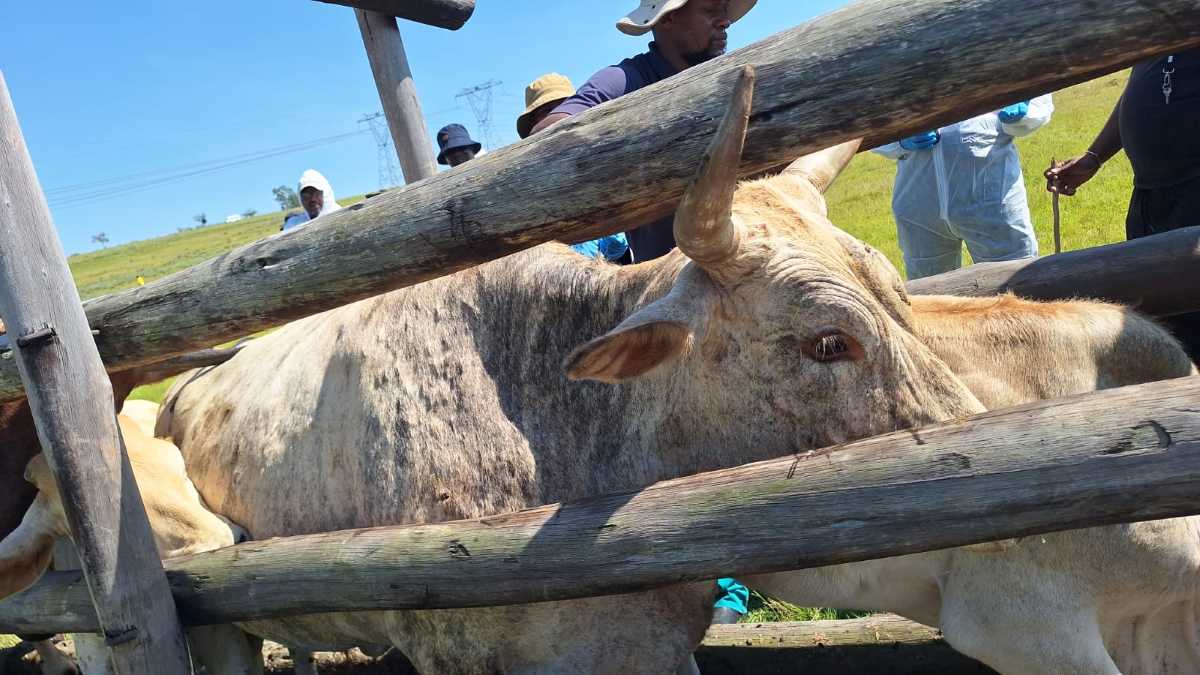
Foot-and-Mouth Disease (FMD) in KwaZulu-Natal has moved beyond a minor health concern. It is now a socio-economic and disaster management crisis affecting livelihoods, food supply chains, and rural economies across the province.
With more than 200 active cases recorded, the KZN Provincial Government has declared a state of emergency, introducing movement controls, surveillance measures, and vaccination programmes in an effort to contain the outbreak.

As the Amajuba District ranks among the hardest hit, farmers from Newcastle, Madadeni, Dannhauser and Utrecht gathered at the Farmers Hall in Newcastle on Tuesday, 10 February 2026, to engage directly with MEC for Public Works and Infrastructure, Martin Meyer, who is leading provincial intervention efforts in the area.
While the meeting focused on disease containment, it also addressed the strain placed on commercial farms over the past year as the outbreak steadily disrupted agricultural operations.
Farmers listened closely as MEC Meyer and Dr Ngwenya from the Department of Agriculture and Rural Development provided a detailed update on the status of FMD in the district.
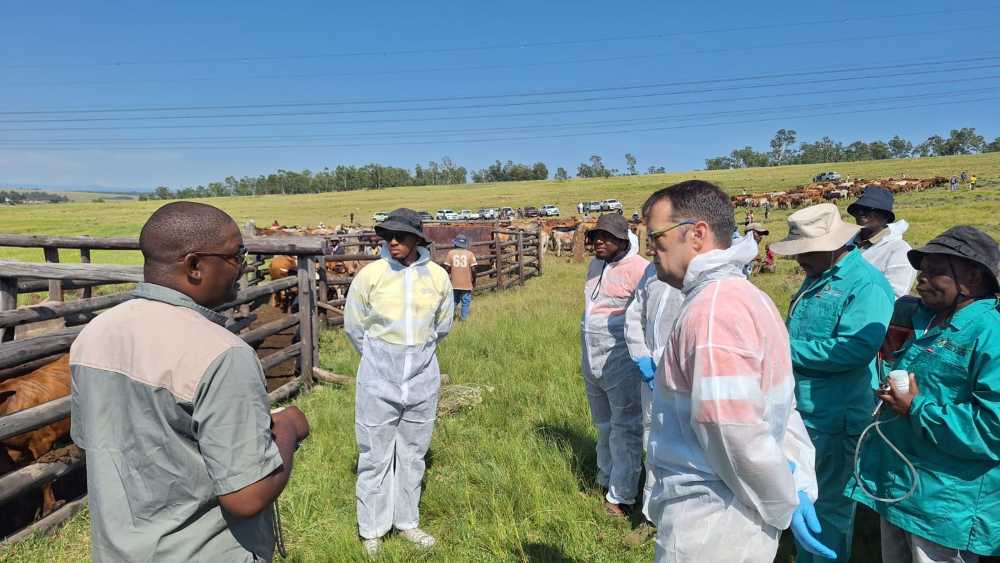
Meyer opened his address with an unusually direct admission.
“Let me start with something else that Government needs to do, and that is apologise. We should have had these engagements sooner; we shouldn’t have waited until it became the crisis it is now before we came to listen to you, because this disease, which is hitting our cattle, is one of the most serious challenges that our country has faced in a very long time.”
He further emphasised the need for improved communication between government and the farming sector and confirmed that he had already inspected several dip sites in the area, identifying urgent infrastructure upgrades.
Discussions with the Department of Agriculture are underway to begin these improvements.
Meyer also acknowledged the financial pressure on farmers, assuring them that they would not face the burden alone.
“Since this is now a disaster nationally, this means disaster funding is available, so I will engage with the national government and treasury as well, to see where we need money for dispensers, where available.”
He confirmed that vaccines were en route and that municipalities would be approached to provide practical support to affected farmers.
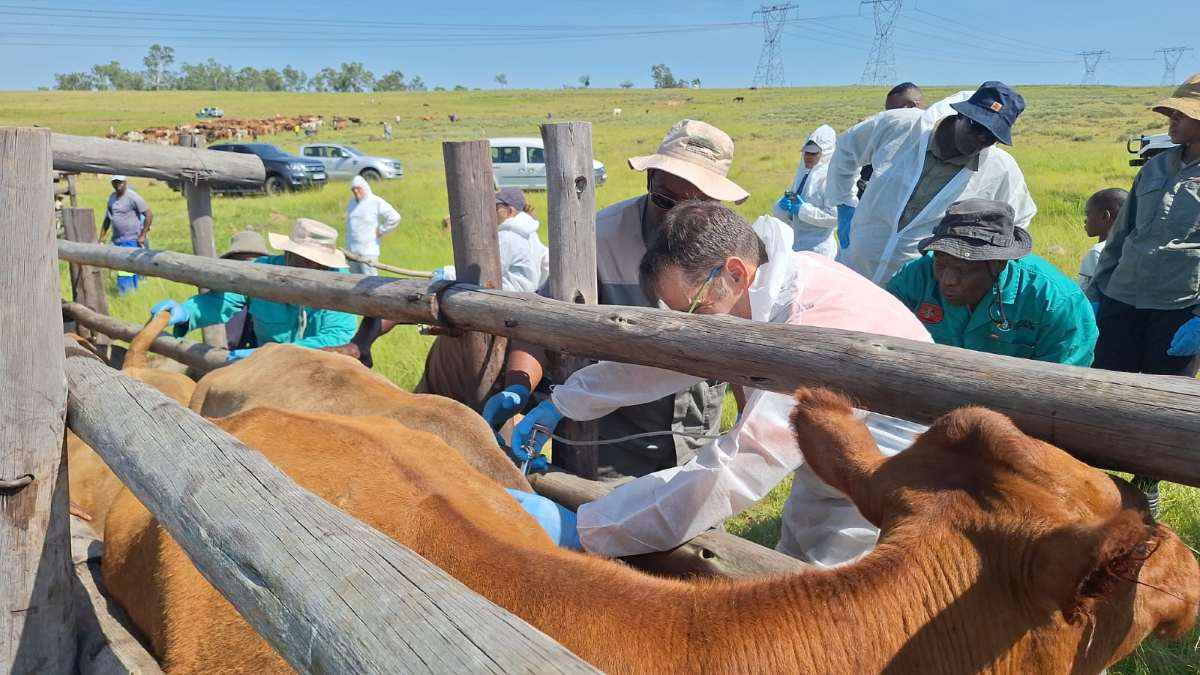
Dr Ngwenya explained that the first FMD cases in Amajuba were confirmed in early March 2025 after laboratory testing on a farm bordering Newcastle, Dannhauser and Utrecht.
Within weeks of confirmation, the disease had already spread.
The Department responded by vaccinating over 53,000 animals within a 30km radius of the initial outbreak site.
However, Ngwenya noted that some commercial farmers declined vaccination, opting instead for natural recovery of their herds. He cautioned that this approach carries risk, as immunity to FMD diminishes over time and stress can trigger resurgence.
By early 2026, the scale of the outbreak in Amajuba had become evident. A total of 6,174 samples from 288 sites tested positive, including 29 locations housing between 500 and 1,000 animals. Underreporting by some farmers, aimed at protecting their livestock from quarantine restrictions, has also contributed to the spread.
The district has now been formally classified as a hotspot and prioritised for vaccine allocation as soon as additional supplies arrive.
Nationally, vaccine production has resumed for the first time in over two decades, with 12,900 doses targeting regional strains (SAT 1, SAT 2 and SAT 3) produced by the Agricultural Research Council and Onderstepoort Biological Products. Additional vaccines are being imported from the Botswana Vaccine Institute, with further supplies expected by late February 2026.
Furthermore, parliamentary oversight has intensified, with the Portfolio Committee on Agriculture demanding explanations from the Department regarding how the outbreak spread from wildlife reservoirs, including buffalo populations, to provinces such as KwaZulu-Natal.
To date, 1.2 million vaccine doses have been distributed nationally, with 285,000 animals vaccinated as part of ongoing containment measures.
Authorities are targeting 80% vaccination coverage in priority districts.
For farmers in Amajuba, the impact is immediate and severe. Many are unable to sell cattle due to movement restrictions, placing the red meat industry under significant strain. Nationally, projected losses to beef production run into billions of rand through reduced exports and lower productivity. Dairy farmers in affected districts have reported milk supply reductions of up to 45%.
The outbreak has also drawn criticism over delays in declaring a provincial disaster, with opposition voices arguing that earlier intervention could have reduced the impact in districts such as Amajuba and uThukela.
The stakeholder engagement in Newcastle forms part of a broader series of recovery efforts, including regulated livestock auctions aimed at restoring communal farming resilience.
As containment efforts intensify, cooperation between government, veterinarians, farming associations and local communities is emerging as the determining factor in limiting long-term damage.
With vaccine prioritisation, increased surveillance, and disaster funding mechanisms now in motion, authorities hope to stabilise the situation. However, officials stressed that transparent reporting from farmers and strict adherence to movement controls remain essential.
The lessons from the crisis are already shaping a longer-term ten-year biosecurity strategy focused on preventing future outbreaks, strengthening local vaccine production, and improving communication between government and the agricultural sector.

For Amajuba’s farmers, the priority remains simple: stopping the spread, restoring trade, and rebuilding livelihoods that have been on hold for nearly a year.
What are your thoughts on this? Let us know below
While you are here, do not forget to read, Chinese Employers Arrested After 34 Undocumented Workers Found at Newcastle Textile Factory, if you missed it.
FAQs for Foot-and-Mouth Disease Newcastle
To address the escalating Foot-and-Mouth Disease outbreak in Amajuba and outline government plans for containment, funding and vaccination.
The district is now classified as a hotspot, with thousands of positive samples and strict livestock movement restrictions.
Disaster funding, vaccine prioritisation, infrastructure upgrades and municipal support are being coordinated.
Vaccines are being produced locally by ARC and OBP, with additional imports from Botswana.
Farmers face trade restrictions, livestock losses, and reduced dairy and beef output due to quarantines and infection spread.








One Response
I refuse to eat red meat if anyone watched Carte Blanche on Sunday night you will understand why this is shocking it has taken so long to sort out