


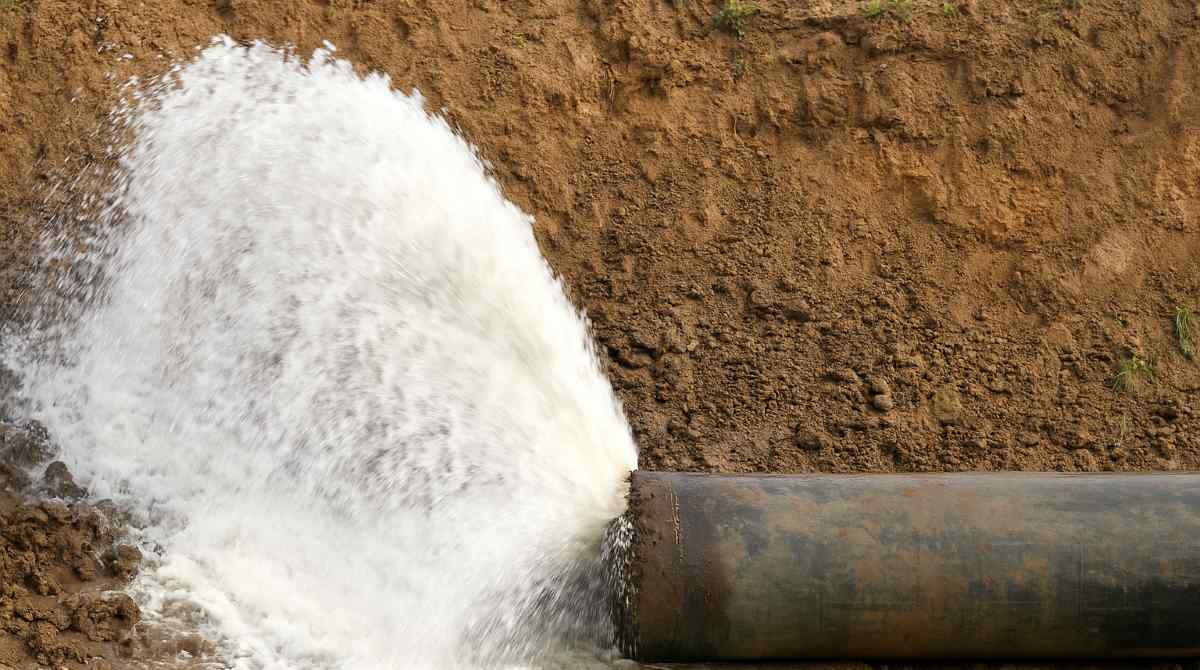
South Africa’s ongoing water interruptions are no longer just a matter of “climate pressure” — newly released data shows mounting evidence of large-scale governance failures costing the public billions. Municipal dependence on water tankers in South Africa continues to grow, despite clear indications that the country’s deteriorating infrastructure is the root cause of supply disruptions.
More than 20% of the country’s 257 municipalities spent a combined R2.32 billion on tanker services in the 2023/24 financial year, with R420 million flagged as irregular expenditure.
This heavy reliance on tankers — temporary, costly, and unsustainable — highlights the collapse of long-term planning and maintenance in the national water system.

The Auditor-General of South Africa (AGSA), presenting its first consolidated water sector audit report to the Portfolio Committee on Water and Sanitation on 2 December 2025, outlined widespread failures across 59 Water Service Authorities (WSAs). Water losses for 2023/24 totalled R14.89 billion, driven by decaying infrastructure, inadequate maintenance, and ineffective governance structures.
Wastewater treatment facilities are among the most compromised components of the system. The audit found that 99% of plants failed at least one quality standard, nearly half of municipalities recorded unsafe drinking water systems, and 44% breached chemical safety requirements.
Additionally, and just as concerning, municipalities spent an average of just 3% of the value of their property, plant and equipment on maintenance — less than half of the recommended 8%.
Some had no maintenance plan at all. The absence of basic maintenance is a major factor behind the growing use of water tankers in South Africa, as municipalities are forced to rely on emergency interventions.
Infrastructure development is also severely delayed. National water entities reported an average delay of 62 months for major projects; water boards averaged 64 months, while WSAs recorded delays of approximately 25 months. These delays have environmental and public health consequences, with untreated wastewater contaminating rivers, drinking water sources, and ecosystems across the country.
AGSA senior manager Jolene Pillay noted that untreated wastewater threatens ecosystems and directly affects drinking water quality. This deterioration, she said, leaves many Water Service Authorities dependent on tanker deliveries to maintain minimum supply levels.
Water conservation programmes continue to falter. Twenty-four WSAs did not submit “no drop” reports, 46 critical WSAs failed to provide water-balance data, and meter replacement programmes remain largely absent in the Northern Cape, Free State, and Mpumalanga.
Seventy-four WSAs were rated poor for lacking the necessary skills to implement conservation strategies. Leak-response capacity is also inadequate, with 83 WSAs flagged for insufficient resources and 60 out of 64 major WSAs failing to submit action plans addressing water losses.
Additionally, financial and governance issues deepen the pit even further.
Material irregularities totalling more than R1.7 billion were identified, with some referred to the Special Investigating Unit. Many municipalities also struggle with poor revenue collection, ineffective billing systems, and general cash flow constraints, making it difficult to fund infrastructure upgrades or preventative maintenance.
The Sol Plaatje Local Municipality, for example, operated without a water-service development plan, a maintenance plan, or an environmental protection plan. Without these mechanisms, the municipality could not identify infrastructure backlogs or prioritise repairs — contributing to an estimated water loss rate of 66% in 2023/24.
AGSA further emphasised the need for stronger governance, improved oversight from water boards and regulators, rehabilitation of billing systems, and increased municipal budget allocation for repairs. The operationalisation of catchment management agencies was identified as critical to strengthening local oversight, enforcing corrective measures, and preventing long-term project delays.
KwaZulu-Natal provides a clear example of how national failures translate directly into community hardship.
According to the NCOP Provincial Week report, Building Viable Municipalities for Enhanced Delivery of Basic Services to Communities (November 2025), fewer than 60% of KZN municipalities reported uninterrupted water supply.
Districts with the most severe interruptions include:
Amajuba District Municipality, incorporating Newcastle, Emadlangeni, and Dannhauser, had the highest interruption rate in KZN at 83.2%.
Ageing pipelines, inconsistent maintenance, and frequent mechanical failures at water treatment plants continue to disrupt supply. Some rural schools and clinics still rely on hazardous pit latrines, further increasing community vulnerability.
Ugu District Municipality, at 77.6% interruptions, continues to battle deteriorating infrastructure, treatment plant failures, and widespread tanker reliance — a trend mirrored across many rural and peri-urban communities.
Harry Gwala District Municipality recorded 43.6% interruptions but remains affected by intermittent supply, under-maintained infrastructure, and wastewater compliance gaps. Rural households remain particularly exposed to unreliable supply and unsafe sanitation.
Despite these challenges, KwaZulu-Natal ranks third nationally for water quality, behind Gauteng and the Western Cape, according to the National State of Water Report (2023).
However, around 14% of the province’s water systems remain in a poor or critical condition. Only three achieved strong Blue Drop scores.
Several municipalities — including uMzinyathi — are rated poor, and mechanical failures at the Empangeni wastewater treatment works in the City of uMhlathuze have caused pollution events despite the municipality having a clean audit.
Moreover, members of Parliament described AGSA’s findings as “shocking” and called for urgent accountability and intervention. The committee recommended intensified oversight visits, stronger reporting from water boards, and consideration of a commission of inquiry into water service failures.
Criminal charges for individuals responsible for sewage pollution and persistent mismanagement were also mentioned as possible outcomes. Committee chairperson Leon Basson stated that untreated sewage and unreliable water supply cannot be normalised and that decisive action must follow.
Taken together, the AGSA audit and provincial findings show that the country’s water sector is at a critical juncture.
Infrastructure decay, backlog maintenance, governance failures, and environmental risks are converging to create systemic vulnerabilities nationwide. KwaZulu-Natal’s district data — especially in Amajuba and Ugu — illustrates how deeply local failures drive national trends and why the reliance on water tankers in South Africa continues to grow.

Restoring stability will require urgent intervention: strengthened oversight, better maintenance budgeting, operational catchment management agencies, and targeted support for the most affected municipalities. Without consistent follow-through, millions of residents remain at risk of ongoing water insecurity, sanitation failures, and the social and economic pressures created by failing municipal systems.
But, what are your thoughts on this? Be sure to let us know below.
Do not forget to read, Why You Are Working Harder But Getting Poorer in South Africa, as it is an eye opener.
Municipalities are increasingly dependent on water tankers because of ageing infrastructure, delayed maintenance, and frequent breakdowns at water treatment plants. Many Water Service Authorities lack functioning maintenance plans, leak-response capacity, or reliable pipelines, forcing them to use tankers as a temporary supply method.
According to AGSA data, more than 20% of municipalities spent a combined R2.32 billion on tanker services in the 2023/24 financial year. Of this amount, R420 million was flagged as irregular expenditure.
No. Tankers are an emergency measure, not a long-term solution. They are costly, vulnerable to corruption, and cannot replace proper maintenance of pipelines, reservoirs, and treatment plants. AGSA reports show that infrastructure rehabilitation is the only sustainable path forward.
KwaZulu-Natal, the Eastern Cape, and parts of the Free State and Limpopo frequently rely on tankers due to widespread infrastructure failures. In KZN, districts like Amajuba and Ugu report some of the highest interruption rates in the province.
Key issues include ageing pipelines, neglected maintenance, mechanical failures at treatment plants, delayed infrastructure upgrades, and weak leak-response capacity. Many municipalities also lack accurate water-balance data and functional meter-replacement programmes.
The AGSA’s consolidated audit reported R14.89 billion in annual water losses, 99% of wastewater treatment plants failing at least one quality standard, and widespread governance failures. The findings show systemic neglect rather than isolated problems.
Amajuba District Municipality recorded the highest interruption rate in KZN — 83.2% — affecting Newcastle, Emadlangeni, and Dannhauser. Ageing pipelines and treatment plant failures are major contributors.
Yes. Many rural schools and clinics still rely on unsafe pit latrines and poorly maintained sanitation systems. This increases public health risks and compounds water-supply challenges, especially in areas already dependent on tankers.
Parliamentary recommendations include stricter oversight of Water Service Authorities, operationalising catchment management agencies, enforcing maintenance budgets, improving billing systems, and considering a commission of inquiry into municipal water failures.
Municipalities need functioning maintenance plans, upgraded pipelines, reliable treatment works, skilled water-management staff, and consistent enforcement from regulators. Without these measures, reliance on water tankers will continue to increase.







2 Responses
Problem: No maintance shows incompetance and no accountability to render services according to the municipal mandates. Ratepayers are keeping to their commitments and accountabilities in paying rates on time, but the money is not applied as per mandate expectations…
Solution: Ratepayers should form their own private municipal service companies and fund the newly formed companies to render services by contracting workers to do what the Newcastle Municipality should have done.
This should be done per suburb to have better control.
—-We dont trust the Municipality anymore—- Continuing in the way we are is damaging our town and property — t
Track the link between water tankers and local goverment and or Municipal officials. That will complete the picture