


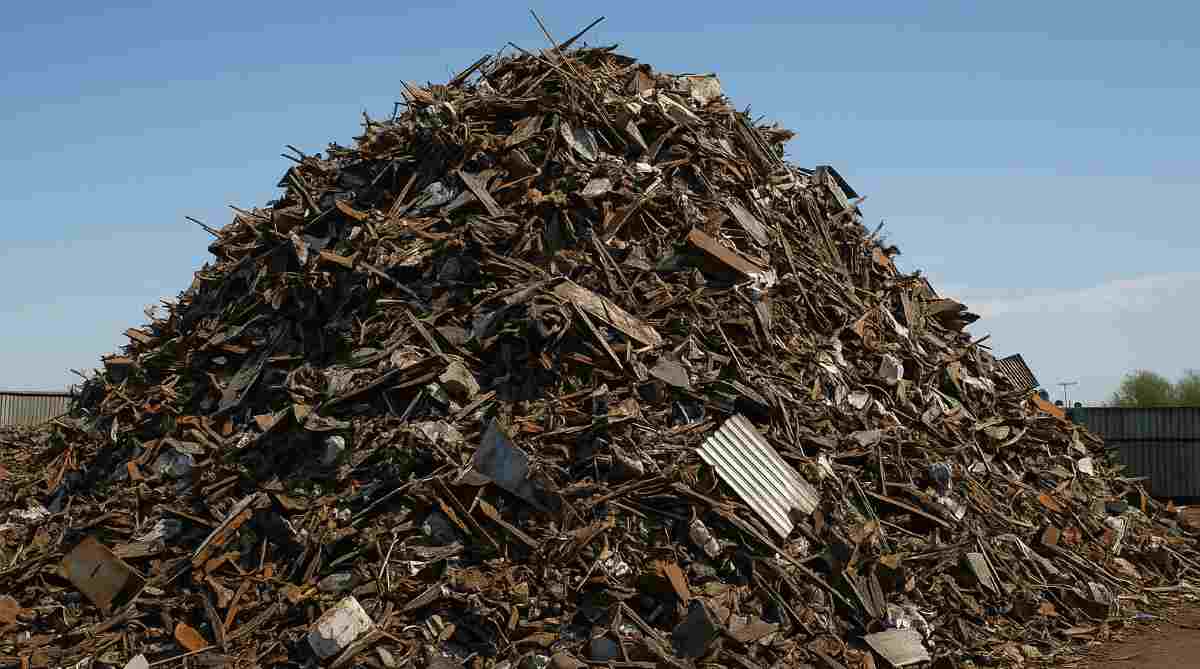
The struggling ArcelorMittal South Africa (AMSA) has called for the immediate suspension and review of recently amended regulations governing the Price Preference System (PPS) for scrap metal, warning that the policy continues to damage the country’s steel industry and undermine industrial competitiveness.
The company argues that the revised framework, as gazetted by the International Trade Administration Commission (ITAC), places South Africa’s broader steel value chain under strain.

AMSA’s Head of Corporate Communications, Tami Didiza, said the industry views the amendments with “serious concern”.
“While presented as supporting industrial development, the policy continues a decade‑long approach that has weakened the country’s steel sector, undermined recycling livelihoods, and constrained industrial competitiveness,” explained Didiza.
Furthermore, as highlighted by the steel giant, the revised regulations again prioritise a small group of scrap‑based mini‑mills, to the detriment of the broader steel manufacturing ecosystem — including primary producers, downstream fabricators, recyclers, waste‑pickers, and industrial consumers.
Taking this into consideration, Didiza stressed, “South Africa cannot afford policy choices that favour a narrow subset of beneficiaries while placing the wider sector and industry at risk.”
As documented by ITAC, the PPS was introduced via a trade policy directive in 2013, and subsequent regulations mandate that scrap metal cannot be authorised for export unless it has first been offered to the domestic consuming industry at a discounted rate determined by ITAC.
Significantly, ITAC on 31 October 2024 issued Notice 3579 of 2024 inviting public comment on revised export control guidelines for ferrous and non‑ferrous waste and scrap metal, with comments due by 8 November 2024.
In response to AMSA’s concerns, the ITAC noted that the review process, which took about 13 months, considered factors including logistics costs and market demand conditions.
Moreover, the ITAC emphasised that its role is limited to administrative and procedural aspects, as it is not the policymaker, and remains committed to ongoing dialogue through dtic-led task teams to address sector sustainability.
The PPS formula requires scrap exporters to offer material domestically at an international benchmark price minus a preference margin (e.g., 30% for ferrous scrap, as per Gazette Notice 532 of 2020).
As one would imagine, this aims to ensure affordable supply for local processors, but recent amendments reduce the ferrous discount to 25% while maintaining other controls.
Independent economic research, as cited by AMSA, shows that the PPS and related export restrictions have long suppressed scrap prices significantly below global parity; constrained investment and employment in formal recycling; eroded the economic base of integrated steelmaking to the detriment of the economy; and failed to deliver substantial jobs.
This, while reducing industrial competitiveness across energy‑intensive value chains. Specifically, South Africa’s crude steel production has declined 52% from 9.7 million tonnes in 2006 to 4.7 million tonnes in 2024, with approximately 7,500 jobs lost in the sector since the PPS’s introduction in 2013.
Taking this into consideration, Didiza noted the consequences have been clear: shrinking output, job losses, reduced export capability, and rising vulnerability in critical supply chains.
These outcomes conflict with the Government’s own stated objectives of reindustrialisation, localisation and green industrial growth.
Furthermore, Didiza emphasised that evidence‑based recommendations submitted to ITAC appear not to have been fully reflected in the final decision.
“The independent scrap‑industry study commissioned by the Department of Trade, Industry and Competition (dtic) has still not been released despite being completed months ago. And while the Government has acknowledged that the concurrent application of PPS and a scrap export tax was unintended and arose from administrative error, this error remains uncorrected,” explained Didiza.
As the steel giant is already facing an uncertain future—having reported an EBITDA loss of R1.8 billion for 2025 amid ongoing business rescue discussions and a deferral of its longs unit wind-down—AMSA further stressed that South Africa requires a modern, globally competitive steel sector capable of supporting infrastructure delivery, energy transition, export manufacturing, and regional development under the African Continental Free Trade Area (AfCFTA).
“This goal cannot be achieved by artificially transferring value from recyclers, waste‑pickers, and primary and downstream manufacturers to a limited number of mini‑mills. It is in the national interest to immediately suspend and review the amended PPS; release the dtic scrap‑sector report so it can be compared to the independent econometric report provided to ITAC and the dtic; then correct the error of having both PPS and export tax; and for a transparent, evidence‑based policy process to be followed focusing on the full industrial value chain,” stressed Didiza.
Bascially, South Africa needs a balanced scrap and steel policy that supports jobs, competitiveness, and long‑term industrial capacity, not narrow interests.
The debate surrounding the PPS highlights a broader tension between targeted industrial incentives and the health of South Africa’s integrated steel ecosystem. As the country seeks to grow its manufacturing base and align with continental trade opportunities, policy decisions will need to balance immediate economic interests with long‑term sectoral resilience, including green steel incentives under the Just Energy Transition and AfCFTA’s implications for scrap trade.

Public comments on the September 2024 ITAC review closed on 8 November 2024, with final recommendations expected in the first half of 2025.
The outcome of AMSA’s call for review and suspension could set a precedent for how government engages with both private industry and critical recyclers in shaping policies that underpin national competitiveness and sustainable industrial development.
What are your thoughts on this? Do you agree? Let us know below.
Do not forget to read, New R2.5 Billion Chinese Steel Mill Reignites Hope for South Africa’s Steel Industry, if you missed it.
FAQs:
The Price Preference System (PPS) is a government policy introduced in 2013 requiring scrap metal exporters to first offer their material to local consumers—such as steel mills—at a discounted rate before being granted export authorisation. The system, administered by the International Trade Administration Commission (ITAC), aims to secure affordable raw material supply for domestic manufacturers and promote local industrialisation.
ArcelorMittal South Africa (AMSA) argues that the PPS, instead of strengthening the local steel sector, has had the opposite effect. The company claims the policy has suppressed scrap prices, discouraged investment in recycling, led to plant closures and job losses, and undermined the broader competitiveness of South Africa’s steel manufacturing industry. AMSA believes the policy benefits only a small group of mini-mills at the expense of the national value chain.
Since its introduction, South Africa’s crude steel output has declined by over 50%, from 9.7 million tonnes in 2006 to about 4.7 million tonnes in 2024. The policy has constrained recycling margins, caused thousands of job losses, and limited the growth of both upstream and downstream manufacturing. Recyclers and waste-pickers earn less for scrap, while integrated producers face raw material shortages and higher production costs.
The 2024 amendments, gazetted by ITAC under Notice 3579 of 2024, adjusted the discount for ferrous scrap from 30% to 25% and introduced new administrative requirements. While intended to reflect logistics and market changes, the steel industry contends that the amendments still disadvantage producers and recyclers, failing to address fundamental flaws or the coexistence of the PPS with a scrap export tax—an acknowledged government oversight.
Critics, including AMSA, argue that the PPS conflicts with the government’s stated objectives of reindustrialisation, job creation, and green growth. By weakening steelmaking and recycling capacity, the policy undermines South Africa’s ability to develop green steel initiatives, localise production, and capitalise on opportunities under the African Continental Free Trade Area (AfCFTA). AMSA and other industry stakeholders advocate for a modern, evidence-based scrap policy that supports the full industrial ecosystem.










One Response
That guy should just shut up at this point, there’s a new long steel industry opening in Nigel and ArcelorMittal only complains about everything. They must admit that they do not have a viable management and business structure and that is the root cause of their predicament. They must sell the company and leave South Africa. There are entities out there that can surely make the business profitable. We are tired of them now