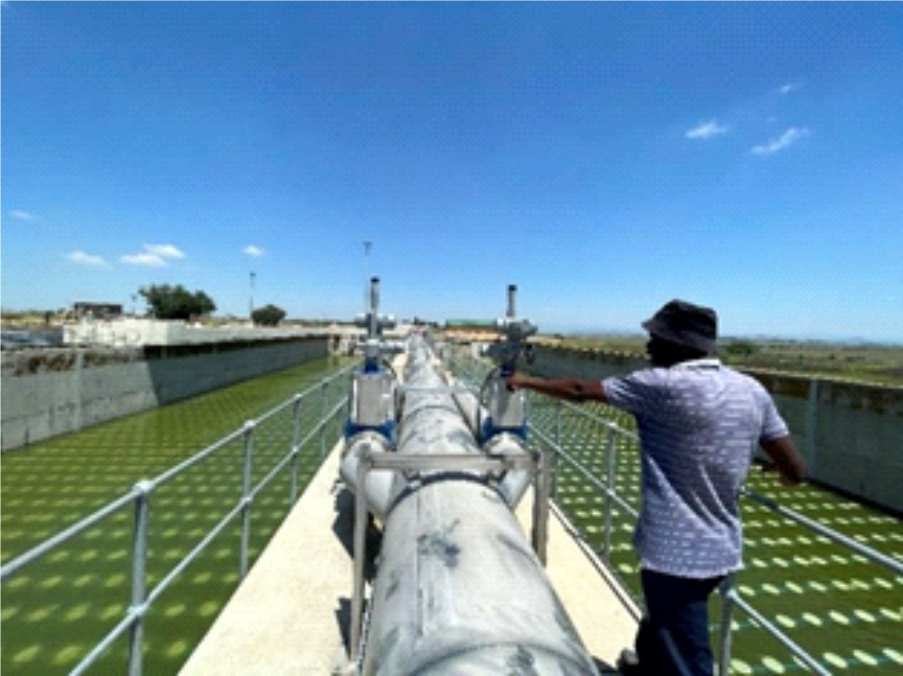
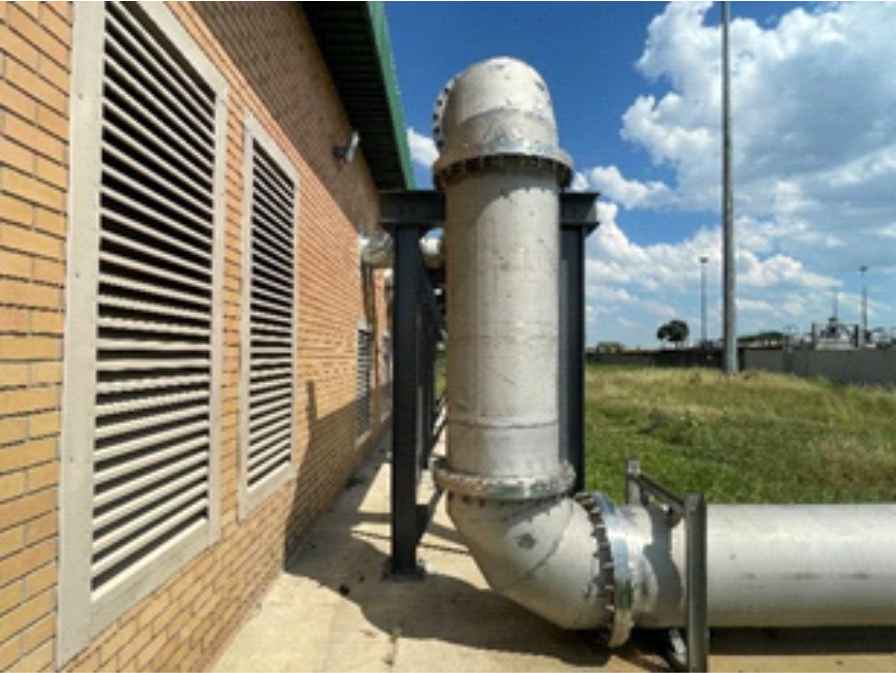
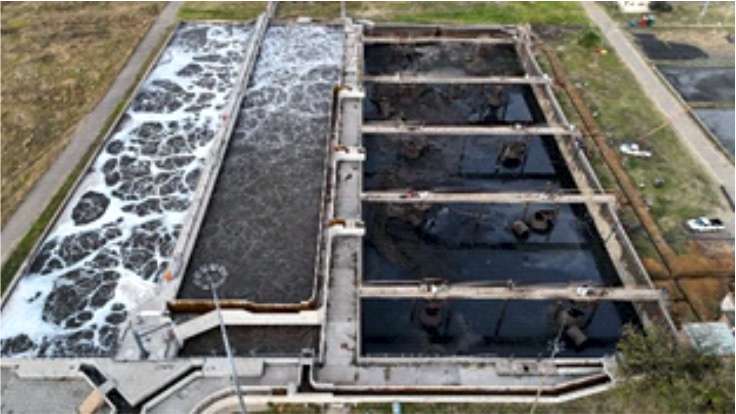
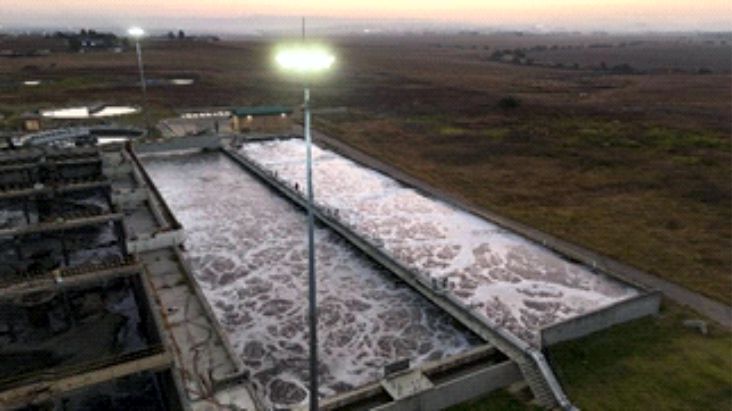
UPGRADE OF MADADENI WASTEWATER TREATMENT WORKS. Image Credit: Newcastle Municipality
After years of public frustration and service delivery protests, the Newcastle Local Municipality appears to be making progress in addressing the water and sanitation infrastructure issues that have long burdened the community. This follows the completion of two major projects and the near-completion of a third, marking what could be a turning point for the town’s service reliability and environmental sustainability.
According to the Amajuba District Municipality IDP 2024/25, Newcastle serves an estimated 389 000 residents across urban and peri-urban areas, with chronic water losses exceeding 35 % due to ageing infrastructure. The latest projects are seen as a response to decades of inefficiency, pollution, and deteriorating public trust.
*PAID ADVERTISEMENT
Municipal spokesperson Mthandeni Myende confirmed that the Madadeni Wastewater Treatment Works Upgrade, valued at R137.6 million and funded through the Municipal Infrastructure Grant, is now technically complete, with only snag-list items remaining.
“The project has been operational since June 2024, and the contractor is attending to the final snag list,” explained Myende, noting that completion came well ahead of the original October 2025 deadline.
The Green Drop certification system assesses wastewater treatment performance across five categories: capacity, effluent quality, operational monitoring, regulatory compliance, and infrastructure management. A score above 90 % earns Green Drop status.
The Madadeni facility’s new compliance levels (ammonium < 6 mg/L, nitrate < 15 mg/L) position it for full certification in the 2025 cycle.
“The upgrade ensures compliance with General Standards, which will improve river quality by reducing organic material and ammonium in the Buffalo River,” said Myende. “Nitrate removal also allows safer downstream use and abstraction.”
Training of operational staff and continued consultant support through the defects-liability period aim to prevent early-stage failures and ensure stable operations. Myende cautioned, however, that while the plant will enhance effluent quality, it will not on its own prevent sewer spills, which will be addressed under a separate municipal project.
As reported by Newcastillian News in May 2024, the Madadeni upgrade had reached 93 % completion at that time. Construction began in 2021, expanding the plant’s capacity from 25 megalitres per day (MLD) to 36 MLD — serving roughly 200 000 residents. The project’s inclusion in the Department of Water and Sanitation’s Project Management Database and Amajuba District Municipality’s 2025/26 Spatial Development Framework underscores its importance for both local and national water-security planning.
Meanwhile, progress continues on the Blaauwbosch Bulk Water Project, now 68 % complete.
Initially due at the end of October 2025, the project is now scheduled for completion by the end of November 2025. Myende confirmed that delays were due to poor performance by a previous contractor and bouts of inclement weather.
“Upon completion, this project will alleviate water shortages in underserved communities, stimulate economic growth, and improve quality of life,” said Myende. “There are no budget overruns either.”
The R23.8 million initiative began in September 2021 and involves laying a 15 km, 450 mm-diameter steel pipeline from the Braakfontein Reservoir to the Blaauwbosch supply area. Over 10 km of pipeline has already been installed, allowing partial water supply to Ward 12. Environmental audits by Hanslab Environmental Consultants ensure compliance with provincial authorisations and sustainability standards.
Furthermore, the Aviary Hill AC Pipe Replacement and PRV Installation (Phase 2) project also reached completion in March 2025.
Funded through a R12.65 million Municipal Infrastructure Grant, this initiative replaced ageing asbestos-cement pipes with durable uPVC and added pressure-reducing valves to curb bursts.
“Water disruptions from high pipe bursts have reduced immensely,” said Myende. “The maintenance team that once responded daily to burst pipes can now focus on other areas.”
The municipality’s 2025/26 IDP Review and forward budget earmark an additional R8 million in 2026/27 for sewer reticulation upgrades in Madadeni Sections 4 and 6 — with tenders expected to open in Q1 2026.
Paid Advertising
Collectively, these projects mark a long-awaited shift towards infrastructure stability. While Newcastle still faces constraints tied to water sourcing and ageing distribution networks, the operational gains already realised are improving service reliability, cutting repair costs, and advancing the town’s broader environmental and economic resilience.
Newcastillian News invites your input. We ask that you keep your remarks courteous and on-topic. We do not allow any form of hate speech, such as racist or sexist comments. All comments are subject to moderation in line with our User Rules and Commenting Policy.