South Africa’s automotive manufacturing sector has faced significant volatility over the past two years, with fluctuating demand, rising input costs, and structural pressures affecting production stability. Consequently, facilities across the country have had to adapt rapidly to changing market conditions, balancing operational efficiency with workforce considerations.
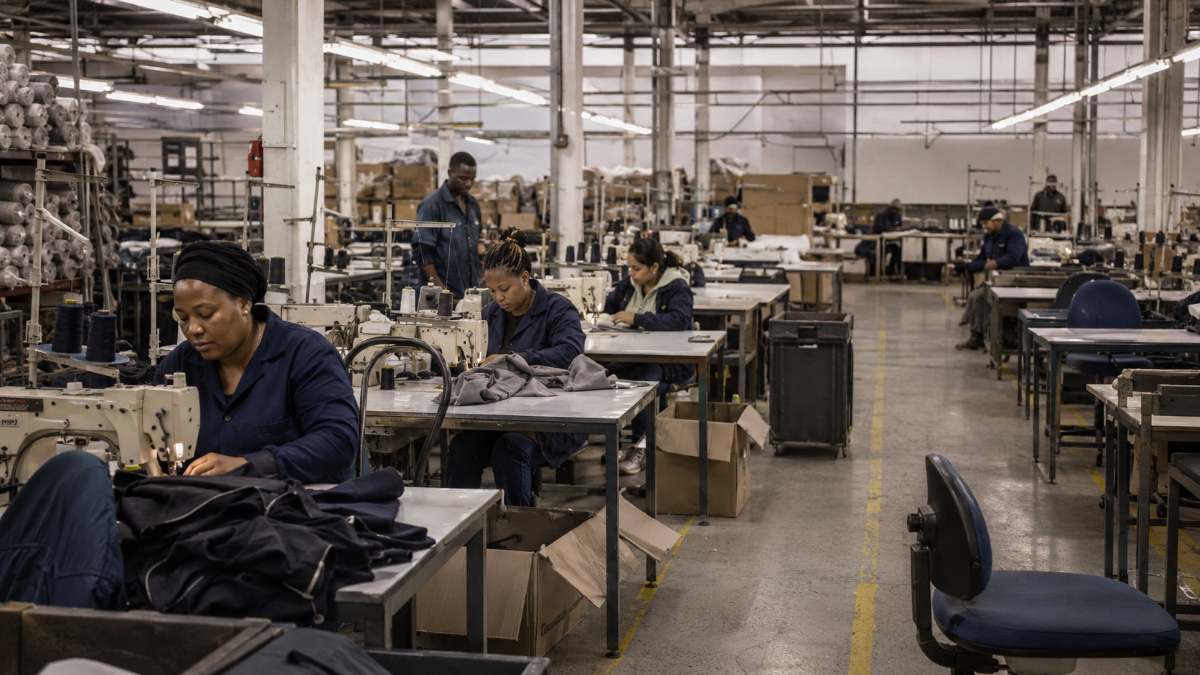
Within this context, Dunlop Tyres South Africa (Pty) Ltd has taken decisive measures at its Ladysmith plant to stabilise operations and secure long-term viability. Early in 2025, the company undertook a business restructuring aimed at restoring competitiveness and aligning production with evolving market realities.
Moreover, Dunlop Tyres South Africa (Pty) Ltd’s Ladysmith manufacturing facility underwent a business restructuring early in 2025 to restore competitiveness and preserve long-term viability.

As initially reported in January 2025, the company announced job cuts at the Ladysmith plant, citing declining automotive-market demand. By 20 February 2025, the restructure was formally concluded, with 90 employees retrenched as part of the process.
Since the restructure, Dunlop stated that it has concentrated on stabilising operations at the Ladysmith facility.
On productivity improvements, the company explained that it focused on “building operational stability and embedding efficiencies across the Ladysmith plant. While we do not disclose specific metrics, we are satisfied by the steady improvements achieved in productivity.” Therefore, although exact figures remain confidential, operational performance is steadily improving post-restructure.
Furthermore, the company acknowledged that the domestic automotive sector continues to show uneven recovery, by emphasising, “The domestic automotive sector continues to reflect a balance of recovery and volatility, and Dunlop has remained agile in its production planning to respond effectively to these trends.”
As a result, the Ladysmith plant has adapted its production mix to match market demand, including the replacement-tyre segment.
To support this, Dunlop has extended its Sure Tyre Insurance programme, which “provides free tyre insurance for irreparable all-road hazard damage for 12 months from purchase. Excitingly, in this 2025/2026 peak season, Dunlop has extended this coverage to 18 months for tyres purchased until 31 January 2026.”
Furthermore, investment priorities for 2026 also reflect a strategic approach to sustainability and product diversification. Dunlop noted that it is focusing on energy efficiency, including “energy-efficient lighting, water conservation, waste management, and the installation of a 1MW solar plant at our manufacturing facility. Plans for expanded renewable energy projects are under consideration.”
In addition, the company stateed that product innovation remains a central focus: “Dunlop plans to bring three new product lines to the market in the course of 2026. Dunlop also extended the AT5 offering in three key high-inch sizes.” Meanwhile, research and development advances with parent company SRI and Kyoto University have “achieved a breakthrough in three-dimensional visualisation of rubber’s internal structure, paving the way for tyres that are safer, longer-lasting, and more environmentally responsible.”
Collectively, these initiatives demonstrate that the restructure is being leveraged as a platform for recovery, combining operational stabilisation with product and sustainability investments.
Recent data from the National Association of Automobile Manufacturers of South Africa (NAAMSA) underscores the uneven recovery in South Africa’s automotive manufacturing sector, with new vehicle sales reaching 54,700 units in September 2025—the highest monthly level since September 2015.
However, the sector faces potential disruptions, as wage negotiations between automakers and the National Union of Metalworkers of South Africa (NUMSA) reached a deadlock in October 2025, with the union rejecting employers’ reliance on the 3.4% CPI as justification for below-inflation increases.
Despite internal efforts, the broader manufacturing and economic environment remains challenging.
ArcelorMittal South Africa (AMSA) has confirmed preparations for the wind-down of its long-steel business by 30 September 2025, with an internal memorandum issued to staff on 29 August 2025 and ongoing closure discussions as of October, citing subdued demand, rising electricity and logistics costs, competition from mini-mills, and imports exceeding 35% of local consumption (Newcastillian News).
For Dunlop, this is significant because tyre manufacturing is closely linked to automotive supply chains that depend on stable upstream metal and component supply.
Therefore, any disruption in steel availability could affect vehicle manufacturers and, consequently, tyre production.
With this in mind, the company further highlighted ongoing macroeconomic pressures, including “raw material price volatility, electricity supply instability, and competition from imported tyres,” alongside challenges related to currency exposure.
Structural pressures evident at AMSA—such as inconsistent rail freight logistics, high electricity tariffs, and uneven domestic demand (Newcastillian News)—mirror broader risks for manufacturers like Dunlop. These challenges emphasise that operational gains at Ladysmith, while meaningful, exist within an ecosystem of volatility and cost pressure.
The human cost of the restructure was immediate: 90 employees were retrenched at the Ladysmith facility. Dunlop’s earlier statement acknowledged that “despite extensive efforts … the steadily declining automotive market demand and conditions had led to the business restructuring.”
Nevertheless, the company continues its employee and community engagement programmes. Dunlop reported that it “remains deeply committed to its employees and the Ladysmith community. Our long-standing programmes for employee recognition, long service awards, and community upliftment continue to run post-restructure.”
While these initiatives do not compensate for job losses, they do reflect a continued emphasis on workforce and community support.
For the Ladysmith region, the key question remains whether stabilised operations will translate into sustained employment or renewed hiring. Dunlop’s operational agility and product-line extensions indicate positive intent, yet verification of production volumes and capacity recovery would provide a clearer picture.
Looking ahead to 2026, Dunlop’s strategy at the Ladysmith plant reflects cautious optimism.
Operational improvements continue alongside product-portfolio expansion and sustainability initiatives, such as the solar plant installation. However, the broader industrial context remains pressured, as seen in AMSA’s challenges and persistent market volatility.
Get your brand in front of thousands of readers with Newcastillian News visibility packages. Email [email protected] for placement options and rates.
Furthermore, as of October 2025, Minister of Trade, Industry, and Competition Parks Tau emphasised South Africa’s automotive competitiveness through rapid adoption of New Energy Vehicles.
In summary, the Ladysmith facility illustrates a South African manufacturer navigating both internal recovery and external structural headwinds. While progress is evident, the plant’s ability to maintain employment, achieve supply-chain resilience, and sustain production gains will depend on the wider economic and industrial environment.
With all this in mind, what are your thoughts? Be sure to let us know below.
Do not forget to read, Illegal Dumping Continues to Strain Newcastle’s Urban Environment, if you missed it.
Frequently Asked Questions (FAQs)
90 employees were retrenched following the business restructuring at Dunlop Tyres SA’s Ladysmith facility (Newcastillian News).
Dunlop stated that it is “building operational stability and embedding efficiencies across the Ladysmith plant. While we do not disclose specific metrics, we are satisfied by the steady improvements achieved in productivity.”
The company extended its Sure Tyre Insurance programme, which “provides free tyre insurance for irreparable all-road hazard damage for 12 months from purchase. Excitingly, in this 2025/2026 peak season, Dunlop has extended this coverage to 18 months for tyres purchased until 31 January 2026.”
Dunlop is implementing “energy-efficient lighting, water conservation, waste management, and the installation of a 1MW solar plant at our manufacturing facility. Plans for expanded renewable energy projects are under consideration.” It is also introducing three new product lines in 2026 and extending the AT5 offering in key sizes.
The plant continues to navigate “raw material price volatility, electricity supply instability, and competition from imported tyres,” alongside challenges related to currency exposure and broader supply-chain constraints.