



Mining companies often promise economic growth, job creation, and social development. Yet, as interest in Newcastle’s mining sector grows, residents in the Amajuba district have an opportunity to influence mining legislation and policy.

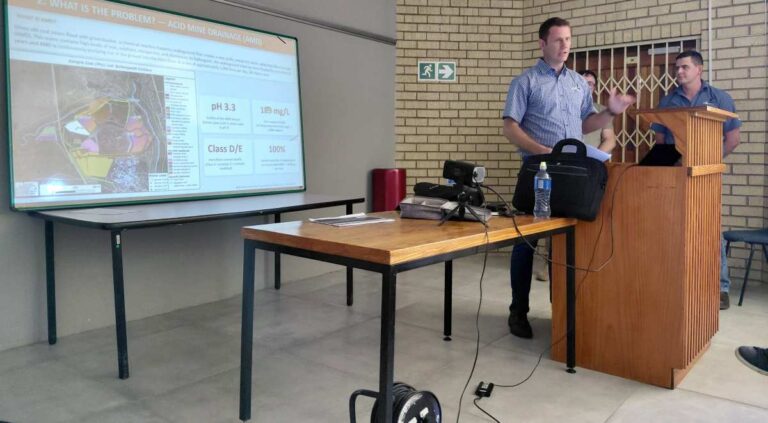
On 26 August 2025, the Amajuba District Municipality held a hybrid council meeting with officials to address governance, economic development, and social welfare. The Department of Mineral Resources and Petroleum presented on the increasing interest in mining across the Amajuba region, highlighting its potential and challenges.
“With existing operations such as Uitkomst Coal Mine and Ikhwezi Mining, the Council examined the sector’s potential to stimulate local economic activity, generate sustainable employment, and enhance socio-economic outcomes for communities across the district,” stated the District Municipality.
Moreover, the government entity further highlighted that discussions focused on integrating mining into local economic plans, promoting responsible investment, and ensuring benefits like skills development and community upliftment. Consequently, the municipality seeks to align these efforts with broader developmental goals for sustainable growth.
As the municipality leverages this interest to drive economic progress, residents must engage in decision-making processes impacting the economy and environment.
Such involvement ensures local perspectives are considered. To this end, the Department of Mineral Resources and Energy (DMRE) will host a public engagement session in Utrecht on 28 August 2025.
This meeting offers a platform for communities and stakeholders to provide input on proposed revisions to mining legislation, shaping the district’s mining future.
Encouraging residents to become more involved with public consultations such as this, Bradley Gibbons of the Endangered Wildlife Trust stressed the need for careful planning in mining operations. “While I am not against mining, a lot of thought must go into where the mines are situated, especially when looking at the close proximity of towns where people live and the habitats of wildlife, especially endangered wildlife,” Gibbons said. He observed, during a survey of 54 Wattle Crane habitats, that mining near these areas caused environmental damage.
Gibbons also highlighted concerns from other communities. “I have also been in contact with communities in the Piet Retief area, where residents noted their water quality had deteriorated, two cows were reported to have died due to the mining activities, and people have also complained about the effects that blasting had on their homes. There is also a community near Wakkerstroom, where residents have complained how sick they have become since mining companies started operating, and while I cannot say this is due to the coal dust, it cannot be healthy to have mines so close to towns where people and their animals live, as the mining activities could pose possible issues to their health and homes,” he stated. These accounts, he noted, highlighted the need for stringent oversight to address mining’s impacts on communities and ecosystems.
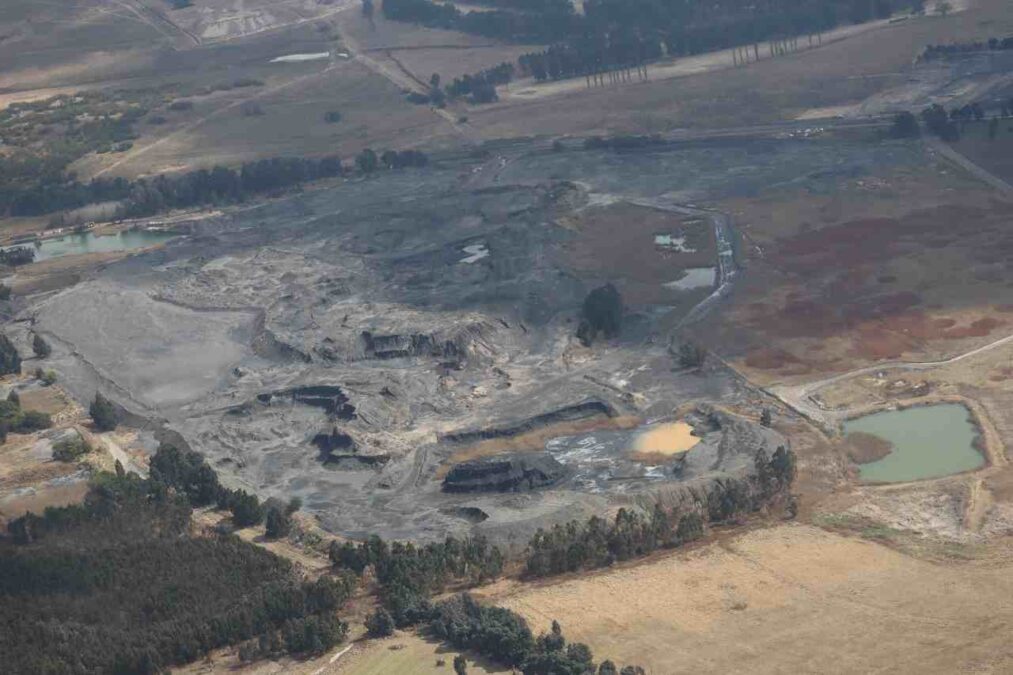
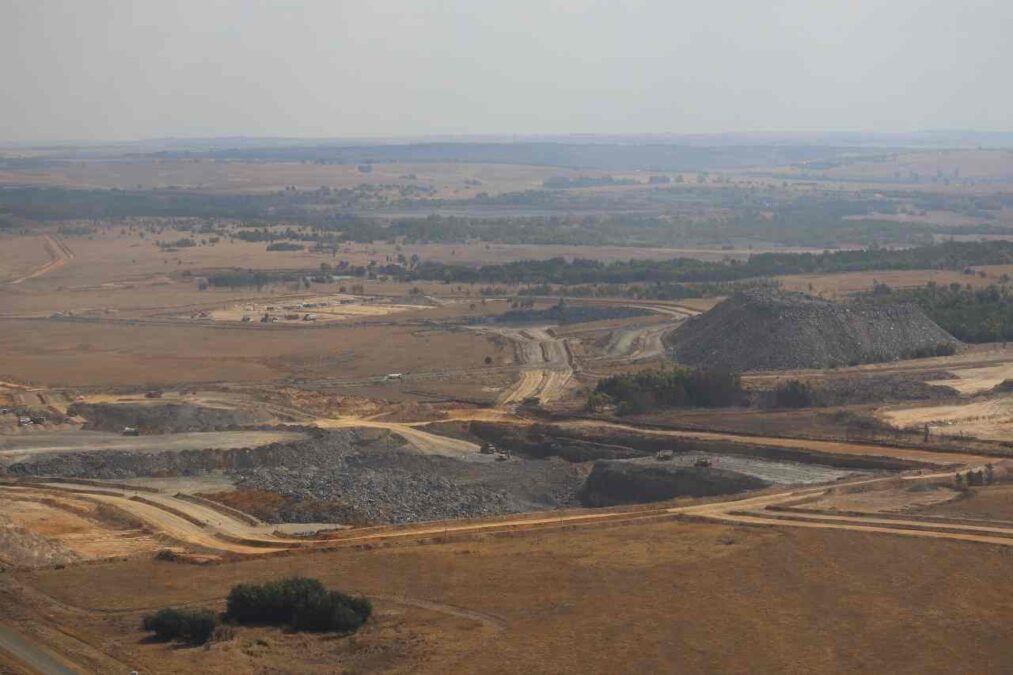
Adding to this, Newcastle Municipality’s Councillor Bertie Meiring, chairperson of portfolio committee for Development Planning and Human Settlement, added that when looking at the current economic climate, this renewed interest held potential in ensuring that development did not stagnate.
“This renewed interest can ensure that development and job creation can continue, through the mining sector and the downstream businesses. However, the situation will have to be closely monitored,” noted Cllr Meiring.
While the mining sector could have a positive impact on the town and the neighboring town of Utrecht, Cllr Meiring pointed out, “The road infrastructure will have to be monitored, with emphasis being focused on ensuring they are not damaged due to trucks, and we will have to look at ways in ensuring mining companies follow the correct protocol when rehabilitating the site once they have complete their work.”
With this in mind, the Department of Mineral Resources and Energy (DMRE) noted it maintained regulatory oversight. For instance, the Department pointed out that in the quarter ending June 2025, 1,164 mining applications were received across South Africa. Of these, 185 were granted, 75 refused, and 222 rejected.
Specifically, 22 mining rights applications were received, with 5 granted, 2 refused, and 4 rejected; 597 prospecting rights applications were received, with 70 granted, 42 refused, and 142 rejected; and 545 mining permit applications were received, with 110 granted, 31 refused, and 76 rejected.
While the DMRE maintains oversight on a number of mining companies in the country, as explained by the Human Rights Watch in their 2025 World Report on South Africa, mining activities continue to exacerbate environmental degradation and social disruptions, such as pollution leading to health issues and displacement in rural areas, often worsening inequalities for marginalised communities.
Furthermore, as detailed by Amnesty International in their 2024 report on human rights in South Africa, communities endure ongoing violations of rights to water, health, and a healthy environment due to acid mine drainage and dust pollution from mining, resulting in chronic illnesses and diminished quality of life over extended periods.
Therefore, the Utrecht session on 28 August 2025, which is set to take place at the Utrecht Town Hall from 10 am, stands as a critical juncture for the Amajuba District to redefine its mining landscape.
By actively participating, residents can demand robust policies that safeguard public health, protect ecosystems, and ensure equitable economic benefits, holding mining companies accountable to their promises while mitigating long-term harm.
Through unified action and oversight, the district has the power to establish a model for responsible mining that prioritises community well-being and environmental preservation. This decisive moment calls for unwavering commitment from all stakeholders to forge a sustainable future, where economic progress strengthens rather than undermines the region’s social and ecological fabric

What are your thoughts on the above? Share your views in the comment section below.
Be sure to read, The Pros and Cons of Investing in Biotech Companies, if you missed it.







2 Responses
Therefore, the Utrecht session on 28 August 2025, which is set to take place at the Utrecht Town Hall from 10 am, stands as a critical juncture for the Amajuba District to redefine its mining landscape : not everyone can drive there or be off on a Thursday at 10 am… How can they sell the towns out like this? there is not one single town which has turned its town into a mining area ,that has survived the money grabs…. seems money is more important than peoples health, towns look, roads, water, natural water way, animals, and i can go on….. The people in charge all have one thing in common, take take take take….
How can they give notice of a meeting one day in advance and expect people to be there? I am in Durban, how will I get back in time? This is really nonsense.