


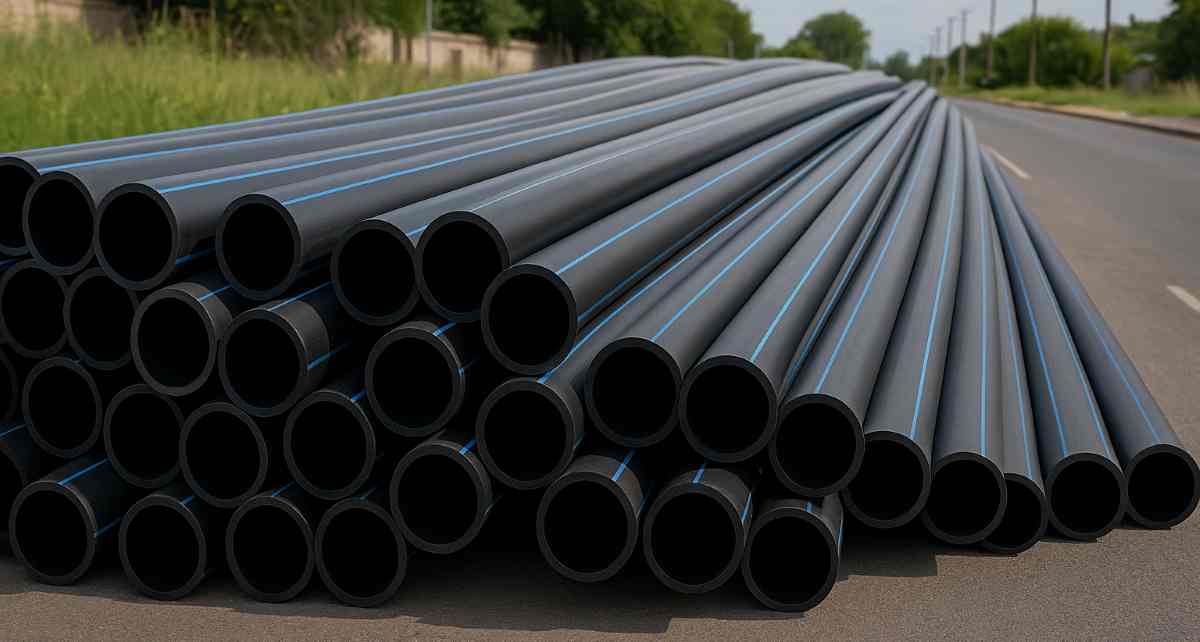
Reservoirs running critically low, recurring water outages, and the frustration of trickling taps are becoming an all-too-familiar reality for Newcastle, leaving many residents exasperated and at breaking point. This past weekend once again saw large sections of Newcastle West grappling with widespread water interruptions. However, according to the local municipal entity, change is on the cards.

This follows oversight inspections carried out by the Deputy Mayor of the Amajuba District Municipality, focusing on key projects designed to strengthen and secure the district’s water infrastructure in the region.
During the week-long inspection, the District Municipality’s Communications Unit confirmed that one of the primary undertakings under review was the Covid-19 Intervention MIG/WSIG Reprioritisation project. Valued at R15 million, this initiative as explained by the District Municipality is aimed at bolstering the district’s water infrastructure through the construction of four booster pump stations, the installation of a backup generator, the upsizing of reservoir outlets, and the repair of bulk pipeline leaks.
These booster pumps are located in Dannhauser—a placement that, according to the Communications Unit, reflects the town’s long-standing and severe water supply problems. The scheme encompasses four stations—Eastbourne Pump Station, Jessie Pump Station, Rutlands Pump Station, and Dorset Pump Station. As matters currently stand, the project has reached an 86 % completion rate and is scheduled for finalisation by 30 September 2025.
However, Cllr Sithole has raised serious concerns over the disruption caused by cable theft at two of the pump stations—a criminal act that has significantly delayed progress.
In response, the Deputy Mayor urged the community to take greater responsibility in safeguarding critical infrastructure, warning that residents themselves ultimately bear the cost of such vandalism. “Despite this setback, the municipality remains committed to delivering essential services to its residents, and the successful completion of this project will undoubtedly enhance the district’s water supply and infrastructure,” said the Communications Unit.
As this project slowly makes progress, it should be noted that, as reported by Newcastillian News on 7 August 2025, the Deputy Mayor had previously conducted site visits to two other significant infrastructure projects with a combined value of R186 million. The larger of these, a R178 million emergency water-supply scheme serving Ramaphosa Settlement and Skombaren, includes the construction of a 2-megalitre reservoir at Hilltop, a 17.9 km pipeline from Durnacol, a 200-kilolitre brake-pressure tank, and a 5-megalitre reservoir at Durnacol. Once completed, it is expected to benefit more than 10 000 households, with work standing at 74 % completion and finalisation targeted for 31 December 2025.
The second project, valued at R8 million, involves restoring the Chelmsford Dam Wall Access Road within the Chelmsford Nature Reserve and reconstructing Sewer Pumpstation DNC7 in Durnacol.
At the time of the Deputy Mayor’s visit, the work stood at 75 % completion, with the project scheduled for conclusion by 30 September 2025. Both initiatives were highlighted as part of the municipality’s broader strategy to address critical water and sanitation needs across Newcastle and Dannhauser.
To read more on these projects, click here.
These local efforts, however, are unfolding against a backdrop of systemic challenges in South Africa’s water sector, as highlighted by the Auditor-General of South Africa (AGSA) in their 2023/24 audit outcomes. The AGSA reported that the Department of Water and Sanitation (DWS) and its entities, including the Water Trading Entity (WTE), are losing billions due to poor planning, project delays, and inadequate maintenance, with 45% of WTE projects delayed nationwide. .
Additionally, the AGSA further noted that 42% of WTE’s bulk infrastructure assets are in poor condition, with only 2.13% of the asset budget allocated to maintenance, far below the National Treasury’s recommended 80% norm.
This underinvestment contributes to water losses costing R18.9 billion in treated water in 2022/23, exacerbating issues like Newcastle’s recurring outages and trickling taps.
Moreover, as explained by the AGSA, municipal debt poses a significant barrier to sustainable water service delivery, with municipalities owing water boards R25 billion as of April 2025. This financial strain threatens the viability of water boards like Amatola or Vaal Central. The AGSA also highlighted R29.7 million in fruitless and wasteful expenditure in the DWS for 2023/24, including losses from uncompleted pump station repairs.
Moreover, the DWS has acknowledged these challenges and is pursuing reforms to address infrastructure backlogs, as outlined in their 2025/26 strategic plan. The DWS noted that 105 of South Africa’s 144 water service authorities are underperforming due to high non-revenue water losses. To address this, the DWS is amending the Water Services Act to ring-fence water revenue and deploying water boards to support struggling municipalities.
However, the South African Institution of Civil Engineering (SAICE) has further emphasised that municipalities often lack the technical expertise to utilise grants efficiently, a challenge Newcastle must overcome to meet its project deadlines.
SAICE estimates that South Africa requires over R90 billion annually for the next decade to repair and upgrade water infrastructure.

While these projects signal hope for Newcastle’s residents, the path to reliable water and sanitation services remains fraught with obstacles.
Ultimately, the success of these efforts hinges on sustained action and accountability. Aligning with the DWS’s reforms, adopting SAICE’s recommendations for technical expertise, and addressing the AGSA’s concerns about financial mismanagement will be critical to ensuring that residents no longer endure the frustration of dry taps and disrupted lives.
What are your thoughts on this? Let us know in the comment section below.
Be sure to read, R4 Million Cannabis Smuggling Arrest in Dundee After High-Speed Chase, if you missed it.
Frequently Asked Questions About Newcastle’s Water Infrastructure Projects
The project is aimed at strengthening Newcastle and Dannhauser’s water infrastructure by installing four booster pump stations, adding a backup generator, upsizing reservoir outlets, and repairing bulk pipeline leaks.
According to the Amajuba District Municipality, the project is currently 86% complete and is scheduled for finalisation by 30 September 2025, barring further delays such as vandalism or cable theft.
Cable theft at pump stations disrupts operations and delays project timelines, ultimately extending water outages for residents. It also increases costs and puts pressure on municipal budgets.
Two other significant projects include the R178 million emergency water-supply scheme for Ramaphosa Settlement and Skombaren, and an R8 million initiative to restore the Chelmsford Dam Wall Access Road and reconstruct Sewer Pumpstation DNC7 in Durnacol.






One Response
Can we get more details regarding the work to be done at Chelmsford Dam