


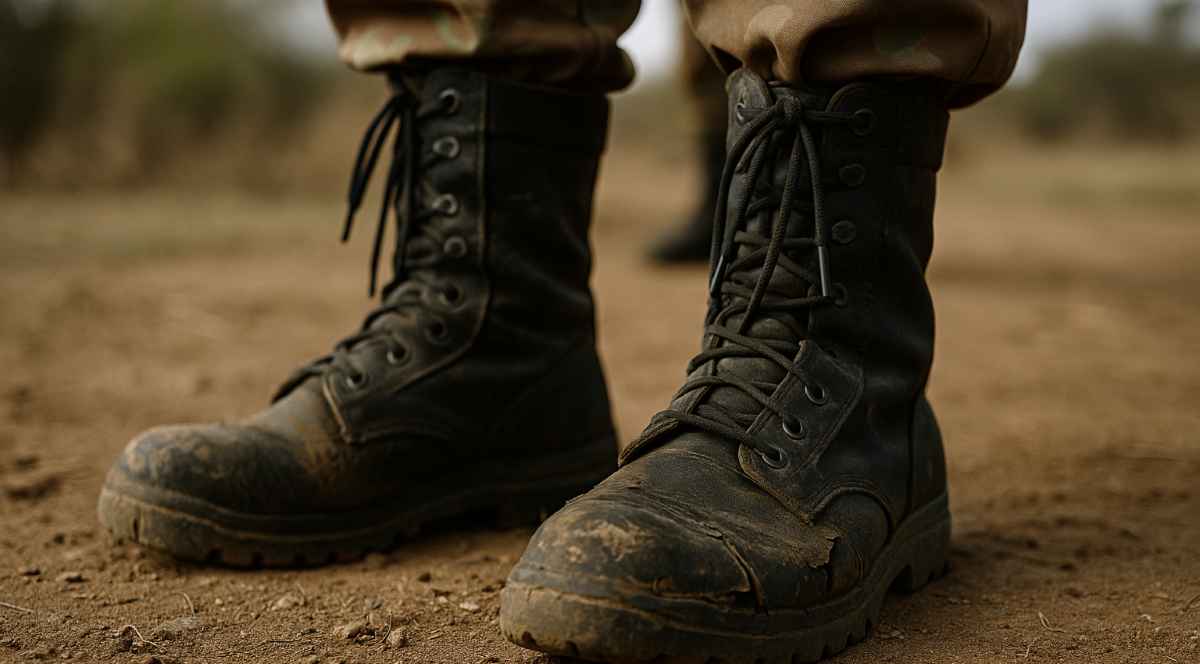
South Africa’s military is facing one of its deepest crises yet. Chronic underfunding, ageing equipment, and budget mismanagement have left the South African National Defence Force (SANDF) struggling to protect the country and uphold its role as a regional power. From pirate threats off the coast to insurgencies on our doorstep, the SANDF’s decline is placing national security, and South Africa’s standing in Africa, on increasingly shaky ground.

This year, the Department of Defence was allocated R57.183 billion, a slight increase from last year’s R55.94 billion. But with inflation running at 4.4%, it’s effectively a budget cut.
Most of that money doesn’t even go to ships, aircraft or border patrols. About 64%, R36.7 billion, is spent on salaries, leaving “only” around R20 billion for everything else: equipment, maintenance, fuel, operations. Parliament’s own Portfolio Committee on Defence warns this imbalance is choking the SANDF’s ability to modernise.
Procurement problems make matters worse. State arms company Denel failed to deliver 264 Badger armoured personnel carriers under an R8.3 billion contract, partly due to the corruption exposed by the Zondo Commission. As a result, troops remain stuck with old, less capable vehicles.
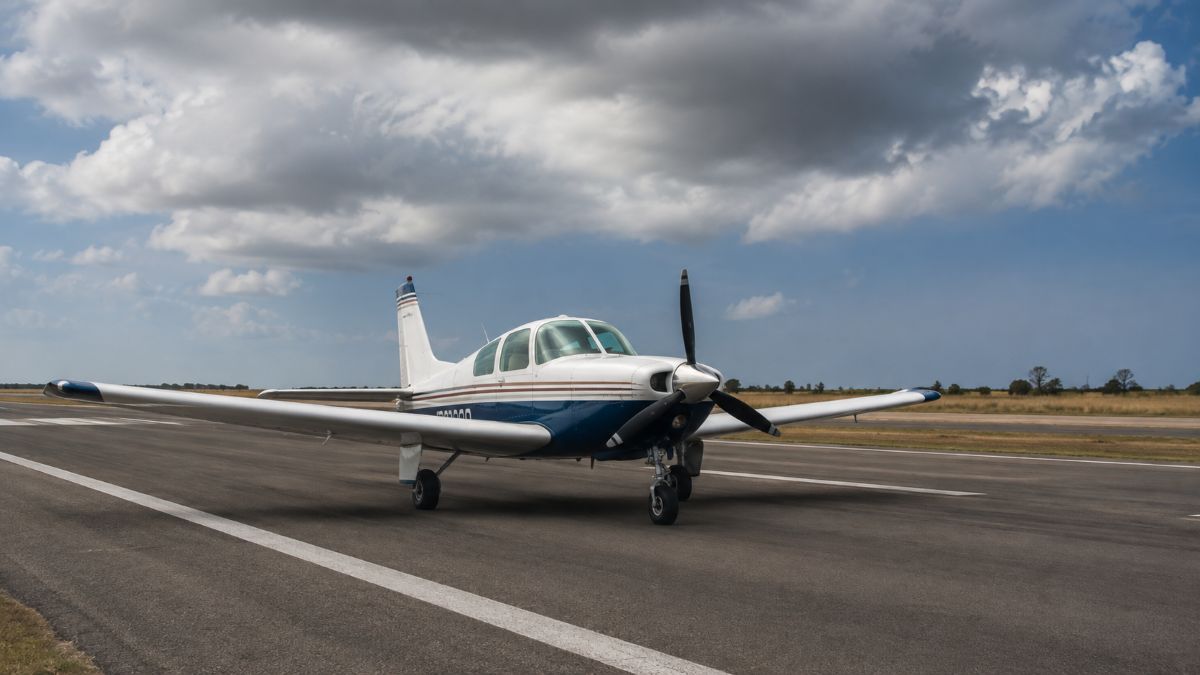
Adding to this, the South African Air Force is in dire shape. Defence experts say only 15–20% of its aircraft are airworthy, including key Gripen jets. Many radar systems are also outdated, raising serious questions about how well our skies are protected.
The Navy is in a similar position, with just one operational frigate to patrol nearly 2,800 km of coastline, vital sea lanes that carry 80% of South Africa’s trade.
Furthermore, the SANDF’s limited capacity has already shown tragic consequences.
In January this year, 14 South African soldiers were killed in the DRC while serving under the SADC mission. Analysts linked these deaths to inadequate air support and intelligence.
Closer to home, Mozambique’s Cabo Delgado insurgency, led by Islamic State-linked militants, has displaced over 800,000 people and threatened massive gas projects. South Africa was expected to help lead regional stabilisation efforts, but its limited air and naval capabilities meant only modest deployments.
Meanwhile, porous borders are being exploited by human traffickers, arms smugglers and sophisticated crime syndicates. Deputy Defence Minister Thabang Makwetla admitted in Parliament that limited personnel and technology are hampering efforts to secure these frontiers. The Institute for Security Studies warns this could even allow terror groups to take root, threatening Limpopo and Mpumalanga.
With only a single operational frigate, South Africa struggles to patrol its own waters, let alone ward off pirates or illegal fishing fleets.
This leaves vital trade routes through the Gulf of Guinea and Indian Ocean, lifelines for the economy, alarmingly unprotected. According to defence analysts, if pirates or major organised crime groups start to exploit this vulnerability, it could choke the trade that underpins most of the country’s GDP. As you would agree, one would think this would be a massive prioroty for the government to urgently remedy.
Yet despite the dire state of these crumbling institutions, Minister Angie Motshekga has cautioned that any further cuts to the defence budget would be “dangerous.” To ease the strain, the government plans to trim spending by offering early retirements to around 2,200 personnel and has allocated funds for the following:
- R480 million for maritime repairs
- R300 million for general maintenance
- R200 million for border security
It’s also investing a head scratching, R2.5 billion in the DRC peace mission and nearly half a billion rand for broader SADC obligations. Meanwhile, Denel and Armscor are meant to drive a defence industry revival to create jobs and boost exports.
But even combined, these moves may not reverse years of decline. Defence spending sits at just 0.78% of GDP, well below the international norm of around 2%. The SANDF’s own human resources plan under the Medium-Term Expenditure Framework aims to free up funds by shrinking the wage bill, but similar efforts in the past have stumbled.
Beyond the mismangement and massive salary bill, with fewer resources, the SANDF is struggling to project power beyond its borders. Where South Africa in the past led SADC security efforts, analysts now warn other countries may step into the vacuum, potentially redrawing influence across Southern Africa.
As you would agree, that has direct consequences for regional stability, where collective responses are needed to tackle cross-border insurgencies, illegal mining networks, and piracy.
But, can the SANDF pull back from the brink?
Without substantial new funding, strict oversight, and a major push to prioritise operational needs over bureaucracy, many fear the SANDF could slide into irrelevance. This would carry steep costs: from trade and investment risks to weakened borders and a reduced voice in African affairs.

While the government insists it’s committed to equipping soldiers properly and modernising core units, the question remains: is this too little, too late?
Be sure to let us know your thoughts on this in the comment section below.
Sources & references
- defenceWeb: Multiple articles & analyses on SANDF air, naval, and land force operational readiness, Denel procurement failures, and budget trends (2024–2025).
- Institute for Security Studies (ISS Africa): Briefs on SANDF capability gaps, regional security risks (Mozambique, DRC), maritime security threats, and defence spending vs GDP.
- Good Governance Africa: Reports on Mozambique’s Cabo Delgado insurgency impact, SANDF regional deployments, and governance-driven security shortfalls.
- Parliamentary Portfolio Committee on Defence & Military Veterans: Budget allocations, MTEF presentations, human resources restructuring plans (April–May 2025 sessions).
- Department of Defence & National Treasury MTEF 2025 documents: Detailed figures on SANDF compensation, operations, equipment & regional deployment budgets.
- United Nations & UNHCR data: Displacement statistics for DRC (~5.4 million) and Mozambique (~800,000).
- South African Maritime Safety Authority & Department of Transport: Confirmation that ~80% of South Africa’s trade moves by sea.
- Deputy Defence Minister Thabang Makwetla (Parliament Hansard, early 2025): Comments on border security and SANDF operational limits.








3 Responses
It’s not a surprise, just look at everything the ANC government touch, SA airways, Railways, Ports, Municipality’s, Post Offices, Dennel, Hospital’s, Medical care, SAOS and so it goes on and on all going bankrupt. and unfunctional, except the top structure and their gangsters that filling up their own pocket with money. From healthy country to desert country with nothing left.
Shocking from the best to the worst it’s terrible
They could not defend kzn during the looting so I don’t see them being able to defend the nation .