


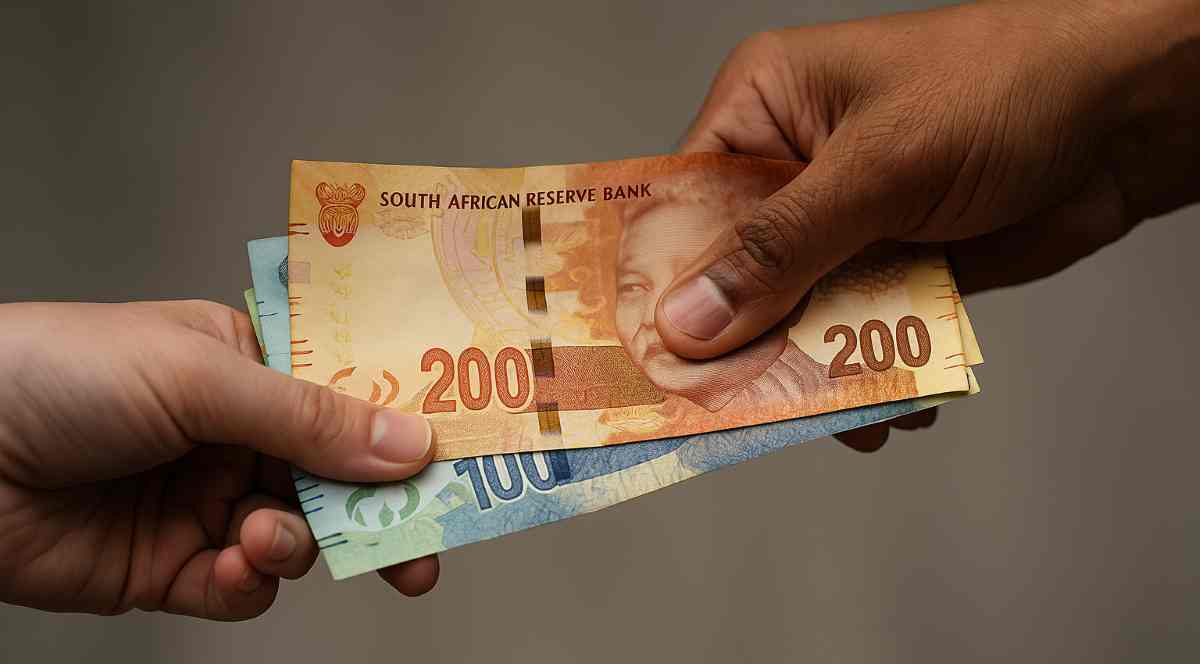
Have you ever wondered how much of your hard-earned tax money is being used to keep struggling state companies afloat? South Africa’s State-Owned Enterprises (SOEs) — once intended to uplift the economy and bridge service delivery gaps — have increasingly become financial black holes. Instead of building the country up, many are dragging it down. And yes, you’re footing the bill.

The Real Cost to You, the Taxpayer
According to Finance Minister Enoch Godongwana, South Africa has poured over R520 billion into failing SOEs in the past decade. Civil society organisations such as the Centre for Development and Enterprise (CDE) and Corruption Watch warn that this figure could be over R600 billion, when including recent support packages. That’s more than R8,600 per person — or around R72 a month for 10 years, per citizen. (let that figure sink in).
Now imagine what that kind of money could do if redirected: better schools, reliable healthcare, social housing, infrastructure. Instead, it’s propping up inefficient institutions who pay their top brass phenomenal salaries. Below, we take a look at what these big-wigs are earning while numerous SOEs continue to fail.
SOE CEO Salaries – 2025 (Annual Figures)
| SOE & CEO | Annual Salary & Monthly Breakdown |
|---|
| Development Bank of South Africa | R15.5 million/year (~R1.29 million/month; ~R42,400/day) |
| Sources: da.org.za, BusinessTech, Gauteng.net |
| Transnet | R8.5 million/year (~R708,000/month) |
| Sources: da.org.za, BusinessTech, SA People |
| PRASA (Passenger Rail Agency of SA) | R7.8 million/year (~R650,000/month) |
| Sources: The South African, BusinessTech, da.org.za |
| Road Accident Fund (RAF) | R7.1 million/year (~R592,000/month) |
| Sources: da.org.za, BusinessTech, The South African |
| CSIR | R6.92 million/year (~R577,000/month) |
| Sources: The South African, BusinessTech, da.org.za |
| Central Energy Fund (CEF) | R6.15 million/year + R2.84 million bonus |
| Sources: da.org.za, Citizen, Daily Investor |
| Air Traffic Navigation Services | R6.14 million/year (~R512,500/month) |
| Sources: da.org.za, BusinessTech, SA People |
| South African Airways (SAA) | R6 million/year (~R500,000/month) |
| Sources: The South African, da.org.za |
| PetroSA | R5.8 million/year (~R483,000/month) |
| Sources: BusinessTech, The South African, SA People |
| Rand Water | R5.4 million/year (~R450,000/month) |
| Source: The South African |
To understand where these billions are going—and what South Africans are actually paying for—it’s important to look at the individual SOEs driving the costs.
The following breakdown unpacks the current state of four key institutions: Postbank, Ithala, Transnet, and Eskom. These entities don’t just absorb public money; they directly impact daily life through grant distribution, banking access, transport logistics, and electricity supply. Their challenges reveal not only the scale of financial mismanagement but the human and economic consequences behind the numbers.
Postbank: The Trust Gap Grows
Meant to promote financial inclusion and deliver social grants to 17 million South Africans, Postbank is battling on multiple fronts. As of June 2025, it has still not secured a full banking licence, operating under temporary status that limits its ability to expand services.
The recent transition from SASSA Gold Cards to Postbank Black Cards has been anything but smooth. Only 880,000 cards had been issued by 28 February 2025. Logistical delays, a suspended rollout, and warnings over rising fraud cases have created deep concern. A technical glitch in July caused 10-day delays in payments, leaving millions vulnerable and questioning whether they can trust the system at all.
Ithala: 257,000 Lives in Limbo
In KwaZulu-Natal, the financial institution Ithala serves over 257,000 depositors, including 76,000 SASSA grant recipients. But its failure to secure a banking licence saw the SARB initiate liquidation proceedings in January 2025.
Although the Pietermaritzburg High Court offered temporary relief in May, the uncertainty lingers. A R2 billion government guarantee protects depositors with balances up to R100,000, but for thousands of families, the future remains unclear. And for a province already battling poverty and unemployment, this uncertainty hits hard.
Transnet: The Supply Chain Struggle
If you’ve noticed rising costs on everyday items or longer delivery times, Transnet might be to blame. Tasked with managing the country’s freight rail and ports, its inefficiencies are choking the economy.
Losses for the six months ending September 2024 hit R2.2 billion. For 2023/24 overall? R7.3 billion. Security-related losses — vandalism, theft, infrastructure sabotage — added another R4.2 billion in damage. Despite “efforts” to improve, the state had to approve an additional R51 billion guarantee facility just to keep things moving.
Transnet’s underperformance directly affects export sectors like agriculture and mining. When goods can’t move, the economy can’t breathe.
Eskom: Still in the Dark
South Africa’s most infamous SOE, Eskom, continues to sap public funds while delivering unreliable power. Despite some recovery in loadshedding levels, its 2023/24 financial year ended with a R25.5 billion pre-tax loss — and a R55 billion loss after tax due to structural changes in its operations.
The R254 billion debt-relief package helped a bit, but Eskom’s liabilities still outweigh its assets. Municipal arrears are projected to hit R110 billion by March 2025. Even with a revenue improvement and a slight increase in energy availability (up to 62.97% with a 70% target), rising tariffs and public frustration persist.
Budget Reboot: Will It Work?
In May 2025, Finance Minister Godongwana announced a shift: less direct bailouts, more focus on infrastructure investment and public-private partnerships (PPPs). With debt servicing costs now eating 21.1% of all tax revenue, and national debt hovering around 74% of GDP, something had to change.
Furthermore, the updated budget rules aim to make PPPs more accessible, especially for projects under R2 billion. Business chambers and opposition parties support the move, but caution that real improvement hinges on fixing the rot within these SOEs.
Financial Inclusion at Risk
Postbank and Ithala aren’t just institutions on paper — they’re a lifeline for millions. But when systems break or trust erodes, people revert to unsafe, informal alternatives. Payment glitches, card fraud, and liquidation threats make it harder for vulnerable South Africans to stay financially included.
Adding to this, Transnet and Eskom’s dysfunctions don’t just hurt trade; they make life harder for everyday citizens trying to run businesses, get to work, or simply keep the lights on.
So, What Needs to Change?
Civil groups, economists, and citizens alike are demanding:
- Independent Leadership: No more political appointments. Competent, accountable executives are a must.
- Operational Reform: Cost control, infrastructure upgrades, modern systems.
- Private Sector Support: Let business help — without giving away the farm.
- Conditional Support: Future bailouts must come with strings attached. No results, no funding.
The Bottom Line
It’s no longer just about budgets or balance sheets. It’s about your money, your services, and your future.
South Africa can’t afford another decade of mismanagement, empty promises, and unchecked bailouts. The damage is no longer invisible—it’s showing up in delayed grants, unreliable electricity, lost jobs, rising costs, and broken infrastructure.
But this doesn’t have to be our normal.
With bold reforms, clear accountability, and leadership that puts people before politics, our SOEs can still be turned around. They can become what they were originally meant to be: drivers of economic progress, builders of opportunity, and pillars of trust—not potholes on the road to it.
The stakes are too high for silence. The pressure must come from every corner of society—citizens, business, and civil organisations alike. Share this article, comment and let us make us much noise as possible using the power of news to see positive changes in our country.
Have you felt the effects of South Africa’s struggling SOEs in your daily life? Whether it’s a blackout, a delayed grant, or a missed opportunity—your story matters. Share it in the comments below and let’s push for change together.







4 Responses
It is shocking how our hard earned money is stolen and wasted when is it going to end enough is enough now
No the government doesn’t care as long as they can put our money in their pockets and their family and fy
This is very bad I have matric licence no work but everybody in this entities lives like kings while I can’t even put bread on my table thus country is bad
The obvious question is what can the normal citizens do to stop this rout. Can we open a class action against the government to stop the funding of the SOE’S