


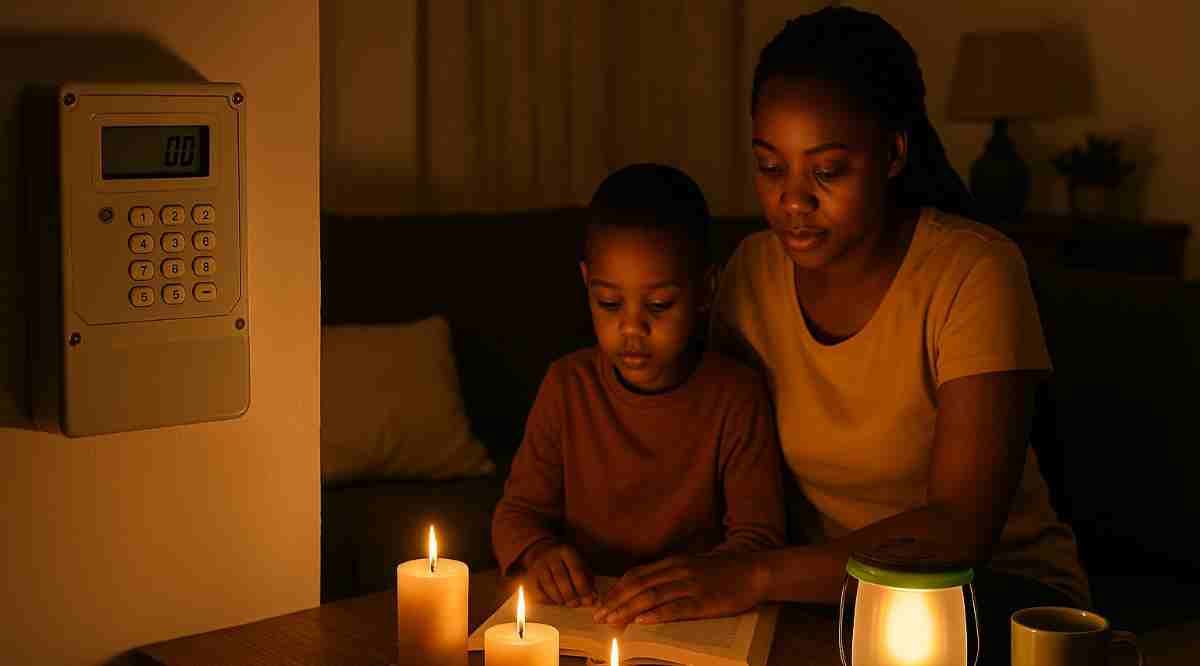
South Africans are once again facing a steep increase in electricity tariffs—adding more pressure to already stretched household budgets. This follows the National Energy Regulator of South Africa’s (NERSA) approval of Eskom’s 12.74% tariff hike, which came into effect on 1 April 2025. The increase pushes the average residential rate up from R2.56/kWh in 2024 to R2.88/kWh in 2025.

To put that into perspective, a household using 600 kWh a month will see their electricity bill jump from R1,536 to R1,728.
And once municipal surcharges kick in—as they do in cities like Johannesburg—monthly costs can easily surpass R2,000.
But here’s the good news: there are practical ways to take control and cut back on your electricity bill. Eskom’s 2025 Energy Outlook shows that households who actively manage their usage can save anywhere between 5% and 15%, which is roughly 30–90 kWh per month.
To help you get started, Newcastillian News consulted official resources to create a step-by-step guide to reducing your electricity costs, without sacrificing comfort.
Step 1: Establish Your Baseline Consumption
What to Do:
Start by understanding your household’s current electricity usage. Eskom recommends checking your April 2025 statement or reviewing prepaid meter receipts.
If you’re on prepaid, divide the amount spent by the tariff to estimate usage. For example, spending R1,000 at the R2.88/kWh rate means you used about 347 kWh. You can track this using printed receipts or prepaid apps like Powertime or Citiq Prepaid.
To drill deeper, the South African Reserve Bank (SARB) suggests dividing your total kWh for the month by 30 to find your daily use, then by 24 for your hourly average. The Department of Mineral Resources and Energy (DMRE) also recommends using Eskom’s “Residential Load Calculator”.
Why It Matters:
Knowing your baseline is essential. Stats SA’s 2025 Household Energy Report shows that urban households typically use between 550–950 kWh a month, while rural households use 320–520 kWh.
Tools and Tips:
- Citiq Prepaid meters: Press
#1#for real-time kWh and#100#for total consumption. - Inclining block tariffs: NERSA explains that usage above 600 kWh may cost over R3.50/kWh.
- Seasonal variations: Compare March and April consumption—summers need less heating, winters more.
- Loadshedding: While it reduces direct grid usage, alternative power sources like gas or inverters add hidden costs.
Official Source:
Eskom Residential Load Calculator
Step 2: Use Tech to Monitor Consumption
What to Do:
Once you know your baseline, start tracking daily usage. According to NERSA’s 2025 Electricity Access Report, 72% of households use prepaid meters. To check usage, input #100# or log into portals like Citiq or Powertime.
Want more detail? Use an electricity monitor—a plug-in device that tracks how much power your appliances consume in real-time. Models like the Efergy Elite 4.0 (±R950) are available from Takealot or Leroy Merlin. These monitors help identify exactly what’s driving your bill up.
Some municipalities like Cape Town and Joburg also offer smart meters—linked to mobile apps that provide hourly breakdowns (e.g. Conlog wBEC).
Alternatively, Eskom suggests manually tracking your usage. For instance, record your meter reading before and after running a 2,000W geyser for one hour. If it increases from 12345.6 to 12347.6, you’ve used 2 kWh.
Why It Matters:
The 2025 Energy Savings Report by Powertime shows that monitoring usage can reduce your consumption by 9–16% in just three months.
Tools and Tips:
- Smart plugs help you track and switch off power-hungry devices remotely.
- On some meters, code
#36#displays real-time energy usage in kW. - A R500 electricity monitor can save you R250/month and pay for itself in two months.
- Inverters like the EcoFlow Delta 2 (±R15,000) offer energy tracking and loadshedding support.
Official Source:
NERSA Metering Standards 2025
Step 3: Conduct a Detailed Home Energy Audit
What to Do:
List all major appliances and calculate their usage. A geyser using 2,000W for 3 hours/day = 6 kWh/day, or around R518/month.
According to the CSIR, top usage typically comes from:
- Geysers (40–50%)
- Heating/Cooling (15–25%)
- Fridges (10–15%)
- Lighting (8–12%)
Why It Matters:
Targeting your top energy consumers delivers quick savings. Geysers alone use up to 300 kWh/month.
Tools and Tips:
- Homeflex tariffs: Save by using electricity off-peak (10 PM–6 AM) at R1.60/kWh.
- Standby drain: A 20W decoder running 24/7 costs R41/month. Combined, standby devices can waste R173–R346 monthly.
- Wiring: Pre-2000 homes often lose 5–10% more power through outdated wiring.
Official Source:
CSIR Residential Energy Profile 2025
Step 4: Adopt Energy-Saving Habits and Techniques
What to Do:
Start with practical changes:
Geyser:
- Set temperature to 55°C (vs 70°C) to save up to 30 kWh/month.
- Use a timer (R250–R600) for off-peak heating.
- Insulate pipes to cut another 12–20 kWh/month.
Lighting:
- Replace 100W bulbs with 15W LEDs—10 bulbs at 5 hours/day can save ±R182/month.
Appliances:
- Run full loads in washing machines and dishwashers.
- Defrost your fridge regularly.
- Switch to gas stoves—R50/cylinder can replace 20–30 kWh of electric stove use.
Behavioural Tips:
- Unplug unused electronics to avoid phantom load.
- Use fans (50W) instead of air conditioners (1,500W)—saving R4.18/hour.
- Only boil the water you need in your kettle.
Why It Matters:
Eskom’s 2025 Efficiency Campaign shows that these small shifts can cut usage by 12–18%.
Tools and Tips:
- Buy geyser blankets (R250–R450) from Builders to save 30–45 kWh/month.
- Invest in solar geysers (R18,000–R35,000) for 150–180 kWh/month savings.
Official Source:
Eskom Energy Efficiency Guide 2025
Step 5: Track and Refine Your Progress
What to Do:
Re-check your usage after 30 days. If it drops from 600 kWh to 540 kWh, that’s a 10% reduction.
Use a smart meter app or Excel to compare usage—weekdays vs weekends—and identify trends. If you’re saving under 5%, consider adjusting geyser hours or installing more LEDs.
Why It Matters:
According to Powertime, households that consistently monitor progress save 11–17% in 90 days.
Tools and Tips:
- Use Excel: Day 1 = 20 kWh, Day 2 = 18 kWh.
- R150 saved could buy a timer or smart plug.
- The City Power Joburg App shows your usage visually.
Official Source:
DMRE Energy Monitoring Toolkit
Step 6: Invest in Long-Term Efficiency (Optional)
What to Do:
Plan big, long-term upgrades:
Insulation:
- Geyser blankets: Save 30–45 kWh/month.
- Ceiling insulation: Save 15–30 kWh/month (R2,500–R6,000).
Solar Power:
- 5kW system: R155,000–R170,000, offsets 480–540 kWh/month.
- Solar geyser: R18,000, saves 150–180 kWh/month.
Net Metering:
- City of Cape Town pays R1.05/kWh for exported solar—100 kWh earns you R105.
Efficient Appliances:
- A-rated fridges save 8–12 kWh/month.
- Heat pump geysers (±R25,000) save 120 kWh/month.
Why It Matters:
According to DMRE’s 2025 Renewable Energy Update, solar households cut 330–450 kWh monthly. Over 15,000 new systems were installed in Q1 2025 alone.
Tools and Tips:
- Eskom offers R5,000–R7,000 solar rebates until April 2025.
- Nedbank Green Loans help fund upgrades (8.5–10.5% interest).
- LookSee.co.za lists used solar kits for R60,000–R80,000.
- EcoFlow Delta 2 batteries (±R15,000) store solar power for loadshedding.
Official Source:
Cape Town Solar & Net Metering Policy 2025

With electricity rates rising sharply, cutting back on consumption isn’t just a budget-saving tip—it’s a necessity. Whether you’re in an urban flat or a rural home, these strategies can help you save money, reduce your reliance on the grid, and build long-term resilience.
Have you tried any of these energy-saving tips? Let us know in the comments below










11 Responses
When we leave for work at 6 in morning, we switch the main off. We return at 5 and switch it on again. The geyser is only switched on for 2 hours when we get home. So plenty of hot water for shower and dishes (I do not own a dishwasher). We invested in a 2 plate gas stove, got rid of electric kettle, boil water on gas stove. Phones are charged on a small solar system my husband installed on the verandah. Got a top loader washing machine (13kg) . Wash only with cold water once a week, so have a full load. I usually have 3 full loads. We do not switch all lights on. We use a small lamp in lounge and in hallway we switch that light on which is sufficient to be able to see the bedrooms and move around. Bathroom light is a rechargable globe.
We have a prepaid meter and our electricity consumption is 300kw pm. Plus minus R750 per month. Nobody home during the day so fridge/freezing compartment does not defrost. Got rid of the huge deep freeze. Have no heater or warm blanket. We use blankets and warm water bottles. Worked out that our usage for 2 people in a flat is 10kw per day. Some months we have 20 to 30 kw left.
Nothing mentioned about peak time prices and hours
Truly eye opening
So why then if my bill says 312 kw does my bill already before increase have R1600 owing…it seems we not all charges the same …if u live in remote areas ur kw is less for 4 people ..we 2 and just because we closer to the cbd we must pay a higher tariff..how unfair…u can never get hold of eskom to query lines are consistently busy…ur nr 20 or 30nin the queue….u mail and Google.says that address isn’t working u whayup and eskom take 3 days to respond…a joke
This is a very interesting and very helpful information thank you very much I will definitely try these tips because we’re going through a rough patch when it comes to buying electricity in my home. I reside in Ladysmith limit hill area using municipal prepaid meter and I am spending almost 2k on electricity only hence we’re always at work and kids at school week days and my geser is set on 60 degrees and have no heater and no air conditioner no dishwasher but the cost of electricity is very high for me.
Good day, Buhle. You are most welcome and we hope it helps you bring down your bill.
Geyserwise can save 30% electricity
Pease email me. I am in Bloemfontein and can assist you.
I can send you a picture
I am a plumber and just what to let people know that the 2 best energy saving improvements you can install are timer on your geyser and most importantly proper installation on the pipe work around your geyser ( Min 1 meater) . Geyser blankets are no longer necessary on newer b rated geysers sold as Thay are manufactured with 80mm foam insulation and a geyser blankets fitted to a geyser with no pipe insulation with lose about 10% of its energy every 1-2 hours. Depending on the weather.
This heat loss will result in the electrical elament turning on unnecessary causing more power consumption
Both of these up grades can be done for around R4 thousands depending on you geyser system.
Hi I use a meter that supplies electricity to my tenants of which there 2 tenants. How can I see on my meter how much of electricity do I consume a day please help. I can 9nly take a reading but that’s for 3 houses.
Simple yet effective! These tips make it easier for anyone to cut down on electricity costs without major changes. Every little bit adds up. Great advice for smarter spending.
You are awesome! Thank you for the positive feedback and have a great day!