


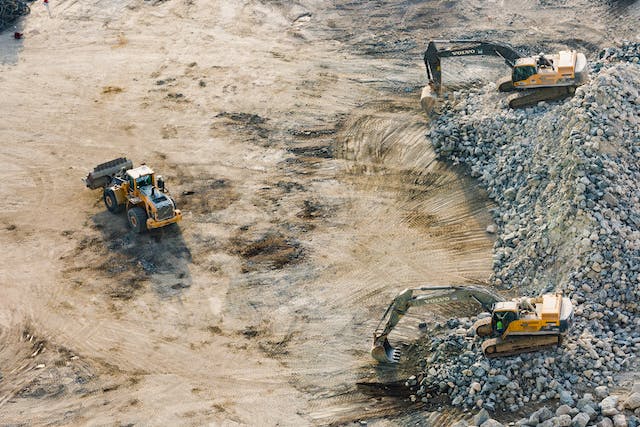
Mining remains a divisive issue in KZN, with numerous companies driving for prospecting rights within town’s like Newcastle. Yet, the sector faces mounting challenges that threaten further job losses unless the untapped potential of Northern KwaZulu-Natal is harnessed.

This concern follows a recent briefing to the Department of Economic Development, Tourism, and Environmental Affairs (EDTEA) Portfolio Committee on the state of mining in KwaZulu-Natal.
The session underscored Northern KZN as a region with considerable promise, though current mining activity remains sparse, with some operations facing closure.
Despite EDTEA identifying mining as a driver of economic growth, Nhlakanipho Nkontwana, Head of the Department, painted a stark picture of the sector’s contribution to the province’s economy: “In mining, we are nowhere; if there is really something to go by, it’s very little.”
This candid assessment coincides with the shuttering of mining-related operations across KwaZulu-Natal. Reports indicate that Assmang Manganese Cato Ridge may cease operations, jeopardising 600 jobs, alongside two other firms in Northern KZN. Meanwhile, ArcelorMittal South Africa’s future in Newcastle remains uncertain, despite a six-month reprieve from liquidation.
Furthermore, Nkontwana elaborated that his department is collaborating with the Department of Mineral Resources to evaluate mining’s impact, particularly in Zululand and uMzinyathi.
He emphasised the sector’s labor-intensive nature as a priority worth pursuing, though KZN barely registers in mining prominence.
Portfolio Committee member Sthembiso Magubane stressed that Northern KZN’s mining industry holds immense potential but is being eroded. Beyond ArcelorMittal’s precarious situation, he pointed to two other companies that have already closed, resulting in at least 1,000 job losses—one shedding 800 workers, another between 200 and 500.
Magubane pressed the department on its strategy to attract investment to these mines, stating, “The mining sector has significant opportunities in Northern KZN, especially in the Amajuba District. The department needs to address the impact of the closure of Arcelor Steel, which employed many youths and heads of families in Newcastle.”
He further highlighted Amajuba’s technical college, which trains skilled artisans for mining and industrial roles. Yet, Magubane cautioned that diminishing job prospects are undermining these skills, potentially discouraging youth from pursuing education if opportunities vanish.
Building on this, he noted Richards Bay’s mining growth in the King Cetshwayo district but warned against over-focusing there, as it could force Amajuba’s youth to relocate for work.
“This could lead to increased pressure on the area. There are many mines in Amajuba that the department can look to for investments to open, ensuring that the people in Amajuba can remain there and that the town does not become a ghost town,” Magubane urged.
As the government seeks to bolster mining for job security in Northern KZN, Mzila Mthenjane, CEO of the Minerals Council South Africa, spoke in February 2025 about the need to streamline licensing for mineral and prospecting rights and align departments to remove barriers stunting the industry’s growth.
“We are in an investment competition globally. We need to be able to work together as industry, government, organised labour and civil society in the right combinations to enable the speed we need to grow the mining industry. It is all about speed and how quickly companies can embark on exploration, prove up a viable reserve, and to be clear in terms of stable, predictable and business-friendly regulations to develop a new mine. As the Minerals Council, we work with junior companies that make up half our membership, and we spend a lot of time navigating the legislative environment, which is hugely frustrating for junior companies and investors. Unfortunately, this frustration has seen the withdrawal of some investors in some instances,” he said at the time.
Furthermore, the Minerals Council emphasised that sustainable transformation—bringing in new entrants, women, and youth—requires industry expansion through new mines tapping known and undiscovered deposits.
It has engaged the Department of Mineral and Petroleum Resources on unprocessed mineral rights applications, advocating for a modern, transparent mining cadastre and a review of the Mineral and Petroleum Resources Development Act.
In a competitive global landscape, the Council argued, South Africa must foster a regulatory and operational climate that attracts investment in exploration, mine development, and existing operations to boost production, extend mine lifespans, and create jobs and local development. It supports beneficiation where viable but opposes coercive measures like punitive taxes or export bans.
“Given where we are as a country, it is critical and urgent that we work towards economic growth. It won’t happen by stakeholders operating alone. The government can’t do it alone and business cannot do it alone either. Cooperation, trust, a shared vision of a prosperous future of inclusive economic growth, job creation and making the most of our natural endowments in a sensible, business-friendly way will realise that goal,” Mthenjane concluded.

With 33 mining companies eyeing prospecting rights in Newcastle and the broader Amajuba District, potentially bolstering economic stability and employment, what are your thoughts?
Share your views in the comment section below.










4 Responses
The Ezemvelo in KZN opposes everything even with the specialist studies and even on disturb land they oppose without any recommendations and that need to be looked upon
This town needs those mines the town does not realize the job opportunities it will bring here wake up people and look at the big picture
It will be a blessing if these min d open especially for job opportunities
This mines must fix road from kwaMdakane to Dundee as well as Newcastle and the open cast have no jobs opportunity.This mines damage our parents houses.