ArcelorMittal South Africa (AMSA) has officially announced its financial results for the year’s first six months, ending on 30 June 2024. According to the steel giant, these results showcase the company’s resilience in the face of challenging market conditions and operational issues.

When examining the steel giant’s financial performance, AMSA reported a headline loss of R1.1 billion.
Chief Finance Officer Gavin Griffiths noted that this improved from the R1.443 billion loss in the second half of 2023. Additionally, it was highlighted that the results were impacted by difficult trading conditions and operational interruptions at the Vanderbijlpark blast furnaces.
Despite these challenges, the company’s focus on cash management yielded significant benefits, maintaining net borrowings at R3.793 billion, a controlled increase from R3.215 billion at the end of 2023. Adding to this, fixed costs were reduced by R132 million to R3.417 billion despite inflationary pressures.
Highlighting the company’s operational resilience, AMSA’s Chief Executive Officer, Kobus Verster, emphasised that despite numerous challenges, including chilled hearth conditions at the Vanderbijlpark blast furnaces in April and May, the company demonstrated remarkable operational agility.
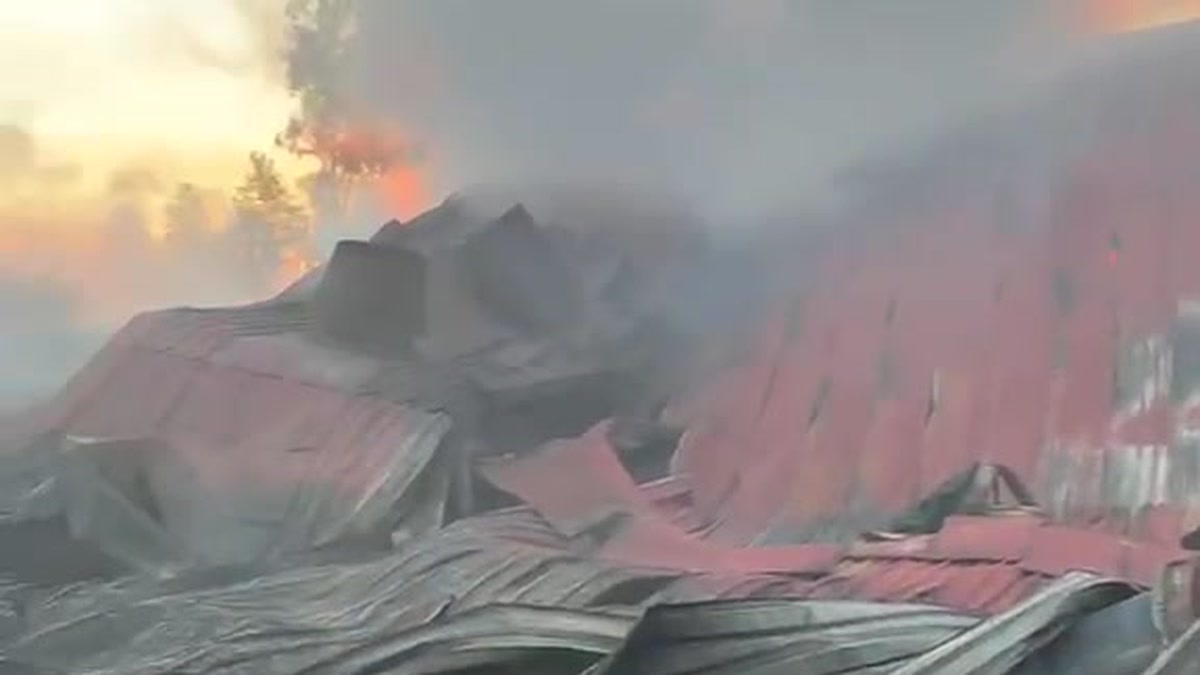
It is noteworthy that the Flats Steel Product operations in Vanderbijlpark experienced significant instability at its Blast Furnaces during this period. Blast Furnace C returned to operation on 1 May 2024 following a three-week outage, and Blast Furnace D returned on 29 May 2024 after a five-week outage.
Furthermore, AMSA explained that as the business was preparing for a shotcrete repair of Blast Furnace C in the second quarter, steel inventory levels had increased. This increase mitigated the impact and enabled the supply of inventory to customers to remain largely uninterrupted, while surplus inventory destined for export jurisdictions was mainly re-routed to the domestic market. Overall, some two weeks of sales volumes were lost, which AMSA plans to recover in the second half of the year.
To manage fixed cost levels, procurement supply chains were sharply contracted, and short working hours were applied at semi-idled plants. The already intensive cash management actions were further bolstered to preserve liquidity.
Moreover, recovery actions for the second half of 2024 have been devised, including a well-considered, responsible, and risk-aware rescheduling of the Blast Furnace C shotcrete and hearth repair to later in the year. Water leaks were identified as the cause of the issues, and immediate actions were taken to minimise their impact.
The negative impact on sales volumes and the direct cost to return the furnaces to operation amounted to R716 million.
Against the comparable period in 2023, the EBITDA impact was R716 million. AMSA pointed out that were it not for the chilled hearth events, EBITDA would have been R495 million against R499 million for the comparable period last year.
AMSA highlighted that management’s swift response minimised supply disruptions to customers and implemented cost-saving measures. The decision to continue operations of the Long Steel Products business underscores the company’s commitment to the Southern African steel industry.
Regarding sustainability and growth, AMSA’s Chief Executive Officer, Kobus Verster, highlighted that ArcelorMittal South Africa continued to advance its high-payback investment portfolio, focusing on projects that will drive future earnings growth, cost savings, and decarbonisation efforts. Verster further pointed out that the company is actively supporting localisation initiatives in energy, logistics, infrastructure, and automotive sectors, positioning itself for growth opportunities arising from national development programs and the Africa Continental Free Trade Agreement.
In terms of market outlook, AMSA emphasised that while global and local steel markets remain challenging, ArcelorMittal South Africa sees potential for gradual recovery in the second half of 2024.
The company expects to return to profitability, supported by operational improvements, increased production volumes, and potential positive shifts in market dynamics. “Our first-half results reflect the resilience of our business model and the effectiveness of our management strategies in navigating a complex operating environment. While challenges persist, we are confident in our ability to capitalise on emerging opportunities and drive sustainable growth for the benefit of all our stakeholders,” said Verster.
Furthermore, in terms of markets, Verster explained that global crude steel production was flat for the first half of 2024 at 955 million tonnes when compared to the same period last year. Additionally, global crude steel production increased by 6% in the preceding six months.
China’s crude steel production decreased from 536 million tonnes to 531 million tonnes, maintaining its market share at 56%. Europe’s crude steel output increased by 1% to 67 million tonnes. North America decreased by 3% to 54 million tonnes, and Turkey increased by 17%. Russia decreased its output by 3%, and India increased by 7% to 74 million tonnes.
Moreover, Africa’s output increased by 3% to 11 million tonnes mainly due to improved production in Egypt and Morocco.
South Africa’s crude steel production decreased by 2% to 2.4 million tonnes. International hot rolled coil (HRC) and rebar prices both decreased by 12% in Dollar terms when compared against the comparable period. These HRC and rebar prices increased by 1% compared to the last preceding six months. The international raw material basket (iron ore, coking coal, and scrap) was 4% down in Dollar terms. In absolute terms, scrap decreased by 9%, coking coal decreased by 6%, while iron ore decreased by 1%.
Turning to South Africa and the regional economy, the GDP growth rate forecast for South Africa is 0.7% for 2024, with those for near and Sub-Saharan African markets forecasted to be at 3.6%.
Considering the outlook for the second half of 2024, Verster explained that from a price perspective, the continued lower profitability of international steel exporters is likely to provide a floor to prices. An anticipated softening of interest rates internationally in the second half of this year, coupled with various trade remedies, is likely to provide an improved environment for pricing sentiment, boding well for a gradual recovery in prices.
Building on this, he pointed out that the provisional 9% safeguard duties on HRC and plate by the International Trade Administration Commission (ITAC) will provide some protection against the surge in imports.
Domestically, Verster explained the potential for interest rate cuts as well as a focus on infrastructure development by the Government of National Unity, may bring much-needed support to demand dynamics in the local market. Jointly, the company expects to further advance its progress into the African market.
Verster highlighted that with the Longs Business continuing to operate, management is committed to working closely with all customers, suppliers, and stakeholders to ensure the sustainability of Long Steel Products’ supply into the Southern African region.
He elaborated that the Longs Business showed stable performance. Through the Longs Business continuing, Verster pointed out that this would have a positive socio-economic impact, preserving 3,500 direct jobs and a further 80,000 jobs across the value chain. With this in mind, Verster commended the AMSA staff for conducting exceptional work to see the Longs Business showcase stability.

Regarding Capital Allocation, Gavin Griffiths listed several projects aimed at strengthening the company:
- Newcastle Coke Over Battery through-wall repairs: R42 million.
- Vanderbijl Blast Furnace D stove #4 campaign extension: R45 million.
- Vanderbijlpark Coke Gas Cleaning plant: R122 million
- Newcastle Storm Water treatment facility: R11 million
- Investments to improve customer value proposition – volumes and quality: R20 million.
As AMSA shows resilience amidst its challenges in the company’s quest to enhance its business operations and path to recovery, what are your thoughts on the above?
Share your views in the comment section below.