

Estimated reading time: 4 minutes
Lappet-faced Vultures are dwindling in numbers across Africa and the rest of the world. Sadly, South Africa’s KwaZulu-Natal province, which contains the southernmost breeding range of three tree-nesting Vulture species, is worse than expected.
Watch: Vulture conservation: https://www.youtube.com/watch?v=vPVy2DJ35Pc&t=75s
The Lappet-Faced Vulture, the largest vulture, listed as endangered on the IUCN red list, is currently experiencing a dramatic population decline. Nest counts for Lappet-faced Vultures have decreased alarmingly from 15 active nests in 2020 to only 6 in 2021, according to intensive aerial surveys conducted by Ezemvelo KZN Wildlife and Wildlife in September 2021.
The vulture population in KZN contributes significantly to South Africa’s overall vulture community. The province is perfectly located within the breeding range of all three tree nesting species, thereby playing host to numerous birds.
Given the role vultures play in ecosystem services, these populations are significant in the context of KZN’s mixed land use, which includes a mix of agriculture, residential, and protected areas.
“The 2021 vulture breeding continues to disappoint. Confirming zero White-Headed Vultures breeding in the province and a considerable decline in breeding Lappet’s is of grave concern. This decline is most probably attributed to the numerous poisoning events that have occurred in the latter part of 2020 and throughout 2021,” says Brent Coverdale, Large Mammal and Bird Scientist for Ezemvelo KZN Wildlife.
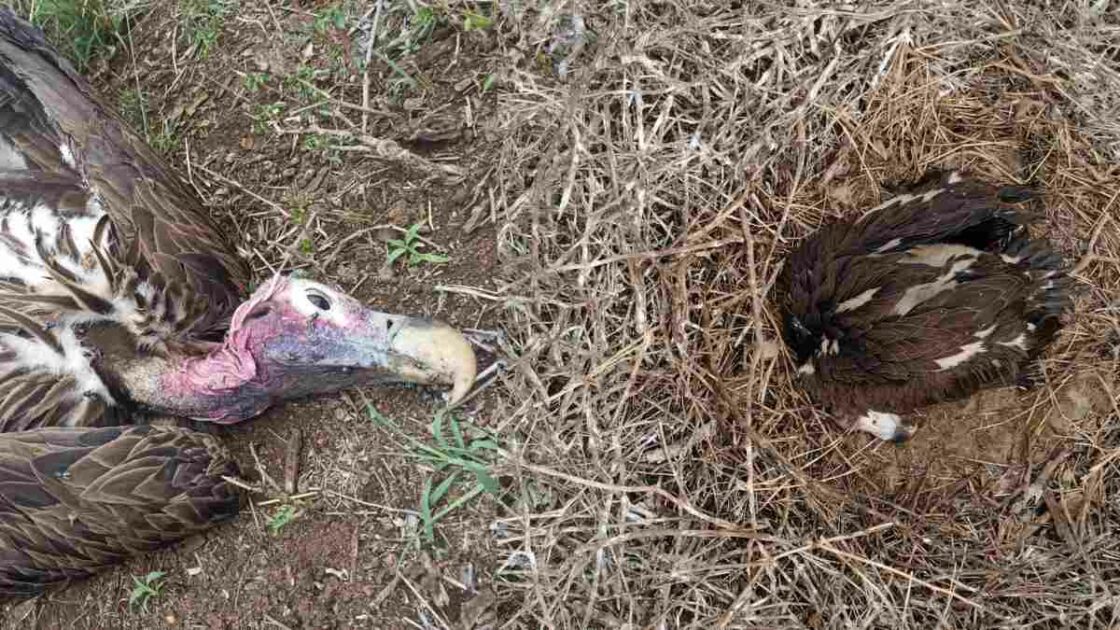
A poisoned Lappet-faced Vulture was recently reported to the Zululand Vulture Project in the Northern breeding cluster.
The Wildlife ACT Emergency Response Team then went to the nearest known Lappet-faced Vulture nest in the area to see if the chick was still alive and if any adults were present. Unfortunately, the large chick was discovered dead in the nest and believed to have died of starvation due to the parent birds’ possible death.
During this year’s breeding season, this nest was the only one known to be active in the northern cluster. It belonged to a known Vulture, tagged as a chick in 2016, and outfitted with a solar-powered GPS tracking unit and patagial tags in May 2020.
This individual’s GPS unit went offline in early October, and the bird has not been seen since. It’s possible that the single remaining parent was trying to raise the chick until it, too, died due to a poisoning event.
This devastating event, combined with another nest mortality event earlier in the season, has reduced the province’s known active Lappet-faced Vulture nests to only four individuals that fledged this breeding season.
At this point, the Lappet-Faced species appears to be on a similar trajectory as the Critically Endangered White-headed Vulture – a species recently declared extinct locally, with no nesting sites discovered during the 2021 surveys or the previous three years.
Chris Kelly, Species Conservation Director, Wildlife ACT, explains, “Vultures are extremely important in the role that they play in our ecosystems. Being incredible scavengers, they are remarkably efficient at disposing of rotting carcasses and reducing the spread of disease amongst wildlife, livestock and to humans. This crucial ecosystem service that vultures provide in our environment is grossly underestimated and goes largely underappreciated as, without the presence of vultures, carcasses will remain exposed to the environment for weeks. Vultures therefore play a critical role in abating the ever-increasing global risk of pathogen spill overs to humans.”
Ezemvelo KZN Wildlife and Wildlife ACT use a multi-pronged approach to conservation through Project Vulture. Project Vulture is actively working to understand the species’ movements and range better, collaborating with landowners to protect critical habitat and provide safe feeding sites in vulture hotspots within and between protected areas.
Furthermore, advocacy and awareness programs are implemented to foster a better understanding of the significance of these species, with this work guided by research into current vulture perceptions and uses.
Additionally, an emergency response team responds quickly to incidents on the ground to reduce immediate threats to vulture populations. This is a last-ditch effort to raise funds for the conservation efforts required to save these species, vital to human health and the economy.
What can you do?
- Donate to the cause: https://bit.ly/3H7OJay
- Report sightings of tagged individuals at www.projectvulture.org.za
What are your thoughts on those mentioned above? Share your views in the comment section below.
Photo credit: PJ Roberts, Wildlife ACT
RELATED NEWS