

Estimated reading time: 4 minutes
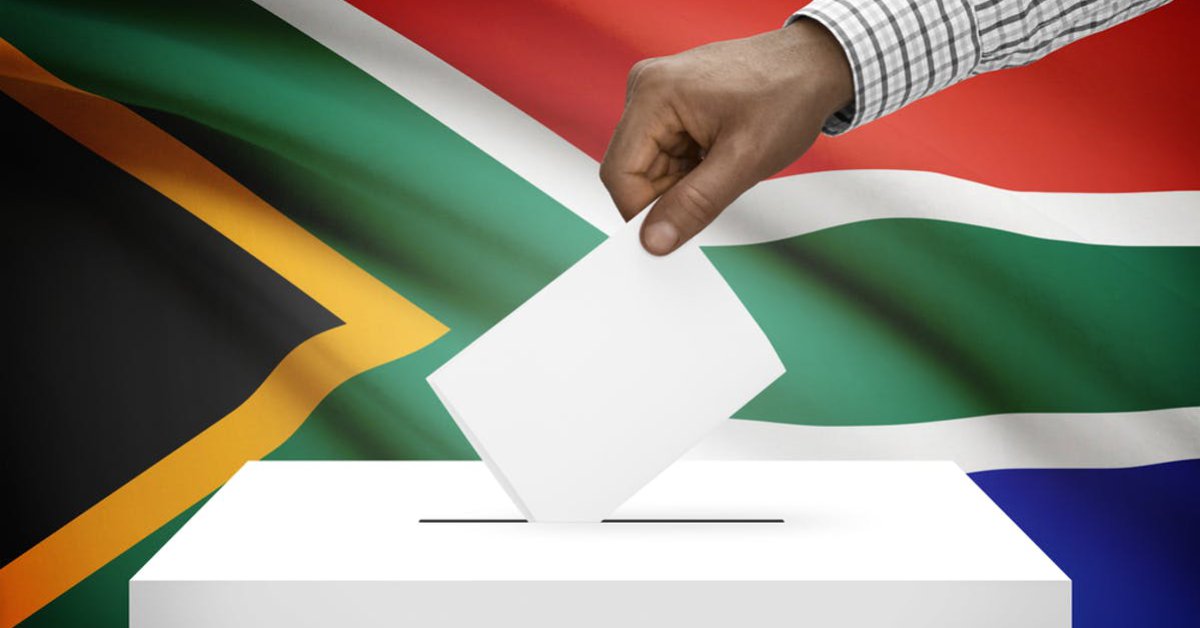
Earlier this month, the Independent Electoral Commission (IEC) launched an application to have the upcoming Local Government Elections, planned for 27 October 2021, to be postponed until February 2022. However, the Democratic Alliance (DA) is not pleased with the possible postponement.
At the outset, DA Federal Council Chairperson Helen Zille explained on Wednesday, 11 August 2021, that it is important to note, postponing an election is not like postponing any other event that can be called off for reasons of convenience or need.
Unlike any other event, the timing of elections is set down in the founding provisions of the Constitution, which can only be changed by a constitutional amendment requiring a 75% super-majority in Parliament. “The drafters of the Constitution purposefully made it extremely difficult to change the regularity of elections, because of the grave risk of a ruling party being able to interfere with the scheduling of elections.”
She further stated, “It is our carefully considered opinion that the ANC, knowing it could not get a 75% majority in Parliament, chose a different route. Despite the fact that the IEC could have met the benchmark for a free, fair and safe election within the stipulated time frames, it has failed to do so, and is now effectively forcing the Court’s hand by saying it cannot meet the conditions for a free, fair and safe election in time. Our submission challenges this position.”
While admitting that it is difficult to hold an election under Covid conditions, she states the IEC must do so, as scores of countries have done during the Covid pandemic. “From February 2020 to 21 July 2021, at least 128 countries and territories have decided to hold national or sub-national elections, despite concerns related to Covid, of which at least 107 have held national elections or referendums. (Source: International Idea Institute for Democracy and Electoral Assistance).”
Zille further added, there was no evidence that the elections would cause a spike in infections when proper protocols are applied. The two exceptions have been India and the United States, where it has been established that large rallies were super-spreaders.
“Because the ANC could not muster the needed majority in Parliament, it chose an alternative route and waited till the last moment so that, whatever the Court decides, there will not be time to hold an election in October 2021. If the Court were to arrogate to itself the power to change the Constitution because it suits the ANC, the precedent would be entirely disastrous and would be the precursor to the unravelling of our constitutional democracy.”
Moreover, the Inkatha Freedom Party (IFP) Chief Whip, Narend Singh, said that as the IFP, they urged the IEC to approach the requisite Court immediately, on an urgent basis, to secure the necessary Court Order and subsequent postponement. “Based on the very thorough investigation by the Moseneke Inquiry, as well as the support for the Report by both the IEC, as well as government, the IFP is confident that the Court now has all the necessary information before it to make an informed decision, as to whether or not to postpone the upcoming LGE.” Further stating, the IFP believes all necessary steps must be taken to ensure a free and fair election, as well as the continued health and wellbeing of all South Africans.
Regarding the Moseneke Inquiry, Zille said all the expert evidence indicated that the weeks prior to, and including, the date of 27 October 2021 will in all likelihood see infection rates towards the lower end of the scale, which is typical of the infection rates between the waves that have characterised the pandemic. “As far as the projections are concerned, following the pattern of the previous Covid waves, the expert predictions are that South Africa may be entering the fourth major wave early in 2022, and may even be at the peak of the wave during February. It is really difficult to understand why Judge Moseneke and the IEC ignored this evidence. Even Professor Shabir Madhi, on whose testimony Judge Moseneke relied, has now stated that South Africa will not reach population immunity by early next year, and because of the slow pace of vaccinations and the mutations in the virus, South Africans will have to learn to “live with this virus”. This must include holding elections.”
What are your thoughts on the matter? Do you feel the elections should be postponed? Or should we go ahead and cast our vote?
Share your opinions in the box below and let us all know.
RELATED NEWS