


As South Africa eases into Level 4 of the nationwide lockdown, what can we as a country expect in terms of the public transport sector? Furthermore, what can we expect from delivery services, driving schools and vehicle services?
Minister of Transport, Fikile Mbalula has announced the level 4 transport directions which we can expect.
“We have always been mindful that transport is not only an enabler of economic activity and access to social amenities, but also a potent instrument, capable of spreading the COVID-19 virus far and wide. After all, it was the aviation sector that enabled the virus to reach our shores. Ours is to ensure that the mobility of the virus through our transport system is stopped dead on its tracks,” said Minister Mbalula.
Adhering to the regulations laid out for Level 4 of the nationwide lockdown, Minister Mbalula said the department was duty bound to ensure that it would not be a sector that will enable the rampant spread of the virus.
“The measures that we put in place, and continue to revise from time to time, are meant to mitigate against this spread through various transport modes.”
With various measures now in place in the transport industry, what can we expect?
Cross-Border Road Transport
Cross-Border road passenger movement remains prohibited. Minister Mbalula explains that only essential cargo will be allowed to move across the country’s land borders.
Public Transport
With the country moving to Level 4 and more people returning to work, the Department of Transport has revised the operating hours for all road-based public transport modes.
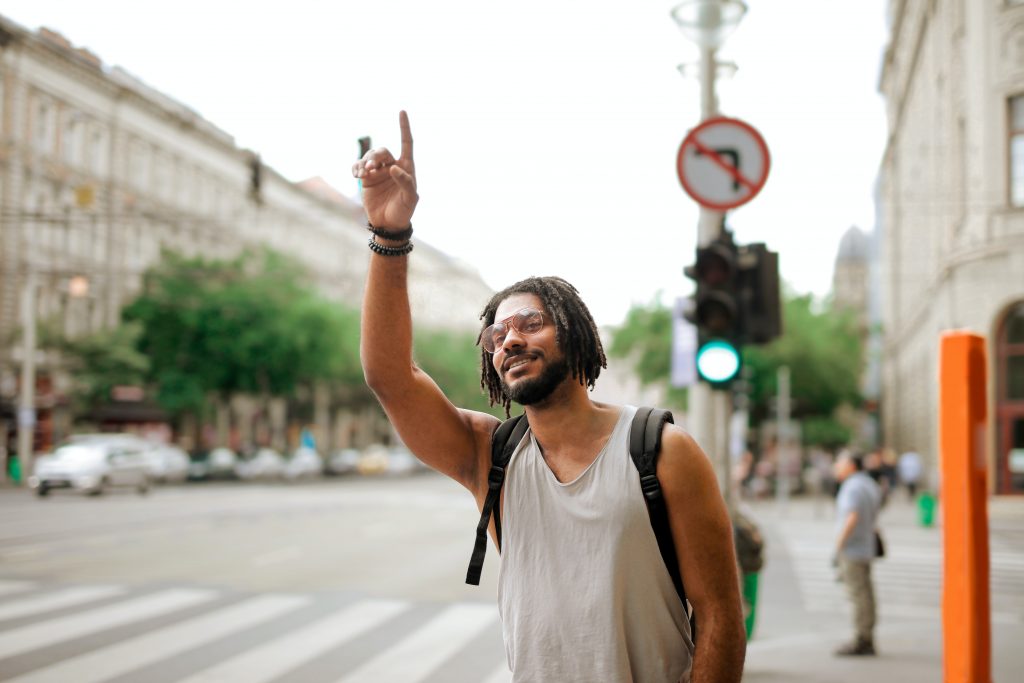
All road-based public transport services are permitted to operate from 5am until 7pm. There will be a grace period of one hour in the afternoon for transport services to complete their trips and drop off passengers. This includes minibus-taxis, buses, metered taxis, e-hailing services, charter and shuttle services.
No public transport is allowed on the road between 8pm and 5am. Sanitisation principles currently applicable to public transport vehicles and facilities remain.
No person is allowed to use public transport if they are not wearing a face mask.
“We call on the pubic to ensure strict adherence to this requirement by obtaining their own face masks in line with the guidance given by Minister Dlamini-Zuma. While government may provide limited assistance in ensuring availability of masks, the onus rests on each individual to ensure that they do not leave home without a mask,” says Minister Mbalula.
Minibus-Taxis
Loading capacity for minibus-taxis remains at 70% of licensed passengers, with social distancing and other mitigating measures remaining in place.
eHailing and Metered Taxis
Loading capacity for metered taxis and e-hailing services remains at 50%. A 5-seater vehicle is permitted to carry a maximum of two passengers and a driver.
Buses
Buses will be allowed to transport 70% passengers of their licensed loading capacity, with requisite social distancing, wearing of masks by all passenger and other mitigating measures.
Shuttle and Chauffeur Services
Shuttle and Chauffeur services will be subject to the same rules as other road-based public transport modes. Both the Shuttle and Chauffeur services will only be permitted for transportation of people undertaking essential work and those economic sectors allowed to return to work under level 4. Loading capacity of 50% is equally applicable to these services.
Charter Services
Charter services will be subject to the same rules as other road-based public transport modes. This service is only be permitted for transportation of people undertaking essential work. Loading capacity of 50% is equally applicable to these services.
Several companies, particularly in the mining sector, work three shifts. This results in employees finishing work outside the permitted public transport operating hours. These companies may make use of charter services. Operators of vehicles undertaking this service, must be identifiable as such for purposes of law enforcement.
Delivery Services
Delivery Services such as Uber Eats, Mr Delivery and any other similar service are permitted to operate between 9am and 7pm, only for delivery of food.
Courier Services
Courier Services are permitted to operate in the delivery of any goods permitted for sale in the Level 4 Regulations.
It should, however, be noted that the wholesale sector has been allowed to return back to service. Amongst the sub-sectors allowed to trade is the e-Commerce, which includes on-line shopping for items such as personal ICT equipment and other goods. This sector is reliant on the Courier services to deliver its goods to customers at their homes.
Driving Schools
Driving schools will be permitted to resume their activities subject to effective social distancing and sanitizing measures. Both the instructor and the learner must always wear face masks .
Vehicle Services
Servicing of vehicles of personnel performing emergency services is permitted under Level 4. This also includes the importation of spares for service purposes and for manufacturing. Emergency spares are also allowed to be on sale.
Repairs and fitments to vehicles utilized for emergency and essential services is permitted.
Emergency Services & Roadside Assistance
The Emergency services and roadside services for all is allowed. This also includes towing services and support with breakdown of vehicles.
Drivers’ Licence Testing Centres and Vehicle Testing Centres
Drivers’ Licence Testing Centres and Vehicle Testing Centres will gradually re-open for essential service workers to renew their drivers’ and vehicle licenses.
The opening of the Driver’s Licence Testing Centres (DLTCs) will be staggered once inspection and verification of the state of readiness is done on all of them. The Metro based DLTCs will be opened first from 1 June 2020.
“Going forward, we are committed to redesign business models, make greater use of artificial intelligence, digital channels, tele-commuting, redesign transport and logistic norms and practices, sanitizing, social distancing, introduce new social norms and practices on masks, gloves, PPEs, transparent screens, as well as human contact (that is no handshakes, no hugging, no pecking/kissing, and ensure minimal contact). These practices and measures will define the new normal and a new way of doing things for generations to come,” Minister Mbalula emphasised.
With all these directions currently in effect, what are your thoughts? Do you feel these measures will help manage the spread of COVID-19?
Share your thoughts and views with us in the comment section below.