A coordinated compliance operation in Dundee, KwaZulu-Natal‘s Central Business District has exposed widespread failures in business regulation, with inspectors finding that nearly all stores visited were allegedly operating without valid trading permits.
The operation also uncovered several fire safety risks, further highlighting the scale of non-compliance identified during the inspection.
Stop guessing what your customers want. A Newcastillian News Customer Survey gives your business real feedback, better-informed decisions, and stronger marketing. Email: [email protected]
According to Endumeni Local Municipality, the operation was carried out on Monday, 15 June 2026, across the Dundee CBD and Sibongile Township, following a stakeholder briefing held earlier that day at the Endumeni Council Chamber.
The inspection formed part of a broader enforcement drive aimed at strengthening regulatory compliance across local trading environments.
The findings come against the backdrop of heightened national attention on migration management, growing public debate around undocumented immigration, and the planned national shutdown scheduled for 30 June 2026.
While the municipality stated that most of the businesses inspected were owned and operated by foreign nationals, the central finding of the Dundee operation focused on alleged breaches of municipal by-laws, trading regulations and public safety requirements.
Detailing the coordination behind the exercise, the Municipality’s Communications Unit stated:
“The briefing brought together key stakeholders, including the South African Police Service (SAPS), municipal law enforcement officials, councillors, Endumeni officials, district municipality representatives, community members, and representatives from Make Endumeni Live Again, a local community organisation committed to promoting accountability, economic growth, and community development within the municipality.”
The inspection team assessed more than 20 businesses, focusing on compliance with municipal by-laws, trading regulations and public safety standards.
“Preliminary findings revealed that approximately 99% of the stores visited were operating without valid trading permits, in direct contravention of municipal by-laws. Most of the businesses inspected were owned and operated by foreign nationals,” stated the Communications Unit.
In addition to the permit violations, inspectors flagged serious fire safety deficiencies at several premises. In some cases, fire extinguishers had not been serviced for extended periods, with some last maintained in 2022.
The Municipality noted that these conditions present clear risks to business owners, employees, customers and surrounding properties.
“As a result of the non-compliance identified, affected businesses were instructed to cease operations immediately until they obtain the necessary permits and comply with all municipal requirements,” the Communications Unit confirmed.
Particular attention was also directed towards second-hand goods dealers, especially those trading in cellphones and furniture.
SAPS officials reiterated that such businesses are required by law to be registered with the South African Police Service in terms of legislation governing the second-hand goods industry.
This reinforced the multi-agency nature of the enforcement operation, with municipal officials and SAPS focusing on both by-law compliance and sector-specific legal requirements.
Speaking during the operation, Mayor Mkhize reaffirmed the Municipality’s commitment to consistent and fair enforcement of by-laws, stressing that regulatory compliance is essential to maintaining an orderly and economically viable trading environment.
“These inspections are aimed at ensuring that all businesses operate legally and comply with municipal regulations. Compliance is critical in creating a fair trading environment, protecting consumers, and supporting local economic development,” said Mayor Mkhize.
The Municipality further indicated that compliance inspections will continue across Endumeni as part of an ongoing enforcement strategy aimed at strengthening public safety and ensuring adherence to municipal regulations.
Business owners have accordingly been urged to regularise their operations without delay by obtaining valid trading permits and meeting all legal requirements.
The intervention also reflects a broader shift across Northern KwaZulu-Natal, where municipalities are increasingly tightening regulatory oversight within key economic sectors.
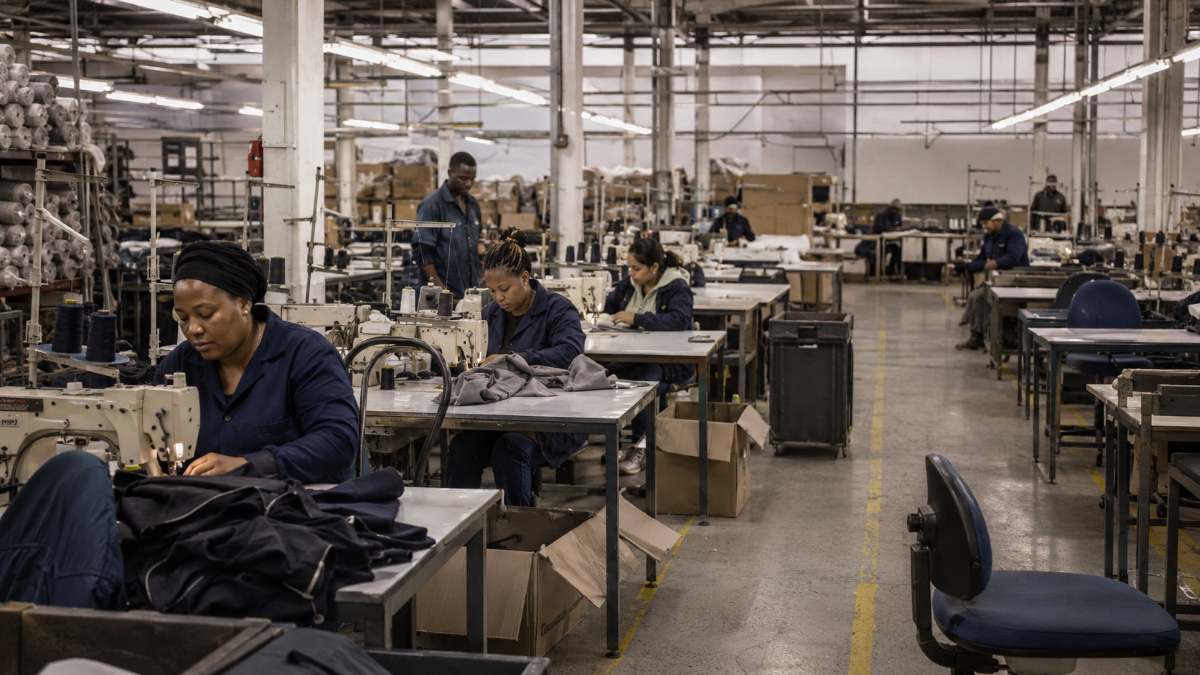
In a parallel development, as reported by Newcastillian News, the Newcastle Local Municipality’s Local Economic Development Unit has begun updating its database of Cut, Make and Trim businesses operating within its jurisdiction.
According to the Municipality, the process is intended to improve understanding of the local clothing and textile manufacturing sector while strengthening engagement with industry stakeholders.
Factory owners, clothing manufacturers, textile operators, labour consultants and relevant industry bodies have been requested to submit full details of their operations.
Meanwhile, developments in Dundee and Newcastle are unfolding alongside broader provincial policy positioning on migration.
On 17 June 2026, KwaZulu-Natal Premier Thamsanqa Ntuli used a sitting of the Provincial Legislature to reaffirm the provincial government’s stance on undocumented migration, framing it as a complex governance issue requiring coordinated intervention.
While acknowledging the historical role of migration in supporting economic and cultural development, Ntuli cautioned that undocumented migration continues to place strain on governance systems and public services.
“Migration itself is not the problem. The challenge before governments is how to manage migration in a manner that protects human dignity, safeguards the rule of law, strengthens public confidence, and ensures that development benefits all who live within our communities,” he emphasised.
He further noted concerns raised by communities across KwaZulu-Natal regarding public safety, labour market pressures, service delivery challenges and social cohesion, while stressing the need to uphold legal and constitutional principles.
“Our responsibility is to confront facts with facts, challenges with solutions, and anxieties with leadership. We must reject xenophobia and discrimination in all their forms, but we must equally reject the notion that the rule of law is optional.”
Reinforcing this balance, the Premier emphasised that constitutional governance requires both the protection of human rights and the enforcement of the law.
“Human dignity and lawful governance are not opposing choices. They are mutually reinforcing obligations. A state that exercises compassion must also exercise responsibility,” he said.
Ntuli also highlighted the province’s Engangeni Ngesango Iyafohla Programme of Action, which is aimed at strengthening migration governance, enhancing law enforcement capacity, disrupting criminal syndicates and improving coordination across government structures.
As part of this programme, KwaZulu-Natal will convene its Second Provincial Round Table on Undocumented Foreign Nationals later this month.
The engagement is expected to bring together government departments, law enforcement agencies, traditional leadership, business, labour, civil society and academic stakeholders.
The Premier said the round table is expected to produce a consolidated Programme of Action to guide the province’s response going forward.
Framing the broader challenge, Ntuli stated:
“The reality before us is that no single institution can address this challenge alone. This challenge demands a whole-of-government and whole-of-society response.”
He concluded by urging cooperation and restraint across all sectors, calling for practical solutions over division.
“Let us reject the politics of division, fear, and scapegoating. Let us equally reject complacency and inaction,” he said.
In Dundee, the implications of the compliance operation now extend beyond immediate enforcement action. With the scale of non-compliance laid bare, the municipality faces mounting pressure to ensure that inspections are followed through with sustained regulatory control, rather than isolated intervention.
The focus now shifts to whether these enforcement measures can be translated into lasting compliance within a trading environment long characterised by informality and weak oversight.
Paid In-Article Advertising
At the same time, the situation places Endumeni at a critical juncture.
While the crackdown signals a firmer regulatory stance, the longer-term test will be whether legitimate traders can regularise their operations efficiently within a functional system that supports both enforcement and economic continuity.
As inspections continue, Dundee’s CBD is likely to remain under close scrutiny, with authorities expected to intensify oversight in an effort to stabilise and formalise local trading conditions.
What are your thoughts on this? Let us know below.
Newcastillian News invites your input. We ask that you keep your remarks courteous and on-topic. We do not allow any form of hate speech, such as racist or sexist comments. All comments are subject to moderation in line with our User Rules and Commenting Policy.