

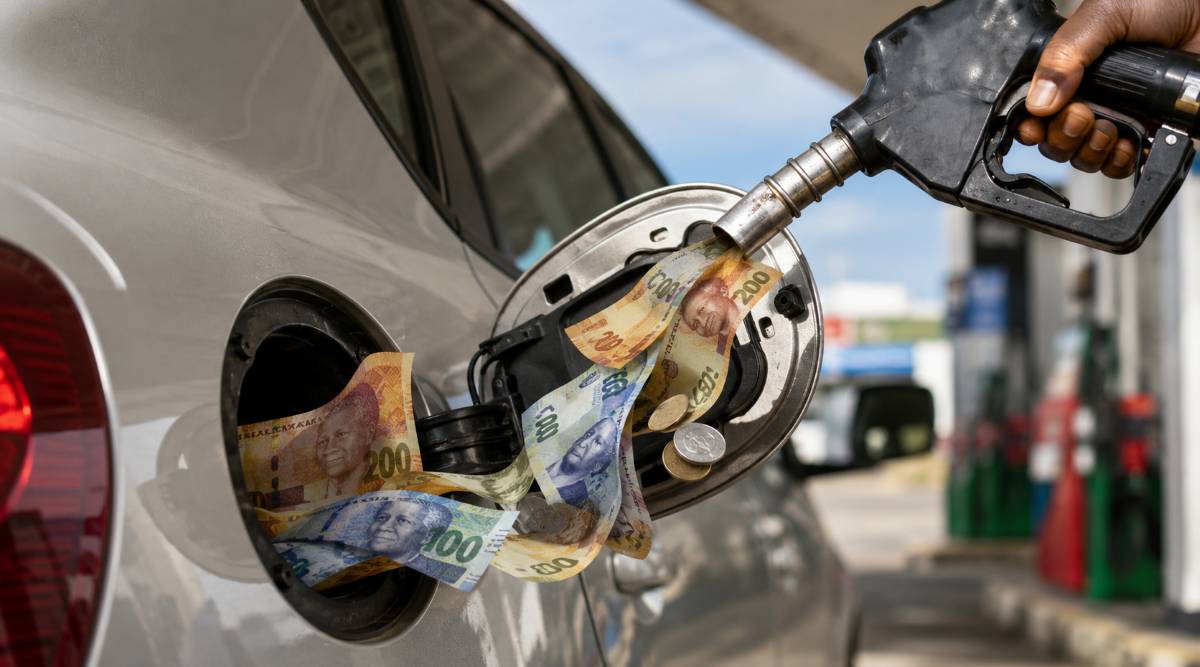
South African motorists are heading into June with more pressure at the pumps, as government begins removing the temporary fuel levy relief introduced earlier this year.
Although the latest fuel price data shows some improvement, especially for diesel and illuminating paraffin, petrol users are still expected to pay more once the levy is added back.
Government reduced the fuel levy earlier this year to help motorists after sharp fuel price increases linked to the conflict in the Middle East and rising international oil costs. However, this relief was always temporary.
From June, part of that relief will fall away. For petrol, R1.50 per litre will be added back to the price. The remaining R1.50 per litre will return in July, bringing the temporary R3.00 relief period to an end.
This means that even though petrol prices are showing a small recovery on paper, motorists are unlikely to feel much benefit.
The latest figures show petrol 93 could decrease by 8 cents per litre, while petrol 95 could decrease by 3 cents per litre.
However, once the R1.50 levy is restored, petrol users are still likely to face an increase of more than R1.40 per litre.
The picture is better for diesel users. Current figures show diesel 0.05% wholesale could decrease by R5.02 per litre, while diesel 0.005% wholesale could decrease by R4.26 per litre. Illuminating paraffin is also showing a possible decrease of R5.21 per litre.
These diesel and paraffin decreases are unusually large, but they follow the heavy increases seen in May. In other words, diesel users may finally see some relief, even after part of the levy is brought back.
For households, businesses, farmers, transport operators and daily commuters, the fuel price remains a major concern.
Fuel does not only affect what motorists pay at the pump. It also affects transport costs, food prices, business expenses and the cost of moving goods across the country.
Furthermore, Finance Minister Enoch Godongwana said government introduced the temporary fuel levy relief to soften the blow for consumers.
However, the relief came at a major cost to the state, with Treasury estimating that it would cost around R17.2 billion in lost revenue.
This is why government is now ending the relief. While it helped consumers in the short term, it also reduced the money available to the state at a time when public finances are already under pressure.
The fuel price is also being pushed around by events outside South Africa’s control. International oil prices, shipping costs, the rand/dollar exchange rate and global supply problems all affect what motorists pay locally.
South Africa also remains heavily dependent on imported fuel.
This means the country is exposed when global markets become unstable, especially when there are problems in oil-producing regions or disruptions to international supply routes.
Minister of Mineral and Petroleum Resources Gwede Mantashe has previously said South Africa needs to strengthen its own petroleum and refining capacity to reduce this dependence. He argued that fuel security is not only an energy issue, but also an economic one.
For now, however, motorists are left dealing with the immediate reality. Petrol users are likely to see another increase in June, while diesel users may get some relief after a difficult May.
The final fuel price adjustment is expected to take effect in early June, once the Department of Mineral and Petroleum Resources confirms the official figures.
Until then, the numbers show a mixed picture.
Diesel and paraffin users may finally get breathing room, but petrol users are likely to see any small recovery wiped out by the return of the levy.

For South Africans already dealing with higher living costs, it is another reminder that fuel price relief can be short-lived. Even when the market briefly moves in the right direction, government levies and global pressures can quickly take that relief away.
What are your thoughts on this? Let us know below.
Do not forget to read: The Pursuit of Answers Behind Newcastillian News Stories