

Analysis / Editorial Comment: This article is based on publicly available fuel price information, industry statements, official fuel-pricing structures, and Newcastillian News’ analysis of South Africa’s broader fuel-security position. Where factual information is referenced, it is attributed to the relevant source. The broader conclusions and questions raised reflect editorial analysis of how fuel pricing, import dependence, domestic production capacity and government levies affect South African motorists, businesses and the wider economy.
South Africa’s latest jet fuel shock is more than an aviation issue.
It is a warning about how quickly the price of movement can become a national economic pressure point, affecting airlines, passengers, imports, exports, courier networks, perishables, tourism and the wider cost of doing business.
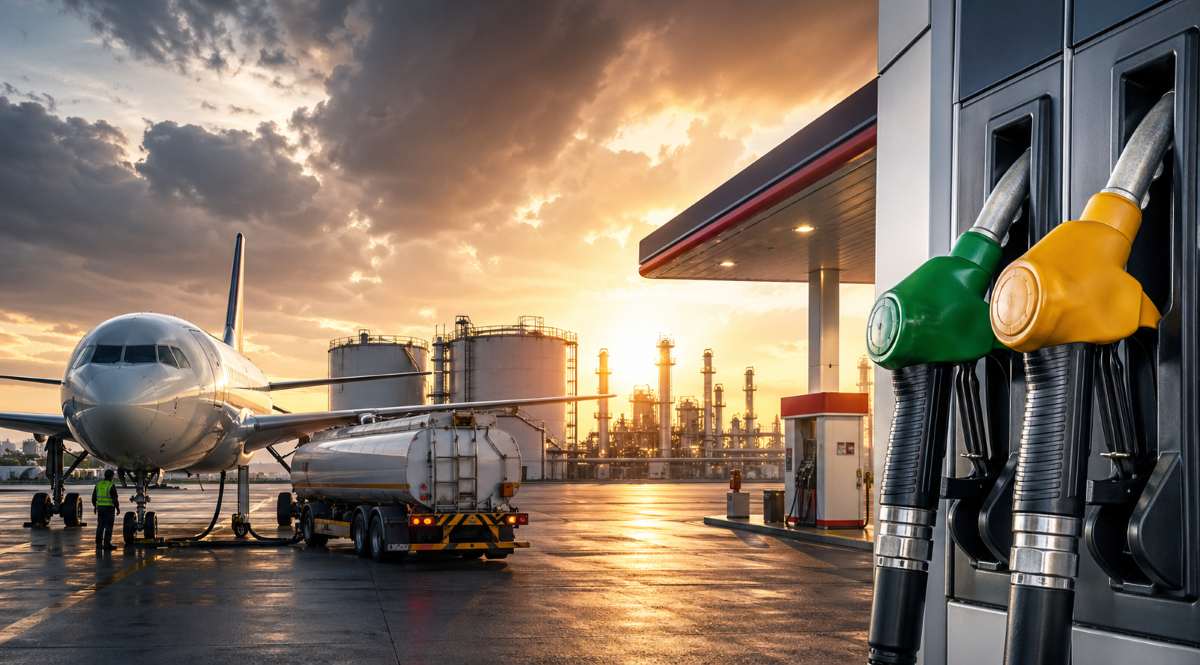
According to the Airlines Association of Southern Africa, jet fuel prices in Southern Africa increased more than threefold, rising from around R8.50 per litre in mid-February to more than R30 per litre by mid-April.

In landlocked countries such as Malawi, Jet A-1 prices reportedly climbed beyond R50 per litre, placing extraordinary pressure on regional aviation networks.
AASA has warned that airlines require clearer visibility on jet fuel availability beyond short planning windows if they are to maintain schedules and meet their operational commitments. The association has called on fuel suppliers, depots, airports and SADC governments to provide more transparent information around allocation, stock levels, contingency planning and distribution.
The immediate focus is understandably on ticket prices and flight availability. Airlines cannot absorb a fuel increase of this scale without consequences.
Fuel is one of the largest operating costs in aviation, and when it spikes this sharply, the effects move quickly into airfares, freight costs, route planning and the movement of time-sensitive goods such as pharmaceuticals, perishables, e-commerce parcels and high-value cargo.
However, the jet fuel situation raises a much broader question for South Africans: if a specialised aviation fuel can rise this dramatically due to supply pressure, what does this say about the structure of the fuel price motorists pay every day for petrol and diesel?
The first point that needs to be clarified is technical. Jet fuel is not expensive because it is “high octane”. Octane is a rating associated with petrol, not commercial jet fuel.
Modern commercial aircraft use Jet A-1, which is a kerosene-grade aviation turbine fuel. It is highly controlled and must meet strict standards because aviation cannot tolerate contamination, incorrect handling, unsuitable blending, poor storage practices or freezing-point failures.
Shell describes Jet A-1 as a kerosene grade fuel suitable for most turbine-engine aircraft, with a minimum flash point of 38°C and a maximum freeze point of -47°C.
This means petrol is generally more volatile than Jet A-1 from a vapour ignition perspective, while diesel is typically less volatile than both. The difficulty with jet fuel is therefore not that it is simply “more explosive” than ordinary road fuel.
Its specialist nature lies in the quality control, safety standards, dedicated infrastructure and handling discipline required to ensure that it performs safely in aircraft operating at altitude and under demanding conditions.
That is where the current price shock becomes important. The sharp increase in Jet A-1 pricing does not appear to be driven by government fuel levies in the same way as road fuel.
Moreover, SARS policy states that aviation kerosene used as aircraft fuel does not attract duty or levies, although it is subject to VAT when used for domestic consumption.
This matters because it separates the aviation fuel shock from the road-fuel levy debate. In the case of jet fuel, the present pressure appears to be tied mainly to rising crude prices, supply-security concerns and uncertainty around regional availability.
In the case of petrol and diesel, South Africans face both international pricing pressure and a domestic price structure that includes government-imposed levies, regulated margins and other local price components.
This is where the bigger public question sits.
Road fuel in South Africa is not only expensive because oil is expensive.
The pump price includes the basic fuel price, transport costs, storage, wholesale and retail margins, slate adjustments, taxes and levies.
The Department of Mineral and Petroleum Resources explains that the Basic Fuel Price is calculated daily and is affected by international petroleum product prices and the rand-dollar exchange rate, before domestic price components are added.
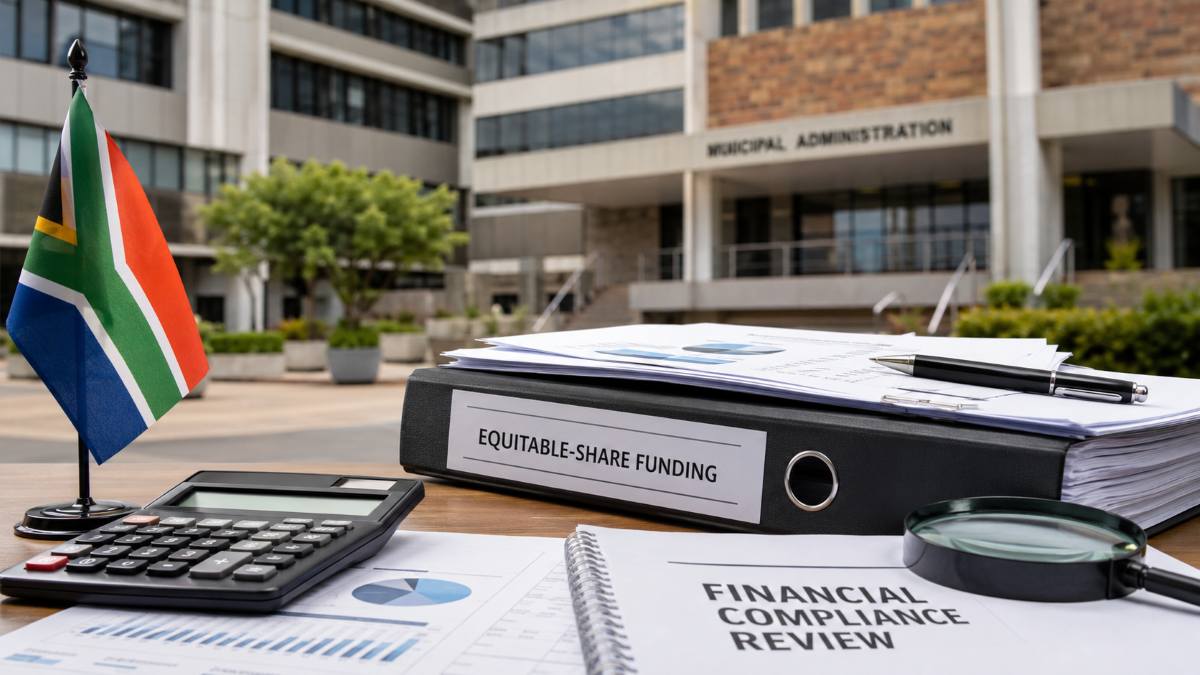
In its April 2026 fuel price statement, the DMRE confirmed that the general fuel levy in the price structure of petrol and diesel would increase to 429 cents per litre for petrol and 416 cents per litre for diesel, while the Road Accident Fund levy would rise to 225 cents per litre.
Due to the scale of the fuel price pressure, government then implemented a temporary R3 per litre reduction in the general fuel levy from 1 April to 5 May 2026, reducing the fuel levy to 129 cents per litre for petrol and 116 cents per litre for diesel during that period.
That temporary relief proves something important: government knows the levy component is large enough to materially affect the price paid by motorists, transport companies, farmers, couriers and businesses.
There is no serious argument that roads, accident compensation and public infrastructure do not need funding. They do. The problem is that South Africans are now living in an economy where every additional rand on fuel becomes a hidden cost on almost everything else.
Diesel affects freight, farming, mining, generators, logistics, food transport and retail distribution.
Whereas, petrol affects household travel, school runs, small businesses and the cost of ordinary movement. When fuel rises, the country does not merely pay more at the pump. It pays more through the entire supply chain.
This is why the comparison with jet fuel is so uncomfortable. Jet fuel is a specialised product that must be produced, handled, stored and supplied under strict conditions. Yet, under normal circumstances, it can still sit below road-fuel prices because aviation kerosene is not loaded with the same ordinary road-fuel duty and levy structure.
Petrol and diesel, by contrast, are everyday economic necessities used by millions of South Africans. But once levies, regulated margins, transport costs and broader price components are added, motorists and businesses are left carrying a heavy load.
Remember, diesel is particularly important.
It is often viewed as simpler and safer to store than petrol because it is less volatile, but that does not automatically make it cheap.
South Africa’s economy runs heavily on diesel, especially because so much freight moves by road. When diesel rises, it does not stay inside the transport sector.
It moves into bread, meat, medicine, building materials, spare parts, online deliveries and municipal service costs.
The jet fuel shock therefore forces two conversations at the same time. The first is about aviation security and whether South Africa and the wider SADC region have enough reliable access to Jet A-1 to keep aircraft operating, cargo moving and regional routes viable.
The second is about whether South Africa’s road-fuel pricing model has become too punishing for a country already battling weak growth, high unemployment, expensive logistics and pressure on household income.
Government’s temporary fuel levy reduction may help in the short term, but it does not answer the structural question.
If the state can cut R3 per litre when the pressure becomes severe enough, then South Africans are entitled to ask whether the fuel price structure deserves a much deeper review.
Not a political slogan. Not a once-off relief announcement.
A serious review of how much of the fuel price is unavoidable, how much is tax, how much is inefficiency, and how much is being carried by citizens and businesses who have no alternative.
There is another uncomfortable layer to this debate. South Africa was never an ordinary fuel-importing economy with no industrial base of its own. The country developed one of the world’s most advanced synthetic fuel capabilities, with coal-to-liquid technology allowing domestic production of petrol, diesel and aviation fuel components.
The problem is that South Africa’s wider fuel-production and refining base has weakened sharply.
The country still has strategic fuel-production capability, particularly through Sasol, but not enough to fully shield the economy from international shocks, imported refined products, shipping costs, refinery disruptions, currency weakness and domestic pricing pressures. Sasol has stated that its Secunda operations and the Natref refinery currently supply approximately 30% of South Africa’s domestic fuels market.
This raises a question that goes far beyond the current jet fuel spike.
If South Africa had modernised and expanded its domestic fuel-production capacity, where would the economy be today?
The answer is not that fuel would automatically be cheap. South Africa’s pump price is still shaped by international product prices, exchange rates, import-parity pricing, margins, levies and taxes. However, stronger domestic production would have meant something extremely valuable: greater control.
It could have reduced the country’s exposure to foreign refinery shutdowns, global supply disruptions and dollar-based import costs.
It could also have supported more industrial jobs, stronger technical skills, deeper energy security, better strategic reserves and greater certainty for airlines, farmers, mines, logistics companies, emergency services, manufacturers, retailers and ordinary motorists.
In practical terms, local production would not merely have meant cheaper fuel. It would have meant more value staying inside the South African economy, more resilience during global shocks, and a stronger ability to protect key sectors from sudden price movements.
That is where the fuel debate becomes bigger than a monthly petrol price adjustment.
With all of this in mind, please remember that South Africa is not only paying for fuel.
It is paying for years of weakened infrastructure, reduced refining depth, policy issues and a shrinking industrial base.
The country still has world-class fuel-production knowledge, but the economy is increasingly behaving like a nation that forgot the value of producing what it consumes.
The jet fuel shock is therefore not only an aviation problem. It is a national warning. A country that cannot secure more of its own fuel supply cannot fully control the cost of movement. And a country that cannot control the cost of movement cannot protect its economy from every crisis that begins somewhere else.
For airlines, the danger is disrupted routes and higher ticket prices. For importers and exporters, it is freight instability.
For ordinary motorists, it is the same old question becoming sharper by the month: how much of South Africa’s fuel burden is truly unavoidable, and how much of it is a price structure that has become too comfortable taking from people who have no choice but to pay?
But, what are your thoughts on this? This is an open conversation between South Africans. Let us know in the comment section below.
Editorial note: This article is intended as analysis and commentary. It does not claim that all fuel price increases are caused by government levies, nor does it suggest that domestic fuel production would automatically result in cheap fuel. Rather, it examines how South Africa’s fuel-pricing structure, weakened refining base, import exposure and levy system combine to place pressure on households, businesses and key economic sectors.
Do not forget to read: Record Fuel Hike Hits South Africa as Panic Buying, Diesel Strain and Farm Disruption Grow