Mining continues to divide communities across the Amajuba District, where residents in Newcastle, Utrecht and Dannhauser remain sharply split over the impact of mining operations and the prospect of further expansion. A high-level government intervention this week has, however, drawn a clear line: compliance must improve, but the sector itself is not under threat.
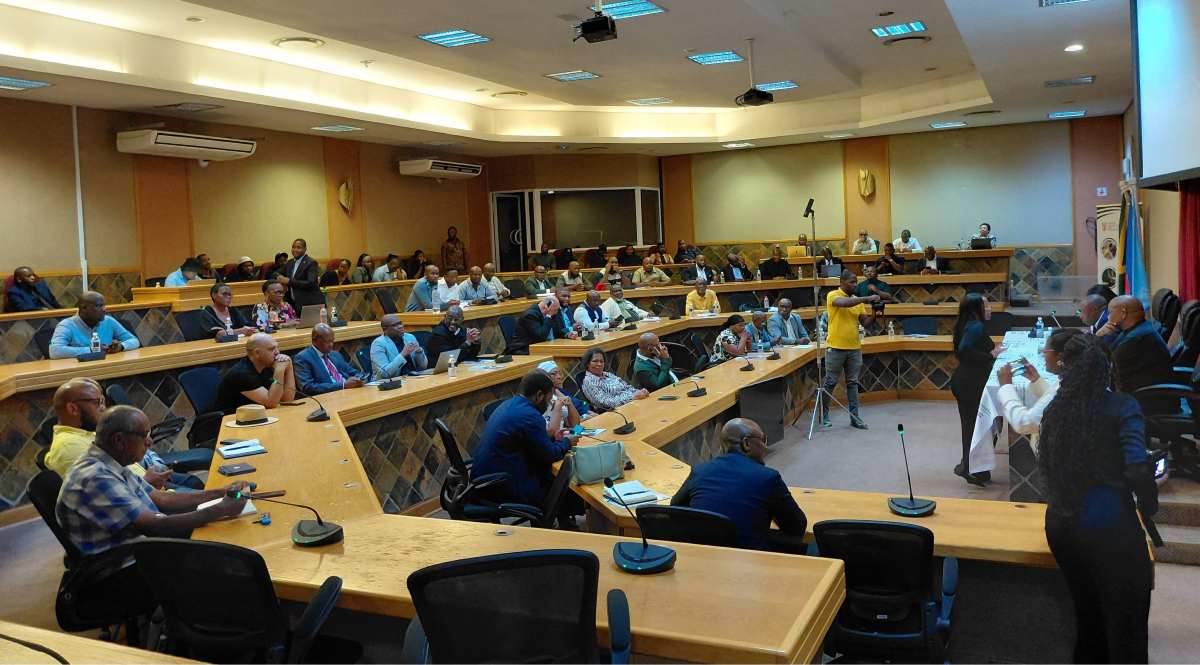
Bringing mining companies, municipal leadership and community representatives into the same room, the session placed the district’s mining operations under pointed scrutiny.
Deputy Minister Mgcina made it clear that the visit was not routine, but rather a response to sustained complaints from affected communities.
“We have received multiple complaints about mines in the district, and therefore, during our visit we felt it necessary to have an engagement session with the relevant stakeholders.”
Those complaints were neither vague nor isolated. Residents pointed to water contamination, environmental degradation and worsening air quality, while also raising concern over blasting practices that are not consistently communicated in advance.
The discussion extended to the safety of nearby communities and livestock, particularly in areas bordering active sites, while damage to local road infrastructure emerged as a further source of strain.
Furthermore, the visit formed part of government’s District Development Model (DDM), under which Minister Mantashe and Deputy Minister Mgcina serve as Champions for the Amajuba District. Their oversight, however, extended beyond mining alone, incorporating a broader assessment of service delivery across Newcastle, eMadlangeni (Utrecht) and Dannhauser, with a focus on improving coordination across all spheres of government.
Earlier engagements reflected this wider mandate. A briefing at the Disaster Management Centre, attended by local mayors, the Acting Mayor of the Amajuba District Municipality and senior officials, centred on progress under the Amajuba DDM One Plan. Attention was given to catalytic projects and the alignment of government resources — discussions which, in effect, framed the tone and substance of the subsequent mining engagement.
Within this context, the meeting with representatives from 18 mining companies carried particular weight. Addressing the room, Minister Mantashe drew on his own experience in the sector, stating:
“As an old mine worker myself, I understand that the mining sector has its challenges, and it can be a difficult sector to manage, and that it can be dirty and dangerous. But, we need mines as they contribute to development, projects and labour.”
At the same time, he acknowledged mounting calls for tougher action against non-compliant operations, cautioning that closures carry significant economic consequences.
Even so, he did not attempt to dilute the concerns raised. “It is important, however, to correct what is wrong with the current concerns at the local mines.”
He further indicated that the Department of Mineral Resources continues to conduct compliance inspections across the district.
While shortcomings have been identified, these are regarded as correctable rather than systemic failures. The emphasis, he suggested, is on ensuring that mining remains a viable long-term investment.
“It is a sector that is changing, and which can do a lot of good, but if done correctly, it can enhance and better the communities where projects are being done.”
Deputy Minister Mgcina reinforced this position by pointing to a departmental report into Ikwezi Mining, commissioned after a community engagement in Dannhauser in November 2025.
Residents described the impact of unannounced blasting, including heightened anxiety among children, alongside disruptions to livestock. The findings also pointed to persistent dust pollution and the presence of unsecured open pits.
In response, the Department deployed a task team to engage directly with the company. While areas of non-compliance were confirmed, the focus has since shifted towards corrective action. This includes the possibility of establishing a dedicated monitoring mechanism to ensure sustained adherence to regulatory requirements.
Looking ahead, Minister Mantashe signalled a broader expectation — that the Amajuba District must find a workable balance between community concerns and the realities of a mining-dependent local economy.
“Steps will need to be taken across the mining sector in the Amajuba District, with Ikwezi Mining now becoming an example on the correct steps to follow.”
He also pointed to the role of municipalities, indicating that stronger institutional involvement will be required, particularly in supporting licensing processes.
At the same time, he acknowledged the frustration evident among residents, underscoring the need for a more coordinated approach between government, industry and communities.
Not all voices, however, were aligned with the tone of the engagement.
A local mining official, speaking on condition of anonymity, suggested that the discussion reflected a gap in understanding. While conceding that improvements are necessary, he argued that the technical realities of mining are often overlooked.
“There are issues which can be addressed, as with any other business, but I don’t think that this is the correct way to address the matters, as many of the individuals at the meeting do not understand the mining sector. But I do feel, having a better understanding of the community, will assist us moving forward.”
Ultimately, the engagement underscored a shifting posture from government — one that places greater emphasis on enforcement, accountability and measurable compliance within the mining sector, rather than tolerance of recurring lapses.
While the Department has signalled a willingness to work with operators to correct deficiencies, the expectation is now clearer: regulatory obligations are not optional, and failure to meet them will increasingly invite scrutiny.
For communities, this signals a potential tightening of oversight, though whether this will translate into tangible improvements on the ground remains to be seen.
At the same time, the discussions reflected a tension between economic dependence on mining and the lived realities of those affected by its impacts. Bridging this divide will require more than periodic engagements; it will depend on sustained transparency, consistent communication and credible follow-through from both industry and government.
Without this, the gap between policy intent, community experience and industry development, is likely to persist.
What are your thoughts on this all? Let us know below.
Newcastillian News invites your input. We ask that you keep your remarks courteous and on-topic. We do not allow any form of hate speech, such as racist or sexist comments. All comments are subject to moderation in line with our User Rules and Commenting Policy.