


As South Africans are bracing to see their municipal electricity bills skyrocket by at least 9.01% from 1 July 2026, the National Energy Regulator of South Africa (NERSA) has opened the window for the public to still have a say in the matter, as the electricity regulator confirmed that it has started receiving the proposed tariff increases by municipalities across South Africa.
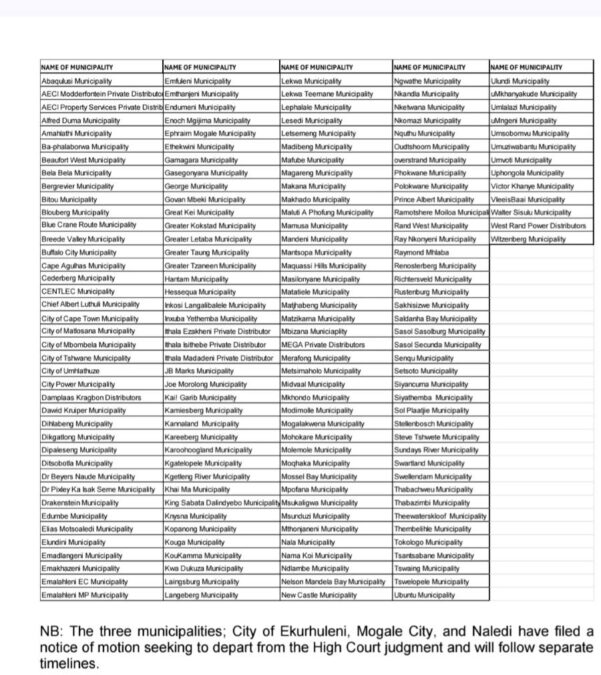
Among the municipalities that have submitted their respective proposed tariff increases are the Newcastle Municipality, Alfred Duma Municipality, eMadlangeni Municipality, and the AbaQulusi Municipality.

This, NERSA explained, forms part of the annual tariff review process.
In an official announcement by NERSA, the energy regulator explained:
“The final decisions on the tariff applications will be taken after due consideration of the written submissions received from stakeholders, together with the technical and regulatory analysis conducted.”
As reported by Newcastillian News in late March 2026, the latest increases stem largely from a regulatory dispute between Eskom and NERSA relating to the sixth Multi-Year Price Determination (MYPD6).
The energy regulator later acknowledged that an earlier calculation error had understated Eskom’s allowable revenue by R54.7 billion, primarily due to depreciation miscalculations, including a R14.5 billion depreciation error, as well as incorrect asset transfers to commercial operation.
Eskom contested the original determination, and although a confidential settlement of approximately R54 billion was initially reached between the regulator and the utility, the Pretoria High Court set the agreement aside on 21 December 2025, ruling that it was unlawful because the public had not been consulted.
Since NERSA approved the tariff hikes, both the Newcastle Municipality and the Abaqulusi Municipality in Vryheid have engaged with their respective communities to announce the proposed electricity hikes.
As noted by the AbaQulusi Municipality at the beginning of April, a Cost of Supply study was done, which the Municipality stressed was crucial in accounting for overheads incurred in delivering this service to consumers, and the recommended rate proposed was 29%.
However, taking into consideration the already mounting pressure on households and businesses, the Municipality explained that the council decided this was not practical, and requested that the figure be adjusted to minimise the impact on consumers.
Subsequently, a figure of 9.9% was proposed, only 0.8% above the NERSA-approved increase, and this was brought forward to the community, with several community members voicing their concern.
As with other Municipalities in KZN, the Newcastle Municipality’s electricity tariffs will be adjusted to 9.01%, with the municipality explaining during its public engagements that Council had approved a proposed electricity tariff increase of 9.01%.
According to the Newcastle Municipality, the proposed electricity tariff was carefully considered against prevailing socio-economic conditions, affordability constraints, and the broader financial sustainability of municipal service delivery.
“While the cost of electricity supply has increased by approximately 19.8%, the Municipality has deliberately limited the proposed increase to 9.01%, in order to cushion residents, businesses, and vulnerable households from excessive financial strain,” stated the Municipality.
As scores of Newcastle residents and their fellow South Africans brace for the tariff hikes, NERSA has encouraged community members to submit comments on the published tariff applications for the FY2026/27 to the following email address: [email protected] on or before 21 April 2026.
Below is a list of tariff applications received to date:
These proposed municipal electricity tariffs underscore the delicate balance between ensuring the financial sustainability of service delivery and shielding households and businesses from undue economic pressure.
While the increases reflect the rising costs of electricity supply, municipalities such as Newcastle and Abaqulusi have demonstrated a deliberate effort to limit the burden on consumers, highlighting the careful consideration of socio-economic conditions and affordability constraints.
As the public consultation period progresses, residents across South Africa, including those in Newcastle, Ladysmith, Vryheid, and Utrecht, are encouraged to actively engage with the process.
By submitting comments and voicing their perspectives to NERSA, communities have a tangible opportunity to influence the final tariff determinations and ensure that their interests are represented in the broader national dialogue on electricity pricing.
What are your thoughts on this? Let us know below.
Be sure to read:








3 Responses
Municipality rates not to be increased as we are ready overpay for service and availability gees to Newcastle Municipality, R1141 on service fees before making use of any services. Pensioners over the age of 65 should not pay for any services fees. Water, electricity rates including property rate & taxes should also discounted as theu could already not afford all these fees
discount
We pay around 2500 in fees, Rates, Availability charges and Service such as refuse, then another 300k on water and electrical usage. We average around 580 units of electricity to 700 , bills range from 5000 to 6000 rand . I can certainly understand why pensioners and people are struggling. The ironic thing is if one looks around, What does these charges get one every month? Rolling black outs, Degraded infrastructure and unmaintained areas. Bylaws never enforced, Roads breaking apart. Yup.. We just enjoy the fruits of our money….
I don’t understand why Eskom wants to increase the electricity if they had a good profit last year….