


Utrecht’s industrial landscape is poised for a notable shift as mining interests focus on northern KwaZulu-Natal. Following more than two decades of dormancy, the Umgala Underground Operation—a site defined by a legacy of both underground and open-cast mining between 1964 and 2004—is now being prepared for a return to active production.
Located just four kilometres south of Utrecht, KwaZulu-Natal, the move to transition the facility out of its long-standing care and maintenance phase signals a strategic push to access the region’s coal reserves.

The renewed interest in the Umgala operation follows the release of the draft Environmental Impact Assessment Report (EIAR) and Environmental Management Programme (EMPr), compiled by environmental consultancy Elemental Sustainability. The documents outline the regulatory approvals still required before any mining activity can resume.
According to the draft report, Welgedacht Exploration Company Proprietary Limited (Welgedacht) holds Mining Right KZN 30/5/1/2/2/122.
Welgedacht is a subsidiary of Unyezi Coal Proprietary Limited, which forms part of Kangra Coal within the broader Menar Group.
The report confirms that Welgedacht has submitted an Integrated Environmental Authorisation (IEA) application as part of the process to potentially restart coal mining near Utrecht.
The application falls under several legislative frameworks, including the National Environmental Management Act (NEMA), the National Environmental Management: Waste Act (NEMWA), and the Mineral and Petroleum Resources Development Act (MPRDA). It also incorporates applications for a Waste Management Licence and a Water Use Licence.
Because the operation has remained on care and maintenance for more than two decades, the project must undergo a fresh environmental assessment process reflecting updated legislation and revised mine planning.
The draft report explains that the project first entered the environmental approval process during the scoping phase conducted by GCS Water and Environmental Consultants.
The scoping report was released for public review in 2024, with the public participation process concluding in October that year.
“GCS Water and Environmental Consultants prepared the initial draft Scoping Report for the Project for public review, and the public participation process concluded in October 2024. The final Scoping Report was submitted to the DMRE and accepted on 10 January 2025, with conditions requiring additional studies to be incorporated into the EIA phase,” the report states.
Following the completion of the scoping phase, GCS withdrew as Environmental Assessment Practitioner. Elemental Sustainability was subsequently appointed to oversee the remaining stages of the environmental authorisation process.
The project scope focuses on recommissioning the Umgala operation itself, including the reclamation and transport of material from the Zimbutu Discard Dump to the Umgala processing plant. The proposal involves significantly more than reopening historic mine shafts and would require major upgrades to surface infrastructure.
Plans outlined in the EMPr include the development of a new underground access adit, the construction of a processing plant, stockpiles and a discard facility, as well as supporting infrastructure such as a sewage treatment plant and stormwater management systems.
The project also proposes reprocessing material from the Zimbutu Discard Dump, integrating existing waste material into the production cycle.
Specialist environmental studies conducted as part of the EIAR examine potential impacts on climate change, air quality, noise, water resources, biodiversity and socio-economic conditions.
While the project could bring economic benefits through employment and procurement opportunities, the environmental studies identify several significant ecological risks. The report estimates that approximately 22.55 hectares of wetlands would be permanently lost due to vegetation clearance and disturbance of aquatic ecosystems. Some of these wetlands are classified as having moderate to high ecological importance.
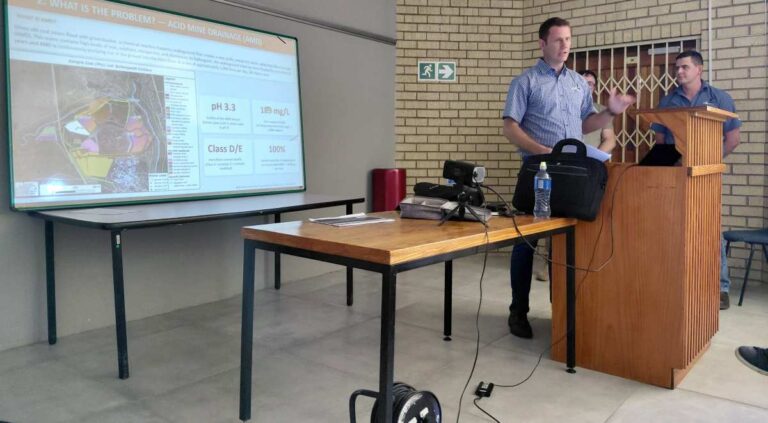
Potential impacts highlighted in the assessment include acid mine drainage, sedimentation and altered water flow regimes, which could affect downstream rivers and ecosystems.
The environmental studies also identified areas of archaeological and palaeontological importance within the project footprint. While dust and noise impacts could likely be managed through mitigation measures such as water spraying, noise suppression equipment and restricted operating hours, biodiversity and heritage impacts remain a central concern.
The draft EIAR indicates that most operational risks could be reduced to low or medium significance through mitigation measures. However, the irreversible loss of wetland and terrestrial habitats is still rated as a high-significance impact even after mitigation.
Additional concerns relate to heritage protection. If graves are discovered within the affected heritage sites, the report states that the potential impact would remain significant regardless of mitigation measures.
“While the Project is economically feasible and the majority of the risks can be reduced through mitigation, residual risks to biodiversity, aquatic ecosystems, and cultural heritage must be acknowledged as highly significant impacts,” the report states. “Long-term monitoring, additional studies, offset initiatives, and compliance with legislation are critical to address these impacts.”
The draft EIAR and EMPr are currently open for public comment until 30 March 2026. Members of the public can review the documents at the Utrecht Library or access the electronic version online.
Interested and Affected Parties (I&APs) are invited to register and submit written comments to Renate Steffens or Ursula Pape at Elemental Sustainability Proprietary Limited via 083 969 4407, or through email at [email protected] or [email protected].
Ultimately, the path forward for the Umgala Underground Operation rests on a delicate balance between revitalising northern KwaZulu-Natal’s coal sector and managing the significant environmental trade-offs identified by Elemental Sustainability.
While the project promises to stimulate the local economy through job creation and procurement opportunities, these potential gains are tempered by the consultancy’s projections of high-significance residual impacts, particularly regarding the irreversible loss of sensitive wetland habitats and the protection of heritage sites.
As the public review process enters its final phase, the onus remains on stakeholders to scrutinise the proposed mitigation strategies and long-term monitoring plans.
Whether the project can successfully reconcile its operational ambitions with the stringent requirements of contemporary environmental legislation remains the central question for the community and regulatory authorities ahead of the 30 March 2026 deadline.
What are your thoughts on this? Let us know below.
Be sure to read: