



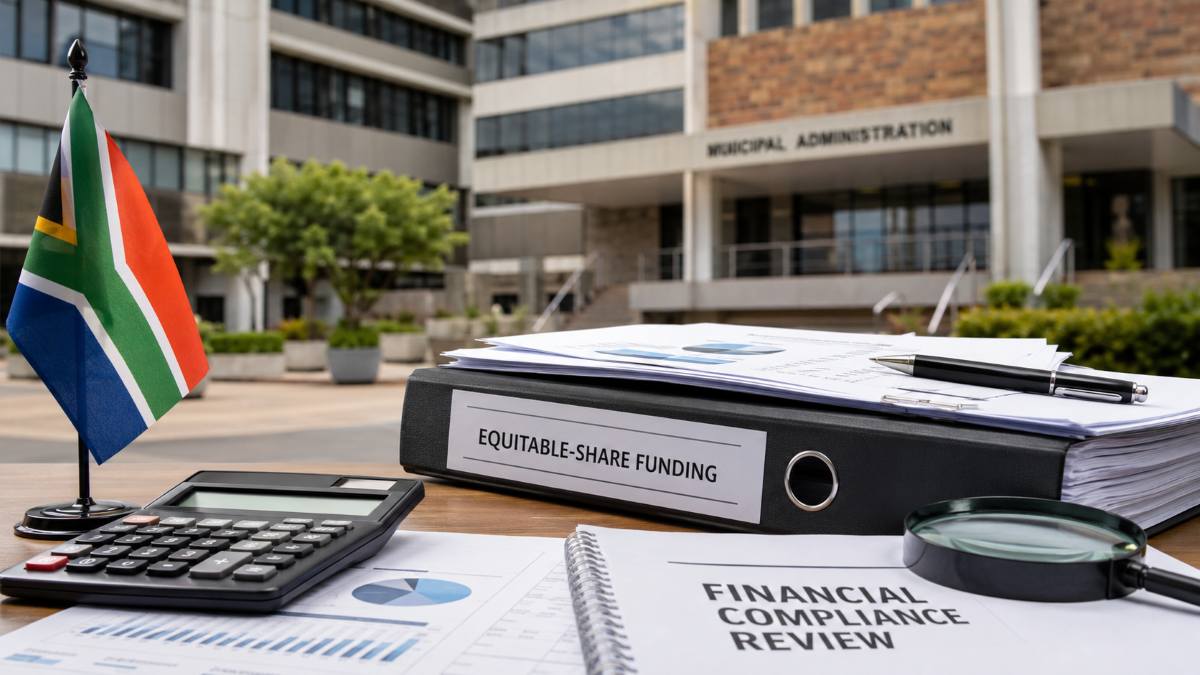
South Africans are preparing for a notable rise in electricity costs, with Eskom set to increase tariffs by 8.76% in April 2026, followed by a further 8.83% hike in April 2027. These increases come after approval by the National Energy Regulator of South Africa (NERSA), enabling the state-owned utility to recover R54.7 billion over three years.
The objective, as per the entity, is not only to correct historical pricing distortions but also to secure the long-term financial sustainability of South Africa’s electricity supply, even as consumers continue to absorb the impact.

The matter stems from earlier attempts by Eskom and NERSA to resolve the issue outside of court. However, in December 2025, the High Court intervened, remitting NERSA’s decision on Eskom’s Generation Regulatory Asset Base (RAB) for the financial years 2025/26, 2026/27, and 2027/28 for redetermination.
Prior to the court’s involvement, Eskom had proposed lower increases of 5.36% for 2026/27 and 6.19% for 2027/28. The revised figures therefore represent a substantial upward adjustment, underscoring the regulatory and financial complexity facing the power utility.
In outlining its rationale, NERSA stressed the need to balance regulatory certainty with consumer protection.
“The decision aims to ensure regulatory certainty, the financial sustainability of electricity supply, and the protection of consumers from undue tariff volatility,” the regulator stated.
It further confirmed that the redetermination strictly followed the approved MYPD4 methodology and incorporated public consultation in accordance with the court’s directive.
NERSA further explained that the redetermination required a component-by-component recalculation of Eskom’s Generation RAB. This detailed review considered factors including Depreciated Replacement Cost (DRC), Transfers to Commercial Operation, Work Under Construction (WUC), Net Working Capital, Asset Purchases, Depreciation, and Returns.
As a result, the additional revenue recovery has been structured in phases: R12 billion in 2026/27, R23 billion in 2027/28, with the remaining R19.7 billion to be recovered beyond the current MYPD6 period.
According to the entity, this phased structure is designed to moderate the immediate burden on consumers. By avoiding retrospective adjustments for 2025/26, the regulator has reduced tariff volatility and lowered the risk of demand erosion. In practical terms, this approach attempts to balance Eskom’s financial recovery with the need to maintain affordability for households and businesses.
However, despite this noble gesture, over the past five years, electricity tariffs in South Africa have risen at a pace well above inflation, largely as a result of regulatory decisions and the endless financial pressures facing Eskom.
Between 2021 and 2022, consumers experienced substantial double-digit increases of approximately 15.6% and 9.6% respectively. This was followed by a particularly steep adjustment in 2023 of around 18.65%. In 2025, tariffs climbed again by roughly 12.7%, accompanied by structural changes to the pricing framework, and now further increases have been approved for implementation in 2026.
The overall pattern is unmistakable: cumulative tariff growth over this period has moved firmly into double-digit territory, outstripping inflation and placing major financial strain on both households and businesses.
The decision highlights the persistent tension within South Africa’s energy landscape. While the phased increases provide a measure of predictability, they also confirm that electricity costs will continue to rise steadily over the coming years. Stabilising Eskom’s finances comes at a time when many South Africans are already navigating elevated living costs and economic pressure.
For households, particularly those in low- and middle-income brackets, the increases are likely to intensify financial strain.
Electricity already constitutes a substantial share of monthly expenditure, and higher tariffs may force families to reduce discretionary spending, limit heating or cooling usage, or seek alternative energy solutions.

Small businesses and informal enterprises, often operating on narrow margins, may face increased operational expenses that ultimately filter through to the prices of goods and services.
Within this context, the regulator’s phased approach may soften the immediate shock, but it also underscores the ongoing challenge of reconciling Eskom’s financial sustainability with the everyday realities faced by South Africans in an already constrained economic environment.
What are your thoughts on this? Let us know below.
Be sure to read, SA’s Minimum Wage Set for Another Increase as Gov Opens Public Comment on 2026 Adjustment, if you missed it.
FAQs:
Because NERSA approved higher increases following a High Court-ordered redetermination of Eskom’s Generation Regulatory Asset Base.
8.76% in April 2026 and 8.83% in April 2027.
It is the asset value used by regulators to determine how much revenue Eskom is allowed to recover through tariffs.
R54.7 billion over three years through phased recovery.
No. NERSA avoided retrospective adjustments for 2025/26 to reduce volatility.








2 Responses
How do eskom think that pensioners and all the sassa pensioners can afford this it’s sickening then the money they collect from us is squander I am sick of this
And what about the illegal hook ups. It’s tragic that the few pay for them.