

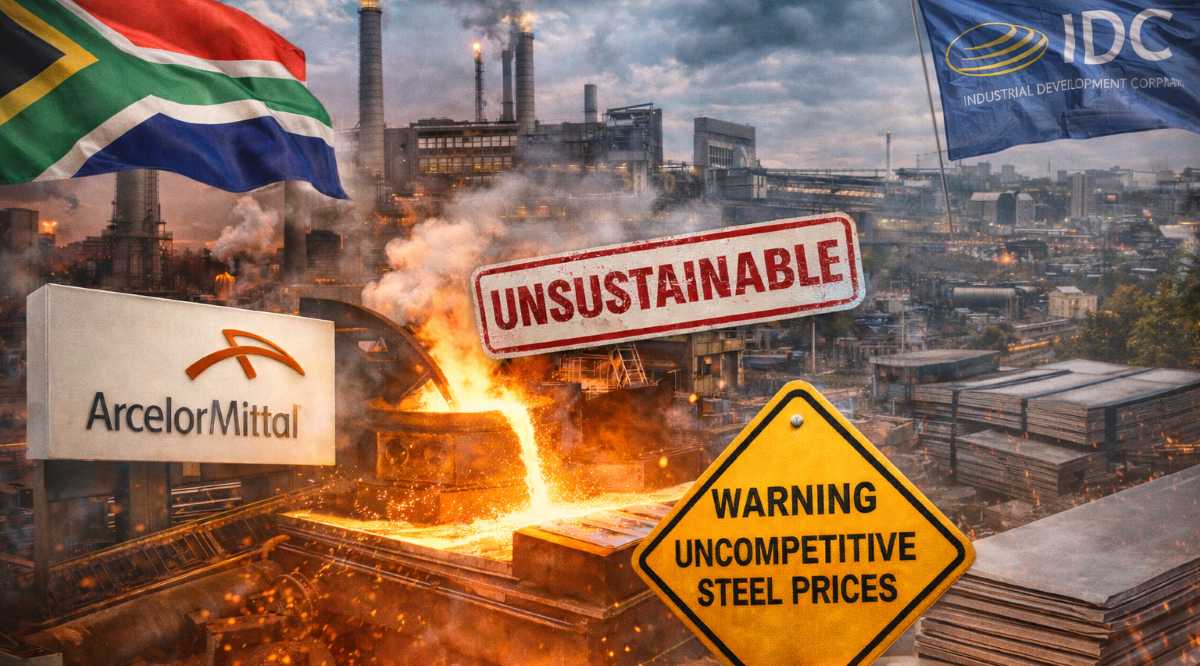
As negotiations continue between ArcelorMittal South Africa (AMSA) and the Industrial Development Corporation (IDC) over the possible rescue of the company’s operations — particularly the Newcastle and Vereeniging steel works — the National Employers’ Association of South Africa (NEASA) has issued a pointed warning.
According to NEASA, the price South Africa is paying for the “privilege” of maintaining a primary steel producer has become economically unsustainable.

In a detailed industry intervention, NEASA chief executive Gerhard Papenfus argues that the burden placed on the steel downstream to protect AMSA has escalated sharply, with serious consequences for the broader economy. He contends that government, acting through the International Trade Administration Commission (ITAC), has repeatedly expanded and intensified a web of import duties on steel and raw materials at AMSA’s request, shielding the company from international competition.
Papenfus characterises AMSA as an antiquated, high-cost producer unable to compete with modern international steel mills without continuous state protection.
Rather than encouraging investment, efficiency, or technological renewal, NEASA argues that these protectionist measures have insulated AMSA from market discipline while transferring the cost of its inefficiencies directly onto downstream users across the economy.
The most recent example cited by NEASA is AMSA’s application for a 51% anti-dumping duty on certain flat-rolled steel products imported from China. If approved, this would be added to the existing 10% import tariff, creating a combined 61% premium on imported flat steel.
NEASA warns that such a measure would sharply inflate domestic steel prices, further constraining manufacturers, fabricators, and engineering firms that rely on competitively priced inputs.
While NEASA acknowledges that import duties are not the sole cause of the steel industry’s long-term challenges, it argues that persistently uncompetitive steel pricing has become a central factor undermining the sector’s sustainability.
Therefore, Papenfus maintains that for as long as ITAC continues to approve AMSA’s protection requests, the negative impact on the broader steel industry will intensify.
Within this duty-driven framework, NEASA argues that AMSA is effectively the only beneficiary. According to the association, tariff protection allows the company to avoid significant capital investment while continuing to sell steel at artificially elevated prices into a shrinking market. This creates what Papenfus describes as a downward cycle: high prices suppress demand, declining volumes are then used to justify further protection, and the industry contracts further.
This dynamic raises a fundamental policy question. Is it justifiable to sacrifice the steel downstream in order to preserve AMSA? And is it reasonable to inflate the price of steel — a core input across countless industries — when those higher costs are ultimately passed on to consumers throughout the economy?
NEASA believes an alternative exists. The association proposes removing all steel-related import duties, allowing the industry to procure raw materials at international prices. Papenfus concedes that this approach could accelerate the closure of AMSA’s remaining flat steel facilities. However, he argues that industry engagement suggests the impact would amount, at worst, to short-term disruption.
He points to recent developments as evidence. Despite AMSA’s closure of its long steel facilities in Newcastle and Vereeniging due to lack of competitiveness, the broader steel industry has continued to operate.
While the closures were difficult, NEASA believes the private sector has shown sufficient capacity to adapt and restructure supply chains accordingly.
The potential closure of AMSA’s flat steel operations at Vanderbijlpark presents more complex challenges. Nevertheless, NEASA maintains that the private sector would again adjust. According to the association, the eventual shutdown of AMSA’s flat steel production may be inevitable, and delaying it through continued protection only prolongs the harm to the rest of the industry.
From NEASA’s perspective, the sooner this transition occurs, the sooner the steel sector can normalise. Access to steel at competitive international prices would ease pressure on downstream manufacturers, restore competitiveness, and create conditions for sustainable growth without permanent reliance on state intervention.
This comes as AMSA has confirmed it remains in talks with the IDC and the Department of Trade, Industry and Competition (dtic). As reported by Newcastillian News on 22 January 2026, these discussions aim to find a sustainable solution for AMSA’s South African operations, particularly the Newcastle and Vereeniging works, which have been under care and maintenance since January 2025.
To read more about this, click here.
The talks are based on a non-binding term sheet, with any outcome subject to multiple approvals and definitive agreements.
AMSA has stressed that no outcome is guaranteed, stating: “Further announcements will be made in relation to these matters as and when appropriate.”
The renewed engagement follows the collapse of previous negotiations in late 2025, when AMSA rejected an informal proposal valued at approximately R8.5 billion, which included repayment of R7 billion owed to its parent company. Meanwhile, Newcastle Works continues clearing remaining steel stock while maintaining environmental safeguards and security measures.
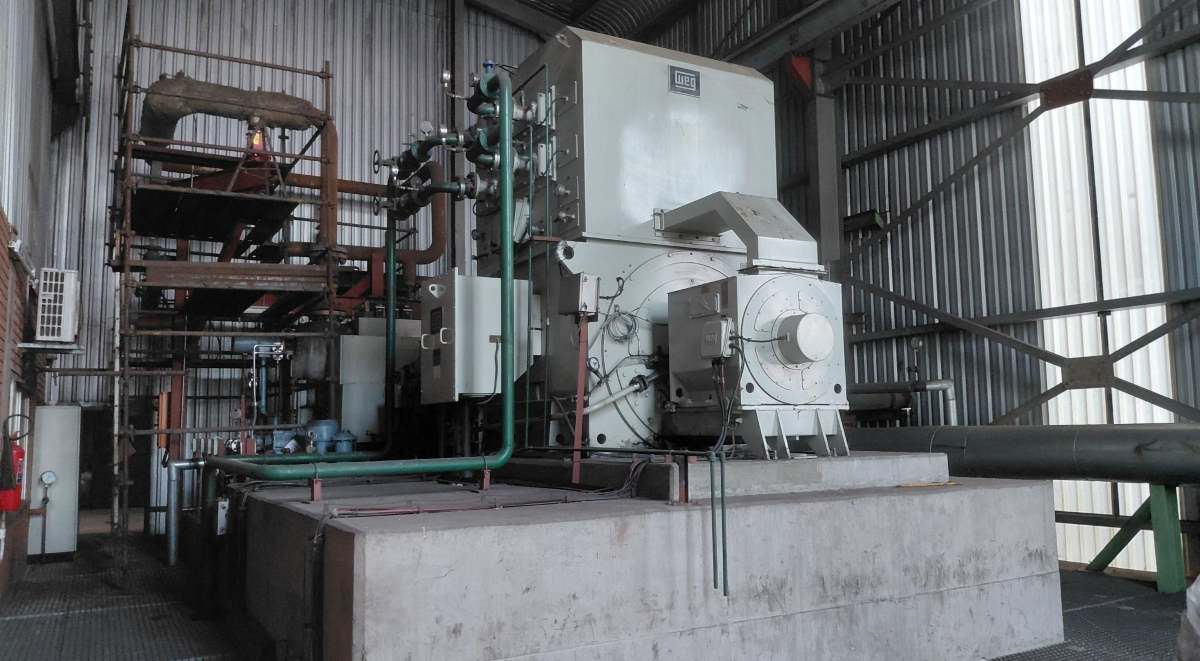
At Newcastle, a bio-treatment plant remains fully operational to treat effluent water and ensure regulatory compliance, protecting surrounding communities and infrastructure. Similar measures are in place at Vereeniging, illustrating the balance AMSA is attempting to maintain between site safety and financial exposure during prolonged negotiations.
The situation at these sites closely reflects the economic dynamics NEASA has described.
While government-backed negotiations and care-and-maintenance measures keep AMSA operational in name, downstream industries continue to face elevated steel costs and limited competition.
The convergence of NEASA’s analysis with the operational realities at Newcastle and Vereeniging highlights the broader tension: protectionism and state involvement may sustain a primary producer, but at a measurable cost to the wider steel sector and national economy.
The steel industry now faces a critical inflection point. Decisions taken in the coming months regarding AMSA’s future, tariff policy, and government intervention will carry far-reaching consequences for downstream manufacturers, investment decisions, and industrial competitiveness.

Ultimately, the path chosen will determine whether South Africa’s steel industry can adapt, modernise, and support downstream sectors efficiently — or whether structural inefficiencies and protectionist policies will continue to constrain growth for years to come.
What are your thoughts on this? Let us know below.
While you are here, be sure to read, Minetek Fights Back: Newcastle Coal Project Appeal Challenges DMRE Decision, if you missed it.
FAQs:
NEASA argues that increased import duties protect AMSA from competition while forcing downstream manufacturers to pay significantly higher steel prices, which undermines the broader steel industry and raises production costs across the economy.
AMSA has applied for a 51% anti-dumping duty on certain flat-rolled steel products from China. If approved, this would be added to the existing 10% tariff, resulting in a combined 61% premium on imported steel.
Steel is a core input for manufacturers, fabricators, construction firms, and engineering companies. Higher steel prices increase production costs, reduce competitiveness, and ultimately lead to higher prices for consumers.
NEASA proposes removing all steel-related import duties so that local businesses can access steel at international market prices, which it believes would restore competitiveness to the downstream steel sector.
Both facilities have been under care and maintenance since January 2025 while AMSA negotiates with the IDC and dtic over a potential rescue plan. No final agreement has been reached, and the outcome remains uncertain.